

Web önizlemesinin çok ötesinde, baskıya hazır bir dosya edinin. Sattığımız her dijital görüntü, stok veri tabanımızdaki yüksek çözünürlüklü bir ana dosyadan —genellikle 5.000 ila 15.000 piksel genişliğinde— gelir; böylece büyük boyutlarda baskı alabilir, dar kırpmalar yapabilir veya ince detayları güvenle yeniden üretebilirsiniz.
Stüdyomuzdan çıkan hiçbir dosya işlenmeden çıkmaz. Bir dijital uzman, renkleri orijinal tabloyla karşılaştırarak kontrol eder ve gerekirse düzeltir; ardından profesyonel rötuş araçlarıyla netliği ve detayları artırır — bunu yaparken her zaman sanatçının fırça darbelerine ve üslubuna sadık kalır. Sonuç, filtrelenmiş bir tarama gibi değil, bizzat tablonun kendisi gibi görünen bir görüntüdür.
İşlem tamamlanmadan önce onayınız alınır: Uzmanımız, incelemeniz için görseli 72 saat içinde e-posta ile gönderir. Memnun kalmadınız mı? İyileştirme veya düzeltme talep edebilir ya da kalite beklentinizin altında kalırsa iade isteyebilirsiniz.
Yayıncıların, tasarım stüdyolarının, galerilerin ve matbaaların güvendiği kalite budur.
Kişisel kullanım, baskı ve yaratıcı projeleriniz için yüksek çözünürlüklü bir dosya indirin. ( Baskı Satışına Geç El Yapımı Tablo Satın Al)
WahooArt.com seçtiğinizde, sadece bir görsel edinmekle kalmaz; titizlikle hazırlanmış, profesyonelce iyileştirilmiş dijital bir sanat eserine sahip olur ve memnuniyet garantisiyle güvence altına alınırsınız. Siparişinizle birlikte otomatik olarak sunulan her şey şunlardır:
Yüksek çözünürlüklü dijital görüntü dosyanız, siparişinizin ardından en geç 72 saat içinde e-posta ile size gönderilecek ve hemen kullanıma hazır olacaktır.
Sanat eseriniz; maksimum detay, netlik ve renk doğruluğu sağlamak amacıyla gelişmiş yapay zeka araçları ve manuel düzenleme kullanılarak profesyonelce optimize edilmektedir.
Dosyanızı yanlışlıkla mı sildiniz yoksa kayıp mı oldu? Endişelenmeyin; dosyanızı dilediğiniz zaman size ücretsiz olarak tekrar göndereceğiz.
Sanat eserinizin tadını gümrük vergisi, harç veya teslimat ücreti ödemeden anında çıkarın; dijital indirmeler her zaman vergiden muaftır.
Profesyonel araçlar ve renk yönetimi kullanarak dijital görselinizin orijinal renklere mümkün olduğunca yakın yansıtılmasını sağlıyoruz.
If you're not satisfied with your digital image, we'll revise it or refund 100% within 100 days - no questions asked.
Memnun kalmadınız mı? Dijital dosyanızı teslim aldıktan sonraki 100 gün içinde, hiçbir soru sorulmaksızın tam para iadesi alabilirsiniz.
Buy 3 images, save 10% - Buy 5, save 15% - Buy 10+, save 20%. Great for creative projects, galleries, and agencies.
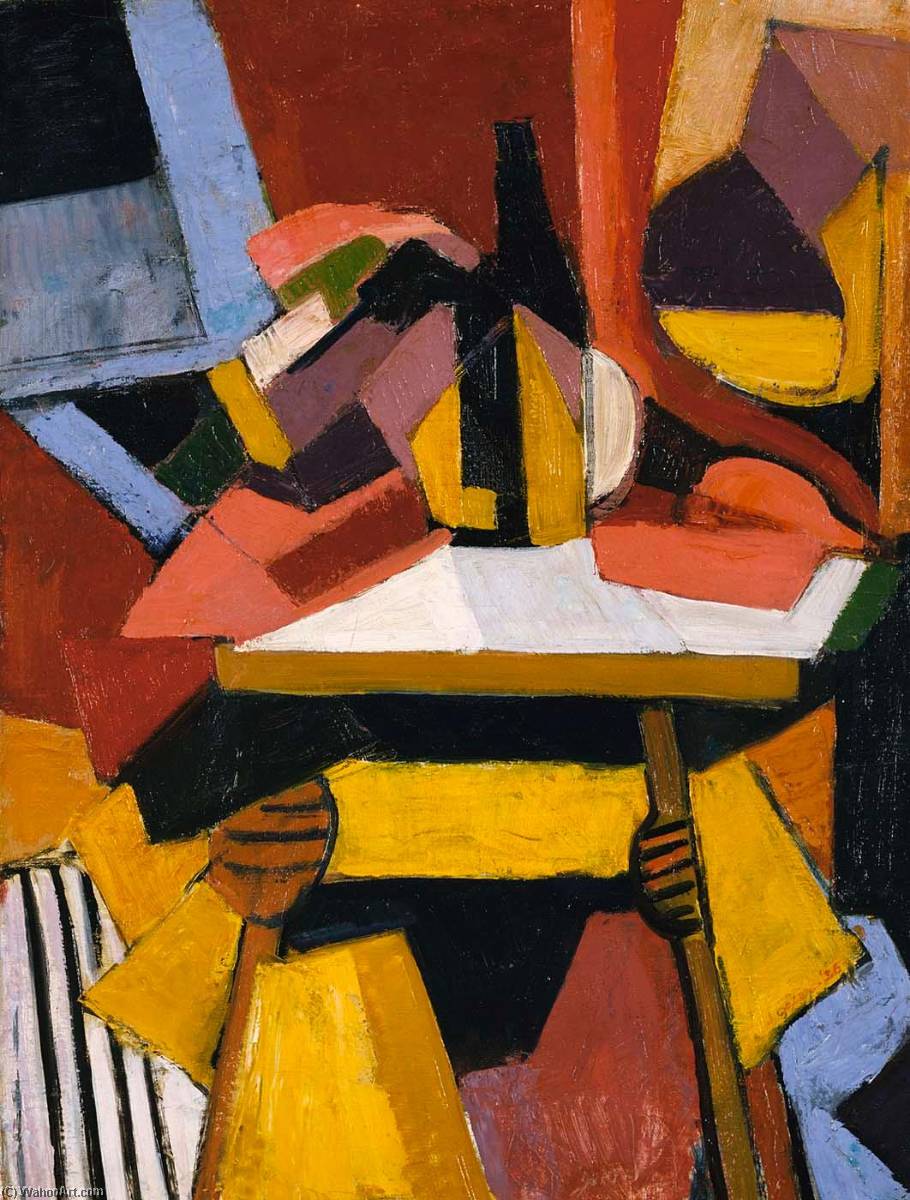
John Opper, "Untitled" adlı eserini 27 yaşındayken yaptı. Sanatçı 1908 yılında doğmuştur ve eser 1935 tarihine aittir.
"Untitled" eserinin Önizleme sayfası, sipariş vermeden önce eseri önizlemenize olanak tanır.
John Opper imzalı "Untitled", Portrait bir kompozisyona sahiptir. Baskı boyutuna karar vermeden önce oranları kontrol etmeye değer.

In the grand tapestry of American modernism, few threads are as vibrantly woven as those left by John Opper. A painter who mastered the delicate balance between the tangible world and the ethereal realm of pure emotion, Opper’s journey was one of profound transformation. Born in Chicago in 1908, his early years were marked by a burgeoning fascination with the visual language of form, nurtured through rigorous studies at the Cleveland School of Art and the Art Institute of Chicago. This foundational period instilled in him a technical discipline that would later serve as the scaffolding for his most radical experiments. As he moved through the 1930s, Opper began to shed the weight of representational accuracy, moving toward a style that whispered of Cubism while yearning for something far more primal and unconstrained.
The landscape of the American West acted as a silent collaborator in his artistic evolution. During a pivotal expedition to Wyoming in 1937, the vastness of the horizon and the raw, elemental power of the terrain ignited a fascination with color as a vessel for memory and feeling. It was during this era that Opper’s work began to pulse with a new kind of energy, moving away from the structured geometry of his early training toward a more fluid, atmospheric exploration. He viewed the 1930s as a "great gestation period," a time when he learned to perceive the unseen forces and tensions vibrating within the picture plane, preparing him for the monumental stylistic shift that would define his legacy.
As the mid-20th century approached, Opper emerged as a vital voice within the Abstract Expressionist movement. His transition from semi-abstract landscapes to fully realized abstraction in the 1950s was not merely a change in subject matter, but a complete reimagining of what a canvas could achieve. He became a founding member of the American Abstract Artists (AAA), a group dedicated to liberating the medium from the constraints of literal depiction. In his hands, painting became an act of constructing intensity through the juxtaposition of color. He possessed a singular ability to create drama on the picture plane by arranging more-or-less rectangular areas of pigment, creating a rhythmic tension that drew the viewer into a state of deep contemplation.
Opper’s technique was deeply aligned with the principles of Color Field painting, echoing the spiritual depth found in the works of contemporaries like Mark Rothko. However, Opper maintained a unique identity through his specific handling of texture and light. His canvases were not merely flat surfaces but luminous environments where color seemed to breathe. He avoided the coldness of hard-edge abstraction, preferring instead a style that felt organic and evolved from nature itself. To Opper, the essence of art lay in its ability to be more than just a sum of parts; it was an immersive experience where the boundaries between the viewer and the pigment dissolved into a singular, emotive moment.
The historical significance of John Opper lies in his role as a bridge between the structured modernism of the early century and the explosive freedom of the post-war era. His work remains a testament to the power of chromatic exploration, proving that color alone can communicate the complexities of the human condition. Throughout his career, which spanned until his passing in 1994, he remained steadfast in his belief that art should not be bound by rigid definitions or conceptual labels. He famously described his school of art as one that was neither purely geometric nor strictly conceptual, but simply an evolution of natural forces.
Today, the presence of Opper’s work in prestigious institutions like the Smithsonian American Art Museum ensures that his contribution to the American avant-garde is never forgotten. His paintings continue to captivate new generations of enthusiasts, offering a window into a period of unparalleled artistic bravery. To look upon an Opper canvas is to witness a master at work, orchestrating light, color, and space to create a lasting resonance that transcends the boundaries of time.

1908 - 1994 , United States
 Gerçek Boyutta Önizle
 Paylaş
 Paylaş
 Detayları Gör
 Rehber

 İndir
İndir
 Benzer ürünler
 X-Işını
 Slayt Gösterisi
 Soru & Cevap
 İstatistikler
 Tümünü Gör


