Acrylic On PaperWallArtRomanticism
 1835Modern
 218.0 x 181.0 cm
 National Gallery of Scotland
Sanatçılarımız tarafından sipariş üzerine hazırlanan; istediğiniz boyut ve çerçevede, tuval üzerine el boyaması yağlı boya. ( Baskı satın al Görsel satın al)





























Eserin orijinal oranlarıyla uyumlu, önceden belirlenmiş boyutlarımız arasından seçim yapın.

Belirli bir çerçeveye veya alana uyması için kendi boyutlarınızı girebilirsiniz. Seçtiğiniz boyut orijinal görüntünün oranlarıyla eşleşmiyorsa, sanat eserini kırparak veya ek el boyaması öğelerle resmi uzatarak ayarlayacağız. Üretim başlamadan önce onayınız için dijital bir taslak gönderilecektir.
Lütfen ekrandaki önizlemenin gerçek kırpmayı veya uzatmayı yansıtmadığını unutmayın. Nihai kompozisyonu yalnızca hazırlanan taslak doğru şekilde gösterecektir.
Özel boyutlar mevcut olsa da, orijinal oranları korumak adına önceden tanımlanmış listeden bir boyut seçmenizi öneririz.
Dünya Çapında Teslimat (); standart 5 hafta yerine 3/4 haftada. (6 Eylül). Kaliteden ödün verilmez.


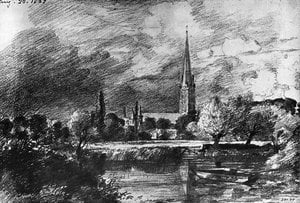
View on the River Severn at Worcester
Reproduksiyon Boyutu
John Constable's “View on the River Severn at Worcester,” painted in 1835, isn’t merely a depiction of a river scene; it’s a carefully constructed meditation on light, movement, and the quiet drama of everyday life. This monochrome study, rendered with an almost obsessive attention to detail, invites us into a fleeting moment captured by one of England's most beloved Romantic landscape painters. The work immediately possesses a captivating immediacy – a sense that we are witnessing something just as it unfolded, a transient glimpse into the heart of rural Worcestershire.
Constable’s genius lies in his ability to imbue the commonplace with profound emotional resonance. He eschewed grand vistas and heroic subjects, instead focusing on the subtle shifts of light and atmosphere within a familiar landscape. The River Severn here isn't presented as an imposing force of nature but rather as a living entity, its surface rippling with reflected light and shadowed depths. The composition is deliberately unheroic; a cluster of small boats – likely working vessels – are scattered along the riverbank, their presence suggesting industry and human connection within this vast natural setting. The dense bank of trees in the background provides a grounding element, framing the scene and hinting at the surrounding countryside.
What immediately strikes the viewer is Constable’s masterful use of line. This isn't a painting dominated by color; instead, it’s a symphony of graphite or charcoal strokes – thick, thin, broken, and continuous – that build up texture and define form with remarkable precision. Short, choppy lines mimic the turbulence of the water, while longer, more deliberate marks delineate the shapes of the boats and the tangled branches of the trees. The artist doesn’t simply *draw* the scene; he *sculpts* it with his lines, creating a tactile quality that invites close inspection. The layering of these lines generates an incredible sense of depth and volume, transforming what could have been a flat depiction into a remarkably three-dimensional space.
“View on the River Severn at Worcester” is deeply rooted in the Romantic movement, but it avoids the bombast often associated with that style. Instead of dramatic storms or sublime mountains, Constable offers a quieter, more intimate exploration of nature's beauty and its relationship to human experience. The implied activity – the boats, the figures – suggests a sense of urgency, perhaps even a hint of potential distress, adding a subtle layer of emotional complexity. The painting’s monochrome palette further enhances this feeling, stripping away distractions and focusing our attention on the tonal variations that define form and atmosphere. It's a scene brimming with quiet observation, inviting us to contemplate the beauty of the ordinary and the fleeting nature of time.
Painted in 1835, this work reflects Constable’s evolving artistic philosophy. He was increasingly interested in capturing atmospheric conditions – light, mist, and rain – as they directly impacted the appearance of his subjects. His dedication to observing nature firsthand, often working *en plein air*, is evident in the painting's immediacy and authenticity. Constable’s focus on depicting familiar landscapes, particularly those surrounding his home in Suffolk, was a deliberate rejection of academic conventions that favored grand historical or mythological scenes. He sought to capture the essence of England – its beauty, its rhythms, and its people – with honesty and emotional depth. This particular sketch was created during a brief visit to Worcestershire, where Constable was delivering lectures on landscape painting, solidifying his position as a leading voice in the English art world.


1776 - 1837 , Birleşik Krallık

Explore the profound legacy of John Constable. Discover how his mastery of light, atmosphere, and the English landscape redefined Romanticism through timeless, museum-quality oil reproductions for discerning collectors.

Explore the profound beauty of American art history. From the Hudson River School to iconic landscapes, discover a curated journey through the masterpieces that defined a nation's spirit and the enduring legacy of American Romanticism.

Explore the profound beauty of American Romanticism. Discover how the Hudson River School captured the wild frontier through masterful landscapes, exploring the legacy of legends like Thomas Cole and Asher Durand in this deep dive into art history.

 Önizleme yap
 Paylaş
 Paylaş
 Detayları Gör

 İndir
İndir
 Benzerlerini gör
 X-Işını
 Slayt Gösterisi
 Tümünü Gör







 Cam seçeneği yalnızca 110 cm altındaki boyutlar için mevcuttur.