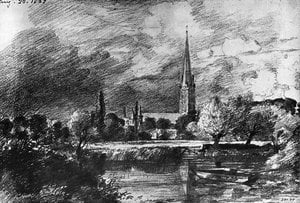
A Window into Suffolk’s Soul: Exploring Constable's Flatford Mill
John Constable’s Flatford Mill (detail) is far more than a mere depiction of a riverside scene; it is an embodiment of Romantic idealism, capturing the very essence of rural England at the cusp of the Industrial Revolution. Painted in 1817, this iconic canvas transcends its visual representation to become a profound meditation on nature's power and humanity’s relationship with it—a sentiment deeply felt by Constable himself, who grew up amidst the fertile landscapes of Dedham Vale. The painting portrays a quintessential English countryside vista featuring a bustling mill alongside the River Stour. Within this meticulously observed scene, a lone horseman rides along the riverbank, accompanied by several boats engaged in activity, creating a sense of life and movement that feels both grounded and eternal.
The artist’s style is firmly rooted in Luminism, prioritizing atmospheric effects over precise detail to achieve a breathtaking realism. Constable achieved this through the painstaking development of layering thin glazes of paint, a technique that allows light to penetrate deeply into the canvas and creates an illusion of shimmering luminescence. This masterful manipulation of light is particularly evident in the reflections on the water surface, where the river seems to breathe with the sky above. The inclusion of a dog towards the bottom right corner adds an element of domestic tranquility to the scene, subtly reinforcing the painting’s overarching theme of harmony between man and nature.
Symbolism and the Emotional Landscape
Beyond its visual charm, the work is rich with symbolic depth. The River Stour itself symbolizes fluidity and change—a visual representation of the unstoppable march of time. However, Constable deliberately juxtaposes this dynamism with the stillness of the mill wheel and the horseman’s posture, suggesting a quiet resistance to inevitable alteration. Light, particularly the diffused sunlight filtering through the clouds, represents divine grace and illuminates the beauty of the landscape; it is not simply illumination, but an embodiment of enlightenment and spiritual contemplation central to Romantic thought.
The historical context surrounding this work is crucial to understanding its profound emotional impact. Constable was grappling with anxieties about the encroaching industrial age, witnessing firsthand the rapid transformation of rural England into a mechanized landscape. Yet, within this looming shadow of progress, he sought solace and inspiration in the enduring beauty of the natural world. For the art lover or interior designer, bringing a reproduction of this masterpiece into a home offers an opportunity to preserve its luminous beauty and invite a sense of peace, nostalgia, and a timeless connection to the natural world into any living space.
Soru ve Cevaplar
John Constable imzalı "Flatford Değirmeni (detay)" eserinde akım ve dönem nasıl buluşuyor?
John Constable imzalı "Flatford Değirmeni (detay)" eserinde, Romantik Manzara akımı 19. Yüzyıl dönemiyle buluşuyor.
John Constable imzalı "Flatford Değirmeni (detay)" kamu malı mı?
Telif hakkı konusunda, "Flatford Değirmeni (detay)" eseri kamu malıdır - telif hakkı süresi dolmuştur statüsündedir.
"Flatford Değirmeni (detay)" adlı eser, John Constable tarafından genellikle üretilen işlerin tipik bir örneği mi?
"Flatford Değirmeni (detay)", kırsal manzara, nehir sahnesi, pastoralizm, constable stili, i̇ngiliz kırsalı, tarım yaşamı, ışık ve gölge konularını betimlerken; John Constable tarafından kaydedilen temalar lorrain'in pastoral vizyonu, suffolk geleneği, kırsal idealizm, manzara öncüsü, constable mirası şeklindedir. İkisini karşılaştırmak, eserin sanatçının alışılagelmiş konularıyla nasıl bir ilişki içinde olduğunu göstermektedir.



 Önizle
 El Yapımı Tablo Satın Al
 Gönder
 Paylaş
 Detaylar
 Rehber

 Dosyayı İndir
 Benzerleri
 X-Işını
 Slayt Gösterisi
 İstatistikler


 Devamını Oku






































 Cam seçeneği yalnızca 110 cm altındaki boyutlar için mevcuttur.