A Symphony of Hope: Decoding Joan Miró’s *Esperanza*
Joan Miró's *Esperanza* (Hope) is a captivating journey into the artist’s unique visual language – a realm where biomorphic forms, vibrant colors, and playful symbols converge. This painting isn’t merely an aesthetic experience; it’s an invitation to explore the depths of human emotion and the enduring power of optimism.
The Artistic Landscape of Joan Miró
Born in Barcelona in 1893,
Joan Miró i Ferrà stands as a pivotal figure in 20th-century art. Initially influenced by Fauvism and Cubism, he quickly forged his own path, becoming a key player in the Surrealist movement while simultaneously developing a distinctly abstract style. Miró’s work is characterized by its rejection of traditional representation, embracing instead a world of intuitive forms and symbolic imagery. The
Fundació Joan Miró in Barcelona serves as a lasting tribute to his innovative spirit and enduring legacy.
Deconstructing *Esperanza*: A Visual Narrative
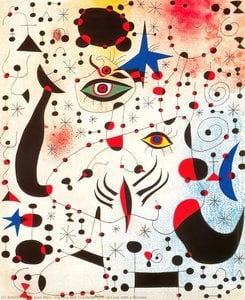
*Esperanza* exemplifies Miró’s mature style, showcasing a dynamic composition teeming with life. The canvas is populated by an array of enigmatic figures – human-like forms, whimsical creatures, musical notes, and abstract shapes – all rendered in a bold palette of reds, blues, blacks, and whites. These elements aren't arranged randomly; they interact within a carefully balanced space, creating a sense of movement and energy that draws the viewer into Miró’s imaginative world. At least thirteen distinct characters populate the work, each possessing unique characteristics and contributing to the painting’s overall complexity. Some appear engaged in dance or musical performance, while others seem lost in contemplation, adding layers of narrative ambiguity.
Symbolism & Interpretation
Miró rarely offered definitive explanations for his symbols, preferring viewers to engage with his work on a personal level. However, recurring motifs within *Esperanza* offer clues to its underlying meaning. The presence of musical notes suggests harmony and joy, while the biomorphic forms evoke organic growth and vitality. The vibrant colors themselves are imbued with symbolic weight: red often representing passion and energy, blue symbolizing tranquility and hope. Ultimately, *Esperanza* is open to interpretation – a testament to Miró’s belief in the power of art to stimulate imagination and provoke emotional response.
Technique & Style
Miró's technique in *Esperanza* is characterized by its spontaneity and fluidity. He employed oil paints with a loose, expressive brushstroke, allowing colors to blend and interact organically. The flattened perspective and simplified forms are hallmarks of his abstract style, emphasizing the emotional impact of color and composition over realistic representation. The textured surface adds depth and visual interest, inviting close examination.
Miró’s Wider Oeuvre: Complementary Masterpieces
To fully appreciate *Esperanza*, it's helpful to explore other significant works by Miró:
- The Lark’s Wing, Encircled With Gold Blue: A similarly vibrant and symbolic composition exploring themes of freedom and transcendence.
- El bello pájaro descifrando lo desconocido a una pareja de enamorados (The Beautiful Bird Deciphering the Unknown to a Couple in Love): A poetic work that blends surreal imagery with romantic undertones.
- Pájaro en la noche (Bird in the Night): A nocturnal scene filled with mysterious forms and evocative colors.
Emotional Resonance & Interior Design
*Esperanza* radiates a sense of optimism and joy, making it an ideal addition to any space. Its vibrant colors and dynamic composition can enliven a living room, bedroom, or office. The painting’s abstract nature allows it to complement a wide range of interior design styles – from modern minimalist to eclectic bohemian. A high-quality reproduction of *Esperanza* offers a unique opportunity to bring the energy and spirit of Miró's masterpiece into your home or workspace. It is more than just decoration; it’s an investment in beauty, inspiration, and enduring artistic value.