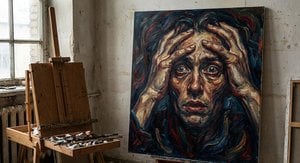
A Descent into Suffering: James Ensor’s *Le Christ Agonissant*
James Ensor's Le Christ Agonissant (The Anguishing Christ) is not merely a depiction of the crucifixion; it is a profound and unsettling plunge into the depths of human suffering, rendered with a visceral intensity that continues to resonate with viewers over a century after its creation. Painted in oil on canvas around 1896, this monumental work exemplifies Ensor’s unique artistic vision – one characterized by a preoccupation with psychological states, masked figures, and a distinctly macabre aesthetic. The painting's scale alone commands attention, immediately drawing the viewer into the heart of the scene, where the agony of Christ is presented not as a pious spectacle but as a raw, almost unbearable experience.
- Subject Matter: The central focus is undeniably the crucifixion of Jesus Christ, yet Ensor’s interpretation diverges sharply from traditional religious iconography. He strips away any sense of serene devotion, presenting instead a scene saturated with anguish and despair.
- Style & Technique: Ensor's style can be categorized as Symbolist, though he deliberately rejected academic conventions. His brushwork is thick and expressive, employing impasto to build texture and convey the physicality of pain. The use of color – predominantly deep reds, blacks, and browns – amplifies the dramatic effect, evoking a sense of blood, darkness, and mortality.
The Shadowed World of Ensor’s Imagination
Born in Ostend, Belgium, in 1860, James Ensor was profoundly shaped by his upbringing amidst a vibrant yet unsettling environment. His father, an English merchant, and his mother, a Belgian artist, provided him with a unique cultural perspective – one that fostered both curiosity and a deep awareness of the darker aspects of human nature. The souvenir shop operated by his parents, filled with carnival masks, shells, and other curiosities, served as a constant source of inspiration, fueling his fascination with disguise, illusion, and the hidden emotions beneath the surface. This influence is strikingly evident in Le Christ Agonissant, where figures are often obscured or distorted, suggesting a world of psychological turmoil rather than literal representation.
Symbolism and Emotional Resonance
The painting’s symbolism is layered and deliberately ambiguous. The surrounding figures – men and women with averted gazes, some weeping, others seemingly indifferent – represent the diverse reactions to suffering that Ensor observed in society. Their masks, subtly incorporated into their faces, reinforce the theme of disguise and the difficulty of truly confronting pain. The overall atmosphere is one of profound isolation and despair, reflecting Ensor’s own anxieties about mortality, illness, and the perceived corruption of modern life. The red hues are not simply representative of blood; they symbolize passion, violence, and the consuming nature of suffering.
Historical Context & Legacy
Le Christ Agonissant was created during a period of significant social and artistic upheaval in Europe. The late 19th century witnessed rapid industrialization, urbanization, and a growing sense of alienation – themes that resonated deeply with Ensor’s work. His painting aligns with the Symbolist movement's rejection of realism and its exploration of subjective experience. Ensor’s unflinching portrayal of suffering established him as a pivotal figure in 20th-century art, influencing generations of artists who sought to challenge conventional representations of religious themes and explore the darker recesses of the human psyche. The painting remains a powerful testament to Ensor's artistic genius and his ability to evoke profound emotional responses through his unsettling yet captivating imagery.



 Önizleme yap
 El yapımı tablo satın al
 Paylaş
 Paylaş
 Detayları Gör
 Rehber

 İndir
İndir
 Benzerlerini gör
 X-Işını
 Slayt Gösterisi
 İstatistikler

 Tümünü Gör






































 Cam seçeneği yalnızca 110 cm altındaki boyutlar için mevcuttur.