Önizle AR ile önizle Baskı Satışına Geç Dijital Görsel Satışına Geç Gönder
Detaylar Rehber Favorilere ekle Dosyayı İndir Benzerleri X-Işını Slayt Gösterisi İstatistikler

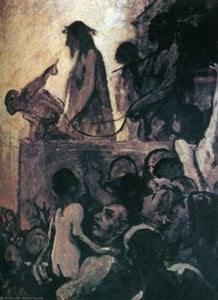
Au conservatoire

James Ensor's 'Au Conservatoire' is an Expressionist masterpiece brimming with unsettling figures and satirical humor. Explore the painting’s layered symbolism, masks, and critique of Belgian society through a unique, captivating visual experience.

James Ensor (1860-1949), İkinci Dünya Savaşı sırasında Ostend’de yaşamasına rağmen Bomba saldırılarından kaçınan Belçika sanatçısıdır. Les XX sanat grubunun üyelerinden biriydi. Ayrıca Ekspresyonizm ve Surrealizm hareketlerine önemli bir etkisi olan ve Rembrandt, Goya ve Whistler gibi sanatçılardan etkilenen Bir İngiliz babası ve Bir Belçika annesi tarafından dünyaya gelen İskoçya doğumlu bir eser

El Yapımı Yağlı Boya Reproduksiyon

Sanatçılarımız tarafından sipariş üzerine hazırlanan; istediğiniz boyut ve çerçevede, tuval üzerine el boyaması yağlı boya. ( Baskı Satışına Geç Dijital Görsel Satışına Geç)

Corner sample of the P118B picture frame: kalıplanmış polistiren, 5 cm wide and 3 cm thick
P118B 10
Corner sample of the P118H picture frame: kalıplanmış polistiren, 5 cm wide and 3 cm thick
P118H 10
Corner sample of the P118W picture frame: kalıplanmış polistiren, 5 cm wide and 3 cm thick
P118W 10
Corner sample of the P438Z picture frame: kalıplanmış polistiren, 5.5 cm wide and 3.5 cm thick
P438Z 10
Corner sample of the P508JH picture frame: kalıplanmış polistiren, 7 cm wide and 3.5 cm thick
P508JH 12
Corner sample of the P508YH picture frame: kalıplanmış polistiren, 7 cm wide and 3.5 cm thick
P508YH 12
Corner sample of the P805H picture frame: kalıplanmış polistiren, 5 cm wide and 3.5 cm thick
P805H 10
Corner sample of the P805Z picture frame: kalıplanmış polistiren, 5 cm wide and 3.5 cm thick
P805Z 10
Corner sample of the P919BZ picture frame: kalıplanmış polistiren, 7 cm wide and 3.5 cm thick
P919BZ 10
Corner sample of the P919G picture frame: kalıplanmış polistiren, 7 cm wide and 3.5 cm thick
P919G 10
Corner sample of the P919XJ picture frame: kalıplanmış polistiren, 7 cm wide and 3.5 cm thick
P919XJ 10
Corner sample of the P959ZH picture frame: kalıplanmış polistiren, 5 cm wide and 3 cm thick
P959ZH 10
Corner sample of the P968JZ picture frame: kalıplanmış polistiren, 6 cm wide and 4 cm thick
P968JZ 12
Corner sample of the W106C picture frame: masif ahşap, 5 cm wide and 3 cm thick
W106C 8
Corner sample of the W218G picture frame: masif ahşap, 5 cm wide and 3 cm thick
W218G 10
Corner sample of the W218JH picture frame: masif ahşap, 5 cm wide and 3 cm thick
W218JH 8
Corner sample of the W218Y picture frame: masif ahşap, 5 cm wide and 3 cm thick
W218Y 10
Corner sample of the W307PJ picture frame: masif ahşap, 6 cm wide and 3 cm thick
W307PJ 10
Corner sample of the W316G picture frame: masif ahşap, 6 cm wide and 3 cm thick
W316G 10
Corner sample of the W316PJ picture frame: masif ahşap, 6 cm wide and 3 cm thick
W316PJ 8
Corner sample of the W316Y picture frame: masif ahşap, 6 cm wide and 3 cm thick
W316Y 10
Corner sample of the W398PJ picture frame: masif ahşap, 5 cm wide and 3 cm thick
W398PJ 8
Corner sample of the W4111J picture frame: masif ahşap, 6.5 cm wide and 3.5 cm thick
W4111J 10
Corner sample of the W500HY picture frame: masif ahşap, 7 cm wide and 5 cm thick
W500HY 15
Corner sample of the W500JH picture frame: masif ahşap, 7 cm wide and 5 cm thick
W500JH 15
Corner sample of the W692G picture frame: masif ahşap, 8 cm wide and 4 cm thick
W692G 12
Corner sample of the W849H picture frame: masif ahşap, 5 cm wide and 3 cm thick
W849H 8
Corner sample of the W940BG picture frame: masif ahşap, 7.5 cm wide and 4.5 cm thick
W940BG 15
Corner sample of the W953PJ picture frame: masif ahşap, 6 cm wide and 3.5 cm thick
W953PJ 8

Standart Boyutlar
özel boyutlu
CM
INCH

Eserin orijinal oranlarıyla uyumlu, önceden belirlenmiş boyutlarımız arasından seçim yapın.

genişlik
yükseklik

Çerçevenize veya duvarınıza uygun olması için ihtiyacınız olan genişliği ve yüksekliği yazın. Bu eser el boyamasıdır; bu nedenle farklı bir formdaki boyutlar için sanatçı, resmin etrafına biraz daha fazla boya ekleyebilir veya biraz daha kırpabilir — seçim sizin. Boyama işlemi başlamadan önce onaylamanız için size bir dijital taslak gönderiyoruz. Bu sayfada gösterilen resim gerçek sonucu yansıtmamaktadır — gerçek sonucu yalnızca taslak göstermektedir.

Değiştirilebilecek örneklere dair: Yüzün müşteri fotoğrafıyla değiştirilmesi; Evcil hayvan eklenmesi (örneğin kedinin köpek ile değiştirilmesi); Arka plana gizli bir mesaj dahil edilmesi; Arka plan manzarasının veya öğelerinin değiştirilmesi.
Siparişten sonra, WahooArt.com ekibi talimatlar için müşteriye e-posta gönderecek ve bir taslak önizleme sunacaktır

Dünya Çapında Teslimat (); standart 5 hafta yerine 3/4 haftada. (20 Ekim). Kaliteden ödün verilmez.

Dünya Çapında Ücretsiz Ekspres Kargo
Yüksek Kaliteli Keten Tuval
Tam Nakliye Sigortası
Gümrük Vergisi İadesi Garantisi
Gerçek Renk Uyumu Garantisi
100 Günlük İade Koşulları (Sadece Üretim Hatalı Ürünler İçin)
%100 Para İade Garantisi
Toplu Alım Avantajı

Toplam Fiyat

₺ 13280

Au conservatoire

Baskı Tekniği

Baskı Boyutu

-

Toplam Fiyat

₺ 13280

Kısa Bilgiler

  • Artistic style: Satirical, grotesque
  • Subject or theme: Conservatoire scene
  • Dimensions: 56 x 71.5 cm
  • Title: Au Conservatoire
  • Notable elements: Masks, satire, hareng-saur
  • Movement: Expressionism

Sanat Bilgisi Testi

Her soru için yalnızca bir doğru cevap bulunmaktadır.

Soru 1:
What artistic movement is most closely associated with James Ensor’s ‘Au Conservatoire’?
Soru 2:
The painting 'Au Conservatoire' primarily utilizes what color palette?
Soru 3:
What is the significance of the numerous objects depicted in ‘Au Conservatoire’?
Soru 4:
Which of the following best describes James Ensor’s style as evident in ‘Au Conservatoire’?
Soru 5:
The inclusion of a ‘hareng-saur’ (a type of herring) in the painting is most likely intended to convey:

A Window into the Psyche: Unpacking James Ensor’s *Au Conservatoire*

James Ensor's 1902 painting, *Au Conservatoire*, isn’t merely a depiction of a scene; it’s an unsettling plunge into the artist’s uniquely warped perception of reality. This work, housed within the Musée d'Orsay in Paris, stands as a cornerstone of Expressionism – a movement that prioritized raw emotion and subjective experience over objective representation. More than just a portrait or still life, *Au Conservatoire* is a meticulously constructed tableau designed to provoke, to challenge, and ultimately, to reveal the anxieties simmering beneath the surface of Belgian society at the turn of the 20th century.

The painting immediately commands attention with its deliberate lack of harmony. A central figure, seemingly directing our gaze with a pointed stick, dominates the composition, yet his purpose remains ambiguous. Surrounding him is a chaotic collection of individuals – men in ties, a woman holding sheet music, and a scattering of objects: a bowl overflowing with what appears to be a disconcerting assortment of items, a knife and fork resting on a table, a bottle, two cell phones—each element contributing to the painting’s overall sense of unease. The use of sepia tones lends an air of timelessness, reminiscent of old photographs, yet this formality is immediately undermined by the distorted figures and jarring juxtapositions.

The Language of Distortion: Style and Technique

Ensor's masterful manipulation of form and color is central to *Au Conservatoire’s* impact. The figures are rendered with a deliberate lack of detail, their faces often obscured by masks or distorted expressions. This technique isn’t simply stylistic; it serves to strip away any semblance of conventional beauty or social decorum, exposing the underlying anxieties and tensions within the scene. Notice how the perspective is subtly skewed, creating a sense of disorientation and pulling the viewer into the painting's unsettling atmosphere. The artist employs a bold, almost frantic brushstroke, adding to the feeling of agitation and instability.

Furthermore, the inclusion of seemingly random objects – the hareng-saur (a type of herring), a canard (duck), and even a cat—functions as a deliberate disruption. These elements, presented with an almost absurd intensity, suggest a critique of bourgeois values and societal pretensions. The inscription on the back of the painting, “He.Y.HOTO.yo / Ho y Ho Ho / HAUT Y HAUT / TROP HAUT / TROP D’EAU / CONSERVATOIRE / ROYAL,” adds another layer of complexity, hinting at a satirical commentary on the rigid hierarchy and self-importance within the musical establishment.

Contextualizing the Discomfort: Expressionism and Beyond

*Au Conservatoire* is deeply rooted in the context of early 20th-century Expressionism. Artists like Egon Schiele, known for his emotionally charged portraits and unsettling imagery, and Pablo Picasso, whose exploration of form and psychology profoundly influenced the movement, were grappling with similar themes of alienation, anxiety, and the fragmentation of modern life. Ensor’s work shares a kinship with these artists, yet possesses a uniquely Belgian sensibility – a darkly humorous critique of national identity and social conventions.

The painting's influence extends beyond its immediate historical context. The use of masks, grotesque figures, and symbolic objects anticipates later developments in Surrealism and continues to resonate within contemporary art. Reproductions of *Au Conservatoire*, particularly those crafted by WahooArt.com, offer a remarkable opportunity to experience the power and complexity of this seminal work, allowing viewers to engage with Ensor’s vision on a deeper level.

To explore further, consider visiting the Musée d'Orsay in Paris or delving into James Ensor’s extensive body of work. And for a truly immersive experience, we invite you to commission a hand-painted reproduction of *Au Conservatoire* – a timeless piece that will undoubtedly become a captivating centerpiece in your collection.

Soru ve Cevaplar

James Ensor imzalı "Au conservatoire" hangi tarihi döneme aittir?

"Au conservatoire", Late Medieval dönemine aittir.

"Au conservatoire", James Ensor’in sıkça işlediği konular arasında nerede duruyor?

James Ensor tarafından kaydedilen temalar arasında yer alan wagnerianism, satire, masks, belgian society, carnival, critique, social commentary, absurd bağlamında, "Au conservatoire" eseri carnival, masks, belgium, wagnérism, satire, figures, sepia üzerine kendi özgün odağını sunuyor.

"Au conservatoire" için önerilen kullanım alanı ve amacı nedir?

"Au conservatoire" eseri Statement için önerilmektedir; kullanım için en uygun alan ise bir Living Room'dur.


Sanatçı Biyografisi

James Ensor: A Pioneer of Expressionism and Surrealism

James Sidney Edouard Ensor (Ostend, 13 April 1860-19 November 1949) was a Belgian painter and printmaker, an important influence on expressionism and surrealism who lived in Ostend for almost his entire life. He was associated with the artistic group Les XX.

Early Life and Artistic Training

Ensor’s father, James Frederic Ensor, born in Brussels to English parents, was a cultivated man who studied engineering in England and Germany. Ensor’s mother, Maria Catharina Haegheman, was Belgian. Ensor himself lacked interest in academic study and left school at the age of fifteen to begin his artistic training with two local painters. From 1877 to 1880 he attended the Académie Royale des Beaux-Arts in Brussels, where one of his fellow students was Fernand Khnopff. Ensor first exhibited his work in 1881.

The Emergence of Expressionist Style

During the late 19th century much of Ensor’s work was rejected as scandalous, particularly his painting Christ’s Entry Into Brussels (1888–89). The Belgium art critic Octave Maus famously summed up the response from contemporaneous art critics to Ensor's innovative (and often scathingly political) work: “Ensor is the leader of a clan. Ensor is the limelight. Ensor sums up and concentrates certain principles which are considered to be anarchistic. In short, Ensor is a dangerous person who has great changes. ... He is consequently marked for blows. It is at him that all the harquebuses are aimed. It is on his head that are dumped the most aromatic containers of the so-called serious critics.” Some of Ensor's contemporaneous work reveals his defiant response to this criticism.

Key Works and Recurring Themes

Ensor’s artistic style evolved dramatically over time, reflecting a profound engagement with psychological exploration and social critique. Initially influenced by Rembrandt, Redon, Goya, Japanese woodcuts, Brueghelian images and contemporary spoofs, Ensor developed a highly personal iconography and design. He rejected French Impressionism and Symbolism and lent himself to the expressive qualities of light, line, colour and the grotesque and macabre motifs such as carnival masks and skeletons, which he rendered in massive tableaux such as *The Aureoles of Christ* (1885–86) and *Skeletons Fighting over a Hanged Man* (1891). These grotesque metamorphoses culminate in Ensor’s most well-known and monumental mask tableau: *Christ’s Entry Into Brussels* (1888–89, oil on canvas, Los Angeles, J. Paul Getty Museum).

Legacy and Influence

Ensor is now widely recognized as a pivotal figure in the transition from 19th-century Symbolism to early 20th-century Expressionism and Surrealism—a true pioneer of modern art. His fearless exploration of the subconscious, his embrace of grotesque imagery, and his rejection of academic conventions paved the way for future generations of artists who dared to challenge artistic norms. Despite facing initial resistance, Ensor eventually gained recognition in his later years, being named a Baron by King Albert I in 1929 and awarded the Légion d’honneur in 1933. He died in Ostend in 1949, leaving behind a body of work that continues to captivate, disturb, and inspire.

James Ensor

James Ensor

1860 - 1949 , Belçika

Kısa Bilgiler

  • Artistic Movement Or Style: Expressionism, Surrealism
  • Artists Who Influenced This Artist:
    • Bruegel the Elder
    • Francisco Goya
    • Whistler
  • Date Of Birth: April 13, 1860
  • Date Of Death: November 19, 1949
  • Full Name: James Sidney Edouard Ensor
  • Nationality: Belgian
  • Notable Artworks:
    • The Scandalized Masks
    • Skeletons Fighting...
    • Christ's Entry into Brussels
  • Place Of Birth: Ostend, Belgium
Temalara, stillere ve özelliklere göre gruplandırılmış sanat eserlerini keşfedin.