Önizleme yap AR ile önizle Baskı Moduna Geç Dijital Görsele Geç Paylaş
Detayları Gör Rehber Favorilere ekle İndir Benzerlerini gör X-Işını Slayt Gösterisi İstatistikler

Vesper chimes

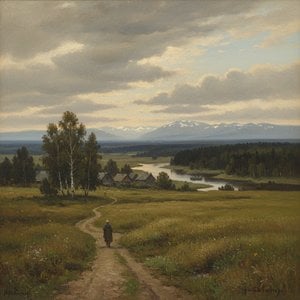
Discover 'Vesper Chimes' by Isaac Levitan – a serene Russian landscape painting capturing a peaceful monastery scene bathed in golden sunset light. A masterpiece of mood and tranquility.

Rusya manzarasının ruhunu yakalayan İsak Levitan’ın ikonik eserlerini keşfedin; özellikle Şehrin Çeşmesi ve İlkbahar Taşkını gibi yapıtlarıyla sanat tarihine yön verdi.

El Yapımı Yağlı Boya Reproduksiyon

Sanatçılarımız tarafından sipariş üzerine hazırlanan; istediğiniz boyut ve çerçevede, tuval üzerine el boyaması yağlı boya. ( Baskı Moduna Geç Dijital Görsele Geç)

P118B $10
P118H $10
P118W $10
P438Z $10
P508JH $12
P508YH $12
P805H $10
P805Z $10
P919BZ $10
P919G $10
P919XJ $10
P959ZH $10
P968JZ $12
W106C $8
W218G $10
W218JH $8
W218Y $10
W307PJ $10
W316G $10
W316PJ $8
W316Y $10
W398PJ $8
W4111J $10
W500HY $15
W500JH $15
W692G $12
W849H $8
W940BG $15
W953PJ $8

Standart
kişiye özel
CM
INCH

Eserin orijinal oranlarıyla uyumlu, önceden belirlenmiş boyutlarımız arasından seçim yapın.

genişlik
yükseklik

Belirli bir çerçeveye veya alana uyması için kendi boyutlarınızı girebilirsiniz. Seçtiğiniz boyut orijinal görüntünün oranlarıyla eşleşmiyorsa, sanat eserini kırparak veya ek el boyaması öğelerle resmi uzatarak ayarlayacağız. Üretim başlamadan önce onayınız için dijital bir taslak gönderilecektir.
Lütfen ekrandaki önizlemenin gerçek kırpmayı veya uzatmayı yansıtmadığını unutmayın. Nihai kompozisyonu yalnızca hazırlanan taslak doğru şekilde gösterecektir.
Özel boyutlar mevcut olsa da, orijinal oranları korumak adına önceden tanımlanmış listeden bir boyut seçmenizi öneririz.

Değiştirilebilecek örneklere dair: Yüzün müşteri fotoğrafıyla değiştirilmesi; Evcil hayvan eklenmesi (örneğin kedinin köpek ile değiştirilmesi); Arka plana gizli bir mesaj dahil edilmesi; Arka plan manzarasının veya öğelerinin değiştirilmesi.
Siparişten sonra, WahooArt.com ekibi talimatlar için müşteriye e-posta gönderecek ve bir taslak önizleme sunacaktır

Dünya Çapında Teslimat (); standart 5 hafta yerine 3/4 haftada. (23 Eylül). Kaliteden ödün verilmez.

why_choose_icon
Dünya Çapında Ücretsiz Ekspres Kargo
why_choose_icon
Yüksek Kaliteli Keten Tuval
why_choose_icon
Tam Kapsamlı Nakliye Sigortası
why_choose_icon
Gümrük Vergisi İade Garantisi
why_choose_icon
Gerçek Renk Uyumu Garantisi
why_choose_icon
100 Günlük İade Politikası (Sadece Kusurlu Ürünler İçin)
why_choose_icon
%100 Para İade Garantisi
why_choose_icon
Toplu Alım İndirimi

Toplam Fiyat

$ 272

reproduction

Vesper chimes

Reproduksiyon Tekniği

Reproduksiyon Boyutu

-

Toplam Tutar

$ 272

Hızlı Bilgiler

  • Notable elements: River scene, boats
  • Dimensions: 87 x 108 cm
  • Influences: Russian landscape
  • Artistic style: Realism
  • Artist: Isaak Levitan
  • Year: 1892
  • Subject or theme: Landscape, tranquility

Sanat Bilgisi Testi

Her soru için yalnızca bir doğru cevap bulunmaktadır.

Soru 1:
What is the primary subject depicted in Isaak Levitan’s ‘Vesper Chimes’?
Soru 2:
In what year was ‘Vesper Chimes’ painted?
Soru 3:
Where is ‘Vesper Chimes’ currently housed?
Soru 4:
What artistic style is most closely associated with Isaak Levitan’s work?
Soru 5:
The painting utilizes a technique to create a sense of movement and energy. What is this technique?

Vesper Chimes: A Russian Soul Captured in Light

Isaac Levitan’s “Vesper Chimes,” painted in 1892, isn't merely a landscape; it’s a distillation of the Russian soul—a poignant meditation on solitude, spirituality, and the ephemeral beauty of twilight. This oil-on-canvas masterpiece, currently residing within the hallowed halls of the Tretyakov Gallery in Moscow, invites viewers into a serene world where nature whispers secrets and time seems to slow to a contemplative pace. Levitan, a master of the “mood landscape,” expertly captures not just what he saw but also the profound emotions evoked by the Russian countryside – a longing for peace, a connection to something larger than oneself, and an appreciation for the quiet grandeur of the natural world.

The scene unfolds along the banks of a gently flowing river, bathed in the golden hues of a setting sun. A small boat rests peacefully on the water’s surface, its presence suggesting a moment of respite, perhaps a solitary fisherman or a traveler seeking solace. In the background, a cluster of trees frames a distant church spire, rising like a beacon against the fading light. The composition is deliberately understated, prioritizing atmosphere and mood over dramatic detail. Levitan eschews sharp outlines and bold colors in favor of subtle gradations of tone and delicate brushwork, creating an illusion of depth and tranquility that draws the eye into the heart of the scene.

The Painter’s Technique: A Symphony of Light and Shadow

Levitan's skill as a landscape painter is particularly evident in his masterful manipulation of light. He doesn’t simply depict the sun setting; he embodies its warmth, its melancholy, and its transformative power. Notice how the golden light spills across the water, reflecting in shimmering patterns that dance with the ripples. The trees are rendered with a delicate touch, their branches silhouetted against the vibrant sky, while the distant church is softened by the haze of twilight. Levitan’s brushstrokes are loose and expressive, conveying a sense of movement and spontaneity—as if he were capturing a fleeting moment in time. He employed an impasto technique, building up layers of paint to create texture and depth, particularly noticeable in the foliage and the reflections on the water.

The painting’s color palette is restrained yet remarkably evocative. Dominated by warm yellows, oranges, and browns—the colors of a dying sun—it's subtly punctuated by cool blues and greens that hint at the approaching night. This careful balance creates a sense of harmony and tranquility, reflecting the stillness of the scene. The use of atmospheric perspective – where distant objects appear paler and less distinct – further enhances the painting’s depth and realism.

Symbolism and Context: Echoes of Russian Spirituality

“Vesper Chimes” is more than just a pretty picture; it's imbued with symbolic meaning. The church spire, rising above the landscape, represents faith, hope, and spiritual connection—a common theme in Russian art. The solitary boat suggests introspection and contemplation, inviting the viewer to pause and reflect on their own place within the vastness of nature. The title itself, “Vesper Chimes,” evokes a sense of evening prayer and quiet reverence – a time for reflection and communion with the divine.

Painted in 1892, during a period of significant social and political change in Russia, the painting reflects a growing interest in traditional values and spirituality. Levitan’s work resonated deeply with his contemporaries, who sought solace and meaning in the beauty of the Russian countryside. His paintings often explored themes of rural life, nature, and the human condition—themes that continue to resonate with viewers today.

A Timeless Masterpiece: Reproduction and Beyond

“Vesper Chimes” remains one of Isaac Levitan’s most beloved works, celebrated for its exquisite beauty and profound emotional impact. Reproductions offer a wonderful opportunity to bring this timeless masterpiece into your home or office—a source of inspiration and tranquility. When selecting a reproduction, consider the quality of materials used and the attention to detail paid in recreating Levitan's delicate brushwork and atmospheric effects. A high-quality print will capture the essence of the original painting, allowing you to experience its beauty and serenity firsthand.

For those seeking to delve deeper into the life and work of Isaac Levitan, we encourage you to visit the Tretyakov Gallery in Moscow or explore online resources such as Wikipedia and WikiArt.org. “Vesper Chimes” is a testament to the power of art to transport us to another time and place—a reminder of the beauty and wonder that can be found in the simplest of moments.


Sanatçı Özgeçmişi

A Symphony of the Russian Soul: The Life and Art of Isaak Ilyich Levitan

Isaak Ilyich Levitan, a name synonymous with the evocative power of Russian landscape painting, was more than just a chronicler of nature; he was a poet of the land, a translator of its moods into visual form. Born in 1860 in Kibarty (present-day Lithuania) to a Jewish family who later settled in Moscow, Levitan’s life was marked by both profound hardship and an unwavering dedication to his art. The early loss of his mother and father instilled within him a sensitivity that would permeate his canvases with a melancholic beauty—a beauty born from sorrow but illuminated by an enduring love for the Russian wilderness. He entered the Moscow School of Painting, Sculpture and Architecture in 1873, where he came under the tutelage of Alexei Savrasov, whose influence would prove pivotal in shaping Levitan’s artistic vision. It was Savrasov who nurtured his student's innate ability to capture not merely the appearance of nature, but its very essence—its atmosphere, its emotional resonance.

The Birth of a ‘Mood Landscape’

Levitan swiftly distinguished himself as an artist capable of conveying profound emotion through landscape. He wasn’t interested in topographical accuracy for its own sake; rather, he sought to imbue his paintings with a sense of *mood*, a feeling that resonated deep within the viewer's soul. This approach earned him the title of pioneer of the “mood landscape,” a genre that moved beyond simple representation to explore the spiritual connection between humanity and nature. His palette was often subdued, favoring naturalistic colors and poetic elements over vibrant displays—colors chosen with meticulous care to convey subtle shades of emotion. He masterfully employed light and shadow, creating atmospheric effects that evoked feelings of tranquility, solitude, or even quiet despair. Consider *Autumn Day. Sokolniki* (1879), painted when he was just nineteen years old; the painting’s muted tones—ochres, browns, yellows—are skillfully blended to create a sense of wistful nostalgia, hinting at the transience of beauty and the inevitability of change. The delicate rendering of light captures the fleeting moments of autumn sunlight filtering through the trees, conveying a profound awareness of time's passage.

Influences and Artistic Kinships

While deeply indebted to Savrasov’s influence, Levitan was also receptive to other artistic currents. He collaborated with fellow artists like Konstantin Korovin, Mikhail Nesterov, and Nikolai Chekhov—the brother of the renowned playwright Anton Chekhov, who became a lifelong friend. This circle fostered an environment of creative exchange and mutual support; they debated ideas, critiqued each other’s work, and shared a common passion for exploring the expressive potential of Russian landscape painting. He admired Vasily Polenov's meticulous observation of detail and his ability to convey both beauty and solemnity—qualities that Levitan himself sought to emulate in his own paintings. Furthermore, he was profoundly moved by the music of Frédéric Chopin, whose melodies inspired him to capture similar feelings of melancholy and longing on canvas. The influence of these collaborations and experiences can be seen in works like *The Vladimirka Road* (1892) and *Eternal Rest* (1894)—paintings that exemplify Levitan’s distinctive style and his deepening understanding of the emotional landscape.

Major Achievements and Recognition

In 1897, Levitan achieved a significant milestone in his artistic career when he was elected to the Imperial Academy of Arts—a testament to his growing stature within the Russian art world and a recognition of his unwavering commitment to his craft. This honor solidified his position as one of Russia’s foremost landscape painters and ensured that his legacy would endure for generations to come. He subsequently became head of the landscape studio at his alma mater in 1898, dedicating himself to nurturing the talent of aspiring artists and shaping the future direction of Russian landscape painting. His tireless efforts to educate and inspire contributed significantly to the preservation and dissemination of Levitan’s artistic vision—a vision that continues to captivate audiences today.

Legacy and Enduring Resonance

Levitan's paintings remain a poignant reminder of Russia’s spiritual heritage, capturing the sublime beauty of its landscapes with unparalleled sensitivity and grace. His ability to convey profound emotion through simple forms and muted colors established him as a pioneer of the “mood landscape,” influencing countless artists who followed in his footsteps. As a symbol of melancholy and contemplation—a reflection of the Russian soul—Levitan’s work continues to resonate deeply with viewers across cultures and generations. In 1941, a solemn ceremony honored his memory when his remains were moved to the Novodevichy Cemetery in Moscow—a poignant gesture of remembrance alongside Anton Chekhov—two artistic kindred spirits who captured the essence of their time and place with extraordinary eloquence. Isaak Ilyich Levitan’s contribution to Russian art is undeniable; he transformed landscape painting into a vehicle for spiritual expression, securing his place as one of Russia's most beloved and influential artists.
İsaak İlyiş Levitan

İsaak İlyiş Levitan

1860 - 1900 , Rusya

Kısa Bilgiler

  • Artistic Movement Or Style: Mood Lanskapesi
  • Artists Or Movements Influenced By This Artist: ['Rusya Lanskapisti']
  • Artists Who Influenced This Artist:
    • Alexei Savrasov
    • Vasily Polenov
  • Date Of Birth: August 30, 1860
  • Date Of Death: July 22, 1900
  • Full Name: Isaak Ilyich Levitan
  • Nationality: Rusya
  • Notable Artworks:
    • Autumn Günü. Sokolniki
    • Vladimirka Yolu
    • Ebedi Din
    • İlkbahar Çölü
    • Şimşek Günü
  • Place Of Birth: Kibarty, Lithuania
Temalara, stillere ve özelliklere göre düzenlenmiş sanat eserlerini keşfedin.