Önizle AR ile önizle Baskı Satışına Geç Dijital Görsel Satışına Geç Gönder
Detaylar Rehber Favorilere ekle Dosyayı İndir Benzerleri X-Işını Slayt Gösterisi Q&A İstatistikler

March

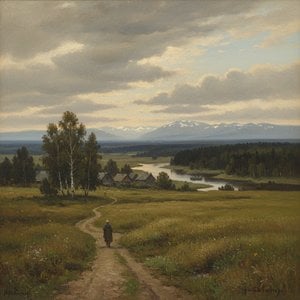
Experience the serene beauty of Isaac Levitan's 'March.' This iconic Russian landscape painting captures a snowy winter scene with remarkable detail and evokes a sense of peaceful solitude.

Rusya manzarasının ruhunu yakalayan İsak Levitan’ın ikonik eserlerini keşfedin; özellikle Şehrin Çeşmesi ve İlkbahar Taşkını gibi yapıtlarıyla sanat tarihine yön verdi.

El Yapımı Yağlı Boya Reproduksiyon

Sanatçılarımız tarafından sipariş üzerine hazırlanan; istediğiniz boyut ve çerçevede, tuval üzerine el boyaması yağlı boya. ( Baskı Satışına Geç Dijital Görsel Satışına Geç)

Corner sample of the P118B picture frame: kalıplanmış polistiren, 5 cm wide and 3 cm thick
P118B ₺10
Corner sample of the P118H picture frame: kalıplanmış polistiren, 5 cm wide and 3 cm thick
P118H ₺10
Corner sample of the P118W picture frame: kalıplanmış polistiren, 5 cm wide and 3 cm thick
P118W ₺10
Corner sample of the P438Z picture frame: kalıplanmış polistiren, 5.5 cm wide and 3.5 cm thick
P438Z ₺10
Corner sample of the P508JH picture frame: kalıplanmış polistiren, 7 cm wide and 3.5 cm thick
P508JH ₺12
Corner sample of the P508YH picture frame: kalıplanmış polistiren, 7 cm wide and 3.5 cm thick
P508YH ₺12
Corner sample of the P805H picture frame: kalıplanmış polistiren, 5 cm wide and 3.5 cm thick
P805H ₺10
Corner sample of the P805Z picture frame: kalıplanmış polistiren, 5 cm wide and 3.5 cm thick
P805Z ₺10
Corner sample of the P919BZ picture frame: kalıplanmış polistiren, 7 cm wide and 3.5 cm thick
P919BZ ₺10
Corner sample of the P919G picture frame: kalıplanmış polistiren, 7 cm wide and 3.5 cm thick
P919G ₺10
Corner sample of the P919XJ picture frame: kalıplanmış polistiren, 7 cm wide and 3.5 cm thick
P919XJ ₺10
Corner sample of the P959ZH picture frame: kalıplanmış polistiren, 5 cm wide and 3 cm thick
P959ZH ₺10
Corner sample of the P968JZ picture frame: kalıplanmış polistiren, 6 cm wide and 4 cm thick
P968JZ ₺12
Corner sample of the W106C picture frame: masif ahşap, 5 cm wide and 3 cm thick
W106C ₺8
Corner sample of the W218G picture frame: masif ahşap, 5 cm wide and 3 cm thick
W218G ₺10
Corner sample of the W218JH picture frame: masif ahşap, 5 cm wide and 3 cm thick
W218JH ₺8
Corner sample of the W218Y picture frame: masif ahşap, 5 cm wide and 3 cm thick
W218Y ₺10
Corner sample of the W307PJ picture frame: masif ahşap, 6 cm wide and 3 cm thick
W307PJ ₺10
Corner sample of the W316G picture frame: masif ahşap, 6 cm wide and 3 cm thick
W316G ₺10
Corner sample of the W316PJ picture frame: masif ahşap, 6 cm wide and 3 cm thick
W316PJ ₺8
Corner sample of the W316Y picture frame: masif ahşap, 6 cm wide and 3 cm thick
W316Y ₺10
Corner sample of the W398PJ picture frame: masif ahşap, 5 cm wide and 3 cm thick
W398PJ ₺8
Corner sample of the W4111J picture frame: masif ahşap, 6.5 cm wide and 3.5 cm thick
W4111J ₺10
Corner sample of the W500HY picture frame: masif ahşap, 7 cm wide and 5 cm thick
W500HY ₺15
Corner sample of the W500JH picture frame: masif ahşap, 7 cm wide and 5 cm thick
W500JH ₺15
Corner sample of the W692G picture frame: masif ahşap, 8 cm wide and 4 cm thick
W692G ₺12
Corner sample of the W849H picture frame: masif ahşap, 5 cm wide and 3 cm thick
W849H ₺8
Corner sample of the W940BG picture frame: masif ahşap, 7.5 cm wide and 4.5 cm thick
W940BG ₺15
Corner sample of the W953PJ picture frame: masif ahşap, 6 cm wide and 3.5 cm thick
W953PJ ₺8

Standart Boyutlar
özel boyutlu
CM
INCH

Eserin orijinal oranlarıyla uyumlu, önceden belirlenmiş boyutlarımız arasından seçim yapın.

genişlik
yükseklik

Çerçevenize veya duvarınıza uygun olması için ihtiyacınız olan genişliği ve yüksekliği yazın. Bu eser el boyamasıdır; bu nedenle farklı bir formdaki boyutlar için sanatçı, resmin etrafına biraz daha fazla boya ekleyebilir veya biraz daha kırpabilir — seçim sizin. Boyama işlemi başlamadan önce onaylamanız için size bir dijital taslak gönderiyoruz. Bu sayfada gösterilen resim gerçek sonucu yansıtmamaktadır — gerçek sonucu yalnızca taslak göstermektedir.

Değiştirilebilecek örneklere dair: Yüzün müşteri fotoğrafıyla değiştirilmesi; Evcil hayvan eklenmesi (örneğin kedinin köpek ile değiştirilmesi); Arka plana gizli bir mesaj dahil edilmesi; Arka plan manzarasının veya öğelerinin değiştirilmesi.
Siparişten sonra, WahooArt.com ekibi talimatlar için müşteriye e-posta gönderecek ve bir taslak önizleme sunacaktır

Dünya Çapında Teslimat (); standart 5 hafta yerine 3/4 haftada. (28 Ekim). Kaliteden ödün verilmez.

Dünya Çapında Ücretsiz Ekspres Kargo
Yüksek Kaliteli Keten Tuval
Tam Nakliye Sigortası
Gümrük Vergisi İadesi Garantisi
Gerçek Renk Uyumu Garantisi
100 Günlük İade Koşulları (Sadece Üretim Hatalı Ürünler İçin)
%100 Para İade Garantisi
Toplu Alım Avantajı

Toplam Fiyat

₺ 13333

March

Baskı Tekniği

Baskı Boyutu

-

Toplam Fiyat

₺ 13333

Kısa Bilgiler

  • Artist: Isaak Levitan
  • Influences: Impressionism
  • Notable elements: Snowy road, dog, trees
  • Title: March
  • Location: Tretyakov Gallery, Moscow
  • Medium: Oil on Canvas

Sanat Bilgisi Testi

Her soru için yalnızca bir doğru cevap bulunmaktadır.

Soru 1:
What is the primary subject of Isaac Levitan’s painting, ‘March’?
Soru 2:
In what year was Isaac Levitan’s painting ‘March’ created?
Soru 3:
Which artistic movement is most closely associated with Isaac Levitan’s style?
Soru 4:
The painting ‘March’ depicts a scene set in which region of Russia?
Soru 5:
What medium did Levitan primarily use to create ‘March’?

The Essence of Russian Moodscapes

Isaac Ilyich Levitan's "March" isn't merely a depiction of a winter landscape; it’s a profound distillation of the Russian soul, captured in oil on canvas with an almost palpable sense of melancholy and quiet contemplation. Painted in 1895 during his time in the Gorka estate near Vyshnevolotsky, this work embodies Levitan's signature style – what he himself termed “mood landscapes.” He wasn’t interested in grand vistas or dramatic events; instead, he sought to convey the emotional atmosphere of a place, imbuing it with a feeling that resonated deeply within him. The painting isn’t about the coldness of winter, but rather the introspection and solitude it evokes – a theme central to much of his oeuvre.

A Symphony of Light and Color

Levitan's masterful technique is immediately apparent in "March." He employs a restrained palette dominated by muted blues, greys, and browns, punctuated by subtle hints of ochre and the stark white of the snow. The light, diffused and soft, seems to emanate from an unseen source, bathing the scene in a gentle glow. Notice how he builds up layers of paint – delicate washes for the sky, textured strokes for the trees, and precise details for the dog and the distant house. This layering creates a remarkable sense of depth and atmosphere, drawing the viewer into the heart of the winter landscape. The brushwork is loose and expressive, reflecting the artist’s emotional response to his subject matter – not a photographic representation, but an interpretation.

Historical Context: Levitan and the Peredvizhniki

To fully appreciate "March," it's crucial to understand its place within the broader context of Russian art at the end of the 19th century. Levitan was a key figure in the *Peredvizhniki* (Wanderers), a group of artists who rejected the academic traditions of the Imperial Academy of Arts and instead sought to depict everyday life and rural Russia with honesty and empathy. The *Peredvizhniki* championed realism, often focusing on scenes of hardship and social injustice, but Levitan’s work transcends mere social commentary. He was deeply influenced by the Barbizon School in France, particularly their emphasis on capturing the essence of nature through light and color. His connection to Chekhov, a prominent writer of the time, further shaped his artistic vision – both men shared a sensitivity to the beauty and melancholy of the Russian landscape.

Symbolism and Emotional Resonance

The inclusion of the dog, walking along the snow-covered road, is particularly evocative. It represents not just companionship but also a sense of journey and perhaps even loneliness. The distant house suggests a refuge, a place of warmth and security, yet it’s dwarfed by the vastness of the winter landscape, reinforcing the feeling of isolation. The two birds, perched high in the trees, offer a fleeting moment of beauty and hope amidst the prevailing stillness. "March" isn't simply a winter scene; it’s an exploration of human emotions – solitude, longing, and the quiet dignity of existence—a reflection on the Russian soul itself.

A Legacy of Moodscapes

“March” stands as one of Levitan’s most celebrated works, exemplifying his unique ability to capture the emotional heart of the Russian landscape. It's a testament to his profound understanding of light, color, and atmosphere, and his remarkable sensitivity to the human condition. Reproductions of this painting continue to resonate with viewers today, offering a glimpse into a world of quiet beauty and enduring contemplation. It’s a piece that invites us to slow down, breathe deeply, and connect with the timeless power of nature.

Soru ve Cevaplar

"March" adlı eser, İsaak İlyiş Levitan'in gelişiminin hangi aşamasını temsil ediyor?

"March", İsaak İlyiş Levitan kariyerinin Mature Period dönemine aittir. Bu sınıflandırma, eseri sanatçının gelişim süreciyle ilişkilendirir.

İsaak İlyiş Levitan hangi takma adlar veya alternatif isimlerle tanınmaktadır?

İsaak İlyiş Levitan aynı zamanda Isaak İlyiş Levitan, Levitan olarak da bilinir.

İsaak İlyiş Levitan imzalı "March" ne kadar tanınıyor?

İsaak İlyiş Levitan imzalı "March" için kaydedilen popülerlik seviyesi Recognized'dir.


Sanatçı Biyografisi

A Symphony of the Russian Soul: The Life and Art of Isaak Ilyich Levitan

Isaak Ilyich Levitan, a name synonymous with the evocative power of Russian landscape painting, was more than just a chronicler of nature; he was a poet of the land, a translator of its moods into visual form. Born in 1860 in Kibarty (present-day Lithuania) to a Jewish family who later settled in Moscow, Levitan’s life was marked by both profound hardship and an unwavering dedication to his art. The early loss of his mother and father instilled within him a sensitivity that would permeate his canvases with a melancholic beauty—a beauty born from sorrow but illuminated by an enduring love for the Russian wilderness. He entered the Moscow School of Painting, Sculpture and Architecture in 1873, where he came under the tutelage of Alexei Savrasov, whose influence would prove pivotal in shaping Levitan’s artistic vision. It was Savrasov who nurtured his student's innate ability to capture not merely the appearance of nature, but its very essence—its atmosphere, its emotional resonance.

The Birth of a ‘Mood Landscape’

Levitan swiftly distinguished himself as an artist capable of conveying profound emotion through landscape. He wasn’t interested in topographical accuracy for its own sake; rather, he sought to imbue his paintings with a sense of *mood*, a feeling that resonated deep within the viewer's soul. This approach earned him the title of pioneer of the “mood landscape,” a genre that moved beyond simple representation to explore the spiritual connection between humanity and nature. His palette was often subdued, favoring naturalistic colors and poetic elements over vibrant displays—colors chosen with meticulous care to convey subtle shades of emotion. He masterfully employed light and shadow, creating atmospheric effects that evoked feelings of tranquility, solitude, or even quiet despair. Consider *Autumn Day. Sokolniki* (1879), painted when he was just nineteen years old; the painting’s muted tones—ochres, browns, yellows—are skillfully blended to create a sense of wistful nostalgia, hinting at the transience of beauty and the inevitability of change. The delicate rendering of light captures the fleeting moments of autumn sunlight filtering through the trees, conveying a profound awareness of time's passage.

Influences and Artistic Kinships

While deeply indebted to Savrasov’s influence, Levitan was also receptive to other artistic currents. He collaborated with fellow artists like Konstantin Korovin, Mikhail Nesterov, and Nikolai Chekhov—the brother of the renowned playwright Anton Chekhov, who became a lifelong friend. This circle fostered an environment of creative exchange and mutual support; they debated ideas, critiqued each other’s work, and shared a common passion for exploring the expressive potential of Russian landscape painting. He admired Vasily Polenov's meticulous observation of detail and his ability to convey both beauty and solemnity—qualities that Levitan himself sought to emulate in his own paintings. Furthermore, he was profoundly moved by the music of Frédéric Chopin, whose melodies inspired him to capture similar feelings of melancholy and longing on canvas. The influence of these collaborations and experiences can be seen in works like *The Vladimirka Road* (1892) and *Eternal Rest* (1894)—paintings that exemplify Levitan’s distinctive style and his deepening understanding of the emotional landscape.

Major Achievements and Recognition

In 1897, Levitan achieved a significant milestone in his artistic career when he was elected to the Imperial Academy of Arts—a testament to his growing stature within the Russian art world and a recognition of his unwavering commitment to his craft. This honor solidified his position as one of Russia’s foremost landscape painters and ensured that his legacy would endure for generations to come. He subsequently became head of the landscape studio at his alma mater in 1898, dedicating himself to nurturing the talent of aspiring artists and shaping the future direction of Russian landscape painting. His tireless efforts to educate and inspire contributed significantly to the preservation and dissemination of Levitan’s artistic vision—a vision that continues to captivate audiences today.

Legacy and Enduring Resonance

Levitan's paintings remain a poignant reminder of Russia’s spiritual heritage, capturing the sublime beauty of its landscapes with unparalleled sensitivity and grace. His ability to convey profound emotion through simple forms and muted colors established him as a pioneer of the “mood landscape,” influencing countless artists who followed in his footsteps. As a symbol of melancholy and contemplation—a reflection of the Russian soul—Levitan’s work continues to resonate deeply with viewers across cultures and generations. In 1941, a solemn ceremony honored his memory when his remains were moved to the Novodevichy Cemetery in Moscow—a poignant gesture of remembrance alongside Anton Chekhov—two artistic kindred spirits who captured the essence of their time and place with extraordinary eloquence. Isaak Ilyich Levitan’s contribution to Russian art is undeniable; he transformed landscape painting into a vehicle for spiritual expression, securing his place as one of Russia's most beloved and influential artists.
İsaak İlyiş Levitan

İsaak İlyiş Levitan

1860 - 1900 , Rusya

Kısa Bilgiler

  • Artistic Movement Or Style: Mood Lanskapesi
  • Artists Or Movements Influenced By This Artist: ['Rusya Lanskapisti']
  • Artists Who Influenced This Artist:
    • Alexei Savrasov
    • Vasily Polenov
  • Date Of Birth: August 30, 1860
  • Date Of Death: July 22, 1900
  • Full Name: Isaak Ilyich Levitan
  • Nationality: Rusya
  • Notable Artworks:
    • Autumn Günü. Sokolniki
    • Vladimirka Yolu
    • Ebedi Din
    • İlkbahar Çölü
    • Şimşek Günü
  • Place Of Birth: Kibarty, Lithuania
Temalara, stillere ve özelliklere göre gruplandırılmış sanat eserlerini keşfedin.