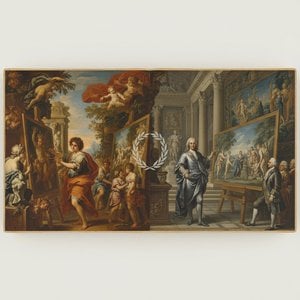
The Sun King’s Gaze: Hyacinthe Rigaud's Portrait of Louis XIV
Hyacinthe Rigaud’s 1701 portrait of Louis XIV is more than just a likeness; it’s a carefully constructed declaration of power, an embodiment of the absolute monarchy that defined France under the Sun King. This monumental oil on canvas, measuring a commanding 238 x 149 cm and currently residing in the Musée du Louvre, transcends the conventions of portraiture to become a potent symbol of regal authority and enduring artistic mastery. Rigaud, a master of his craft who rose through the ranks of the Académie Royale de Peinture et de Sculpture, didn’t simply paint a king; he sculpted an image, meticulously crafting a visual narrative that resonated with the grandeur and ambition of Louis XIV himself.
A Baroque Masterpiece: Style and Technique
Rigaud's style is distinctly Baroque, a period characterized by dramatic contrasts, opulent detail, and a heightened sense of theatricality. The portrait exemplifies this perfectly, utilizing a masterful interplay of light and shadow – *chiaroscuro* – to sculpt Louis XIV’s form and imbue the scene with an almost divine quality. Notice how Rigaud expertly employs a deep, rich background, receding into a hazy landscape that emphasizes the king's imposing presence. The use of gold leaf and shimmering fabrics further amplifies this effect, creating a sense of luxurious abundance. The meticulous rendering of textures – the velvet of the robe, the sheen of the armor, the delicate embroidery – speaks to Rigaud’s unparalleled attention to detail and his commitment to capturing the very essence of material wealth and royal status. The composition itself is carefully balanced, drawing the eye directly to Louis XIV's face, a study in regal composure and unwavering confidence.
Symbolism Woven into the Canvas: Royal Authority and Divine Right
Beyond its technical brilliance, the portrait is laden with symbolism. The most immediately striking element is, of course, Louis XIV’s attire – a magnificent coronation robe adorned with the fleur-de-lis, the emblem of French royalty. This isn't merely decorative; it’s a visual assertion of his divine right to rule, suggesting that he was chosen by God himself to govern France. The elaborate armor, a symbol of military prowess and leadership, underscores Louis XIV’s role as both a warrior king and a protector of his realm. The column behind him is not just a backdrop; it represents the stability and strength of the French monarchy, a solid foundation upon which his reign was built. Even the pose itself – standing tall, with his gaze fixed directly at the viewer – conveys an air of authority and command, inviting the audience to acknowledge his supreme position.
A Window into 18th-Century France: Fashion, Power, and Legacy
The portrait offers a fascinating glimpse into the fashion, culture, and political landscape of 18th-century France. Rigaud’s meticulous depiction of Louis XIV's clothing – the voluminous robes, the elaborate lace collars, the towering wig – reflects the prevailing trends of the era, demonstrating that fashion was not merely about aesthetics but also a powerful tool for projecting status and reinforcing social hierarchies. Furthermore, the portrait served as a crucial propaganda piece, solidifying Louis XIV’s image as an enlightened ruler who presided over a golden age of French culture and power. It's a testament to Rigaud’s skill that this single painting continues to captivate audiences centuries later, offering a tangible connection to one of history’s most influential monarchs.
Recreating the Majesty: High-Quality Reproductions
At WahooArt.com, we are proud to offer meticulously crafted oil painting reproductions of Hyacinthe Rigaud's iconic portrait of Louis XIV. Utilizing traditional techniques and archival-quality materials, our artisans recreate every detail with exceptional accuracy, ensuring that you can own a stunning piece of art history in your own home. Whether you’re an art enthusiast, a collector, or simply seeking to add a touch of regal elegance to your interior design, our reproduction captures the spirit and grandeur of this timeless masterpiece. Explore our collection today and bring the Sun King's gaze into your world.



 Önizleme yap
 Baskı Moduna Geç
 Paylaş
 Paylaş
 Detayları Gör

 İndir
İndir
 Benzerlerini gör
 X-Işını
 Slayt Gösterisi
 İstatistikler


 Tümünü Gör






































 Cam seçeneği yalnızca 110 cm altındaki boyutlar için mevcuttur.