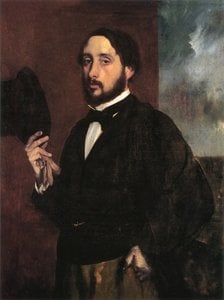
The Chorus: A Window into Parisian Drama
Edgar Degas’s “The Chorus,” painted in 1876, is more than just a depiction of a theatrical scene; it's a vibrant snapshot of modern life captured with the artist’s signature blend of observation and expressive brushwork. This oil on canvas transports us to the heart of late 19th-century Paris, where the energy of the theater – its drama, anticipation, and fleeting moments – is powerfully rendered. The painting immediately draws the eye to a group of figures engaged in what appears to be a rehearsal or performance, their postures conveying both seriousness and playful engagement. Degas’s genius lies not just in his subject matter but in his ability to imbue it with a palpable sense of movement and emotion.
Impressionist Technique and Composition
- Light and Shadow: Degas masterfully employs light and shadow, characteristic of the Impressionist style, to create depth and dimensionality within the crowded stage. The strategic use of highlights illuminates key figures, drawing attention to their expressions and gestures while subtly obscuring others in a hazy atmosphere.
- Bold Brushstrokes: The painting is defined by its bold, expressive brushstrokes – a hallmark of Degas’s technique. These aren't delicate washes but rather confident marks that convey a sense of immediacy and movement. They ripple across the canvas, suggesting not just the physical presence of the performers but also their energy and passion.
- Dynamic Composition: The composition itself is deliberately dynamic, with figures arranged in diagonals and overlapping planes. This creates a visual tension and prevents the scene from feeling static or posed. It mirrors the inherent chaos and excitement of a theatrical performance.
Historical Context and Degas’s Vision
Created during a period of significant social and artistic change, “The Chorus” reflects Degas's fascination with modern life – particularly the world of dance and entertainment. While often associated with Impressionism, Degas resisted being fully categorized within the movement, preferring to focus on his meticulous observation of reality. He was deeply interested in capturing fleeting moments and portraying subjects with an unflinching honesty, as evidenced by his numerous studies of racehorses and jockeys. The painting’s subject matter – a rehearsal for a theatrical production – speaks to the burgeoning entertainment industry of Paris during this time, reflecting the city's embrace of new forms of artistic expression.
Symbolism and Emotional Impact
The figures in “The Chorus” are not merely static representations; they possess a quiet dignity and intensity. The swords held by some men suggest a potential for conflict or dramatic action, adding to the overall sense of suspense. Degas’s focus on the performers' expressions – their concentration, anticipation, and perhaps even weariness – invites us to contemplate the dedication and sacrifices involved in pursuing an artistic career. Ultimately, “The Chorus” is a powerful meditation on performance, identity, and the human condition, offering a glimpse into a pivotal moment in art history.



 Önizleme yap
 Baskı Moduna Geç
 Paylaş
 Paylaş
 Detayları Gör
 Rehber

 İndir
İndir
 Benzerlerini gör
 X-Işını
 Slayt Gösterisi
 İstatistikler

 Tümünü Gör






































 Cam seçeneği yalnızca 110 cm altındaki boyutlar için mevcuttur.