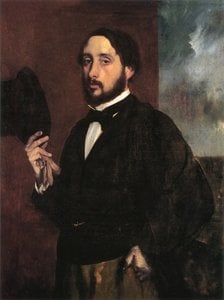
Melancholy: A Study in Quietude by Hilaire Germain Edgar Degas
Hilaire Germain Edgar Degas’s “Melancholy,” painted circa 1860, is more than just a portrait; it's a carefully constructed meditation on mood and the subtle complexities of human emotion. This captivating work, depicting an unidentified woman in rich red attire, reveals Degas’s masterful ability to evoke intimacy and solemnity through restrained composition and nuanced observation. While the precise narrative behind the subject remains elusive – likely reflecting the artist’s preference for formal calm over explicit interior life – the painting resonates with a profound sense of quiet contemplation, a hallmark of Degas's artistic vision.
- Subject & Composition: The central figure, a woman gazing downward with a slightly tilted head, dominates the canvas. Her partially obscured face, framed by flowing hair, adds to the air of mystery and vulnerability. Two secondary figures – one on the right and another in the background – subtly enrich the scene, suggesting an environment of private conversation and shared experience, deepening the sense of intimacy.
- Color Palette & Technique: The dominant use of red in the woman’s clothing immediately draws the eye, creating a focal point while simultaneously hinting at passion or perhaps even sorrow. Degas's signature technique – characterized by loose brushstrokes and a focus on capturing fleeting moments – is evident in the rendering of fabric and form, contributing to the painting’s overall sense of movement and atmosphere.
Historical Context & Artistic Influences
Painted during a pivotal period in Degas's career, “Melancholy” reflects his evolving artistic sensibilities. Though often associated with Impressionism alongside artists like Monet and Renoir, Degas deliberately resisted this label, prioritizing realism and meticulous observation over the immediate effects of light and color. This commitment stemmed from his deep engagement with classical art, particularly the works he meticulously studied in the Louvre – a foundation that informed his approach to portraiture. The painting’s contemplative mood aligns with the artistic currents of the time, echoing the interest in psychological depth and emotional nuance prevalent within French Salon painting.
Interestingly, Duncan Phillips frequently displayed similar intimate portraits by Bonnard and Vuillard alongside “Melancholy,” suggesting a shared appreciation for the genre's capacity to evoke quiet contemplation. This association further solidifies Degas’s position as a key figure in the exploration of human emotion through portraiture.
Symbolism & Emotional Impact
The title itself, "Melancholy," is significant. While perhaps not consciously chosen by Degas – who favored neutral titles – it perfectly encapsulates the painting's dominant mood. The woman’s downward gaze and the overall atmosphere of solemnity suggest a profound sense of sadness or introspection. It’s a portrait that invites viewers to consider themes of loneliness, vulnerability, and the quiet suffering inherent in the human condition. Degas masterfully avoids sentimentality, instead offering a glimpse into a private moment of emotional depth.
Collecting & Appreciation
"Melancholy" remains a powerful example of Degas’s artistic genius, showcasing his ability to capture not just likeness but also the very essence of human emotion. A hand-painted reproduction offers an exceptional opportunity to bring this evocative work into your home or office – a testament to a master's profound understanding of light, form, and the complexities of the human spirit. Its timeless appeal makes it a valuable addition to any art collection or a striking focal point for interior design.



 Önizleme yap
 El yapımı tablo satın al
 Paylaş
 Paylaş
 Detayları Gör

 İndir
İndir
 Benzerlerini gör
 X-Işını
 Slayt Gösterisi
 İstatistikler

 Tümünü Gör






































 Cam seçeneği yalnızca 110 cm altındaki boyutlar için mevcuttur.