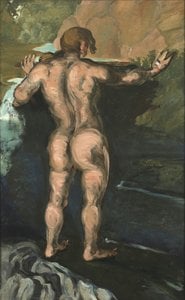
A Moment Frozen in Grace: Degas's "Dancers"
Edgar Degas’s “Dancers,” a captivating black and white drawing, offers an intimate glimpse into the world of movement and emotion that defined the artist’s oeuvre. The scene depicts two women engaged in a dance, their forms rendered with a remarkable sensitivity to gesture and posture – hallmarks of Degas's unique approach to depicting the human figure. Unlike many artists of his time who sought to capture idealized beauty, Degas was profoundly interested in portraying the *reality* of movement, particularly as it manifested in everyday life, often focusing on subjects outside the traditional salon settings.
- Subject Matter: The painting centers around two dancers, their interaction suggesting a shared moment of joy and connection.
- Composition: The placement of the figures – one to the left, the other to the right – creates a dynamic sense of space and directs the viewer’s eye across the composition.
- Color Palette: While rendered in monochrome, Degas masterfully utilizes tonal variations to define form and create depth, emphasizing the textures of the dancers' dresses and the surrounding foliage.
The Artist's Vision: Realism and Observation
Degas’s artistic identity was complex and often debated. Though frequently associated with Impressionism, he vehemently rejected the label, preferring to be considered a realist. This distinction stems from his painstaking observation of the world around him – not through fleeting impressions but through sustained study. He spent countless hours sketching dancers in rehearsal rooms and outdoor settings, meticulously documenting their movements and expressions. His goal wasn't simply to record what he saw; it was to capture the *essence* of movement itself, a challenge that required an unparalleled understanding of anatomy and gesture.
His fascination with dance extended beyond mere artistic interest. Degas himself was a passionate dancer, frequently attending performances at the Opéra Garnier. This personal engagement fueled his desire to accurately represent the physicality of dancers – their strained muscles, their poised stances, and the subtle shifts in weight that define movement. The drawing’s figures are not romanticized; they possess an undeniable sense of vulnerability and effort.
Technique and Style: A Masterclass in Line
Degas's technique is characterized by a remarkable control of line. He employed a combination of charcoal, chalk, and pastel to achieve a range of tonal values and textures. Notice the delicate rendering of the fabric – the way it clings to the dancers’ bodies, the folds created by their movements. His lines are not merely outlines; they convey volume, weight, and dynamism. The artist's use of broken lines—a technique he favored—adds to the sense of movement and immediacy, as if the figures were frozen in a fleeting moment of performance.
- Line Work: Degas’s mastery of line is central to his style, creating a dynamic and expressive representation of form.
- Texture: The artist meticulously renders textures – from the smooth skin of the dancers to the rough fabric of their dresses – adding depth and realism to the composition.
- Gesture: Degas’s ability to capture gesture is particularly evident in the figures' arms, which are raised above their heads in a graceful pose.
Symbolism and Emotional Impact
"Dancers" transcends a simple depiction of two women engaged in a dance; it speaks to universal themes of connection, joy, and the beauty of movement. The red and yellow dresses, though seemingly arbitrary, add a touch of vibrancy to the monochrome scene, further emphasizing the energy and vitality of the dancers. Degas’s work invites us to contemplate the ephemeral nature of performance and the enduring power of human expression. It is a testament to his ability to capture not just what he saw, but also how it *felt* – a profound appreciation for the beauty and grace inherent in the simplest of movements.



 Önizleme yap
 Switch to Print
 Paylaş
 Paylaş
 Detayları Gör

 İndir
İndir
 Benzerlerini gör
 X-Işını
 Slayt Gösterisi
 Stats
Stats


 Tümünü Gör