A Study in Quietude: Gustav Klimt’s “Portrait Study for Maria Ucicka” (1898)
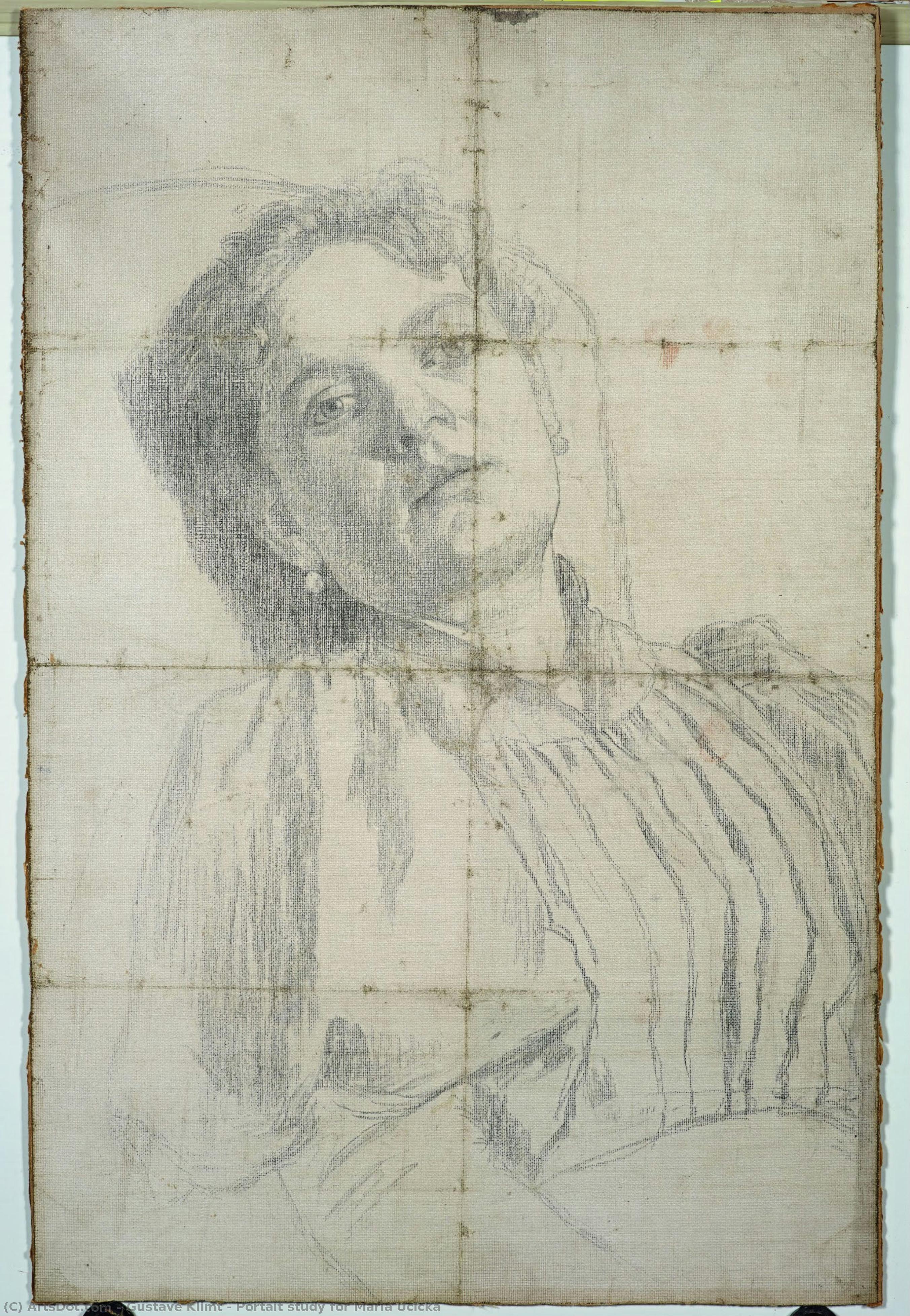
This intimate portrait study, executed by the visionary artist Gustav Klimt in 1898, offers a rare glimpse into the genesis of one of his most compelling works. More than just a preparatory sketch, it embodies Klimt’s burgeoning exploration of female psychology and his nascent fascination with decorative elements that would soon define his signature style. The painting depicts a young woman, identified as Maria Ucicka, gazing thoughtfully into the distance – an act of quiet contemplation rendered with remarkable sensitivity. The photograph itself captures the delicate texture of the original oil on canvas, revealing subtle brushstrokes and the ghosting of earlier layers, hinting at the evolution of Klimt’s ideas during this crucial period.
The Seeds of a Style: Early Influences and Artistic Development
Born in Baumgarten near Vienna in 1862, Gustav Klimt's artistic journey was shaped by a complex interplay of influences. His father, Ernst Klimt, a gold engraver, instilled within him an appreciation for luxurious materials and intricate detail – a fascination that would later manifest in the lavish use of gold leaf that became synonymous with his work. Klimt’s early training at the Vienna Kunstgewerbeschule provided him with a foundational understanding of technique, yet he quickly sought to transcend academic constraints, driven by an urgent need to express his own unique vision. This period saw him experimenting with Symbolism and Art Nouveau, absorbing elements from Japanese prints and Celtic art while simultaneously forging his distinctive path.
- Vienna’s Artistic Landscape: Klimt was part of a vibrant artistic community in Vienna at the end of the 19th century, alongside artists like Egon Schiele and Josef Makart.
- The Influence of Ornamentation: The study demonstrates an early interest in decorative patterns and their potential to convey deeper meaning – a key element that would dominate his mature style.
A Portrait of Inner Life: Symbolism and Psychological Depth
“Portrait Study for Maria Ucicka” is not merely a likeness; it’s an exploration of the sitter's inner world. The woman’s downward gaze, coupled with her pensive expression, suggests introspection and perhaps even melancholy. Klimt masterfully uses light and shadow to sculpt her face, emphasizing the delicate contours of her features and conveying a sense of vulnerability. The braided hair, a common motif in Klimt’s work, adds an element of elegance and timelessness, hinting at a connection to ancient traditions. The two figures in the background – a man and a woman – remain enigmatic, possibly representing the social context or emotional landscape surrounding Maria Ucicka.
Technique and Materiality: A Glimpse into Klimt’s Process
Executed in oil on canvas, this study reveals Klimt's meticulous approach to his craft. The loose brushwork and layering of colors suggest a process of experimentation and refinement. Notably, the use of muted tones – predominantly browns, greys, and ochres – creates a sense of intimacy and immediacy. While not as overtly opulent as his later works, this study foreshadows Klimt’s eventual embrace of gold leaf, demonstrating an early exploration of its transformative potential to imbue surfaces with both beauty and symbolic weight. The subtle variations in paint application—a delicate wash here, a bolder stroke there—speak volumes about the artist's considered hand.
WahooArt offers meticulously crafted reproductions of “Portrait Study for Maria Ucicka,” allowing you to experience the profound emotional resonance and artistic brilliance of this pivotal work by Gustav Klimt. Each reproduction is created using archival-quality materials, ensuring that the delicate nuances of the original are faithfully preserved, bringing a touch of Viennese mystique into your home or studio.


 Önizleme yap
 Baskı Moduna Geç
 Paylaş
 Paylaş
 Detayları Gör

 İndir
İndir
 Benzerlerini gör
 X-Işını
 Slayt Gösterisi
 İstatistikler


 Tümünü Gör






































 Cam seçeneği yalnızca 110 cm altındaki boyutlar için mevcuttur.