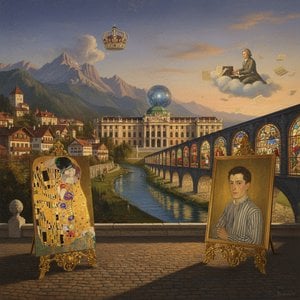
Erken Yaşamı ve Sanatsal Başlangıçlar
Gustav Klimt, 14 Temmuz 1862’de Viyana yakınlarında Baumgarten'de dünyaya geldi. Ailesi hem sanatsal eğilimlere hem de maddi zorluklara sahip bir aileydi. Babası Ernst Klimt, altın gravürcüsüydü; bu meslek genç Gustav’ın estetik anlayışını ince ve derin bir şekilde etkileyecekti – altının cazibesi, titiz detaylar, eşsiz zenginlik. Ailenin yaşadığı sıkıntılar nedeniyle Viyana içinde sık sık taşınmaları, Klimt'te çevresini dikkatle gözlemleme ve insan deneyimine karşı duyarlılık gibi özelliklerin gelişmesine katkıda bulundu. Çocukken bile çizim yeteneği olağanüstüydü; bu yetenek hem babasının mesleği hem de doğuştan gelen bir yetenek tarafından beslendi. 1876’da Viyana Uygulamalı Sanatlar Okulu'na (Kunstgewerbeschule) girdi ve Ferdinand Laufberger yönetiminde mimari resim eğitimi almaya başladı. Bu, ona sağlam bir teknik temel sağladı ancak aynı zamanda hakim akademik tarzlara da maruz bıraktı – Klimt’in sonunda onları aşacağı ve sorgulayacağı tarzlar. Burada kardeşi Ernst ve Franz von Matsch ile önemli bir sanatsal ortaklık kurdu; bu işbirliği erken dönemde dekoratif duvar resimleri ve tavanlar için komisyonlar almalarını sağladı ve gelecekteki başarısı için zemin hazırladı.
Viyana Sezession’un Yükselişi
1890'ların sonlarında Klimt, Viyana sanat camiasındaki muhafazakar tutumdan giderek daha fazla hoşnutsuzluk duymaya başladı. Daha fazla yaratıcı özgürlüğe, yeniliğin geleneklerin kısıtlamaları olmaksızın gelişebileceği bir alana ihtiyaç duyuyordu. Bu arzu, Avusturya sanat tarihinde önemli bir dönüm noktası olan 1897'de Viyana Sezession’un kurulmasıyla sonuçlandı. Klimt, hareketin ilk başkanı olarak seçildi ve yeni sanatsal akımları kucaklayan bir harekete öncülük etti – Art Nouveau, Sembolizm ve Japonizm. Sezession binası, Joseph Maria Olbrich tarafından tasarlanmış; bu bina, modern sanatın tapınağı haline gelerek isyanın sembolü oldu. Klimt'in çalışmaları Sezession’un felsefesinin merkezindeydi; alışılagelmiş estetik anlayışların reddini ve dekoratif öğelerin, cesur renklerin ve sembolik imgelerin benimsenmesini temsil ediyordu. Resimleri, toplumsal normları zorlayarak hem hayranlık uyandırdı hem de tepki çektiği aşk, ölüm ve cinsellik temalarını eşi benzeri görülmemiş bir dürüstlükle ele aldı.
Altın Dönem ve Sanatsal Olgunluk
1900'lerin başlarında Klimt, günümüzde "Altın Dönem" olarak bilinen bir döneme girdi; bu dönem, Bizans mozaiklerinden ve ortaçağ el yazmalarından ilham alan altın yaprakların cömertçe kullanılmasıyla karakterize edildi. Bu teknik, resimlerini ruhani derinlik ve duyusal çekicilikle dolu, dünyevi olmayan görkemli vizyonlara dönüştürdü. Belki de en ikonik eseri olan *Öpücük* (1907-1908), bu tarzı örneklendiriyor – altın bir aura ile çevrili, karmaşık desenlerle süslenmiş bedenleriyle kucaklaşan bir çift. Bu dönemde aynı zamanda *Adele Bloch-Bauer I* (1907) gibi çarpıcı portreler de üretti; bu portrelerde sadece fiziksel benzerliği değil, aynı zamanda konularının psikolojik karmaşıklığını da yakalama yeteneğini sergiledi. Resim ve süsleme arasındaki sınırları giderek bulanıklaştırdı; form ile içeriğin uyumlu bir sentezini yaratmak için kompozisyonlarına dekoratif öğeler entegre etti. Japon sanatının –Japonizm– etkisi özellikle belirginydi; düzleştirilmiş perspektifi, çizgiye verdiği önem ve dekoratif desen kullanımıyla kendini gösterdi.
Tartışmalar, Etkiler ve Kalıcı Miras
Klimt'in kariyeri tartışmalardan azade değildi. 1900 yılında Viyana Üniversitesi’nin Büyük Salonu için tavan resimleri yapma görevi aldı; burada Felsefe, Hukuk ve Teoloji temalarını temsil etti. Ancak bu çalışmalar –özellikle *Felsefe*– muhafazakar eleştirmenler tarafından müstehcen olarak değerlendirildi ve kamuoyunda tepkilere yol açtı; bu durum Klimt'in daha fazla kamu görevi almasını engelledi. Bu olay, kariyerinde bir dönüm noktası oldu ve onu daha özel himaye altına iterek daha büyük sanatsal özgürlük sağlamasına olanak tanıdı. Hayatı boyunca Hans Makart’ın tarihi resimlerinden Bizans ve Japonya sanatının dekoratif geleneklerine kadar çeşitli sanatçılardan ve stillerden etkilendi. Sembolizm akımından da ilham aldı; mitoloji, alegori ve bilinçaltı gibi temaları ele aldı. Gustav Klimt, İspanyol gribi salgını sırasında 6 Şubat 1918’de felç sonucu hayatını kaybettiği ana kadar üretken bir şekilde resim yapmaya devam etti. Daha sonraki çalışmaları daha soyut formları ve manzaraları keşfederek sürekli sanatsal evrimini gösterdi. Günümüzde Avusturya sanat tarihinde en önemli figürlerden biri, Viyana Sezession’un önde gelen temsilcisi ve Art Nouveau zarafetinin kalıcı bir sembolü olarak tanınmaktadır.
Resimleri açık artırmada yüksek fiyatlara satılıyor ve etkisi günümüz sanatında ve tasarımda yaşamaya devam ediyor.
Temel Özellikler & Sanatsal Tarz
- Sembolizm: Klimt'in çalışmaları derinlemesine semboliktir; aşk, ölüm, cinsellik ve insanlık durumu gibi temaları sıklıkla ele alır.
- Art Nouveau: Art Nouveau hareketinin önde gelen figürlerinden biriydi; organik çizgileri, dekoratif desenleri ve güzelliğe verdiği önem ile karakterizedir.
- Altın Dönem: Altın yaprak kullanımının yarattığı parıldayan, görkemli yüzeyler onun imza tarzı haline geldi.
- Dekoratif Öğeler: Klimt, resimlerini süslemelerle entegre ederek resim ve süsleme arasındaki sınırları bulanıklaştırdı.
- Kadın Formu: Kadın bedeni çalışmalarının merkezinde yer aldı; genellikle şehvetli ve psikolojik derinlik ile tasvir edildi.



 Önizleme yap
 Baskı Moduna Geç
 Paylaş
 Paylaş
 Detayları Gör

 İndir
İndir
 Benzerlerini gör
 X-Işını
 Slayt Gösterisi
 İstatistikler


 Tümünü Gör






































 Cam seçeneği yalnızca 110 cm altındaki boyutlar için mevcuttur.