Web önizlemesinin çok ötesinde, baskıya hazır bir dosya edinin. Sattığımız her dijital görüntü, stok veri tabanımızdaki yüksek çözünürlüklü bir ana dosyadan —genellikle 5.000 ila 15.000 piksel genişliğinde— gelir; böylece büyük boyutlarda baskı alabilir, dar kırpmalar yapabilir veya ince detayları güvenle yeniden üretebilirsiniz.
Stüdyomuzdan çıkan hiçbir dosya işlenmeden çıkmaz. Bir dijital uzman, renkleri orijinal tabloyla karşılaştırarak kontrol eder ve gerekirse düzeltir; ardından profesyonel rötuş araçlarıyla netliği ve detayları artırır — bunu yaparken her zaman sanatçının fırça darbelerine ve üslubuna sadık kalır. Sonuç, filtrelenmiş bir tarama gibi değil, bizzat tablonun kendisi gibi görünen bir görüntüdür.
İşlem tamamlanmadan önce onayınız alınır: Uzmanımız, incelemeniz için görseli 72 saat içinde e-posta ile gönderir. Memnun kalmadınız mı? İyileştirme veya düzeltme talep edebilir ya da kalite beklentinizin altında kalırsa iade isteyebilirsiniz.
Yayıncıların, tasarım stüdyolarının, galerilerin ve matbaaların güvendiği kalite budur.
Kişisel kullanım, baskı ve yaratıcı projeleriniz için yüksek çözünürlüklü bir dosya indirin. ( Baskı Satışına Geç El Yapımı Tablo Satın Al)
WahooArt.com seçtiğinizde, sadece bir görsel edinmekle kalmaz; titizlikle hazırlanmış, profesyonelce iyileştirilmiş dijital bir sanat eserine sahip olur ve memnuniyet garantisiyle güvence altına alınırsınız. Siparişinizle birlikte otomatik olarak sunulan her şey şunlardır:
Yüksek çözünürlüklü dijital görüntü dosyanız, siparişinizin ardından en geç 72 saat içinde e-posta ile size gönderilecek ve hemen kullanıma hazır olacaktır.
Sanat eseriniz; maksimum detay, netlik ve renk doğruluğu sağlamak amacıyla gelişmiş yapay zeka araçları ve manuel düzenleme kullanılarak profesyonelce optimize edilmektedir.
Dosyanızı yanlışlıkla mı sildiniz yoksa kayıp mı oldu? Endişelenmeyin; dosyanızı dilediğiniz zaman size ücretsiz olarak tekrar göndereceğiz.
Sanat eserinizin tadını gümrük vergisi, harç veya teslimat ücreti ödemeden anında çıkarın; dijital indirmeler her zaman vergiden muaftır.
Profesyonel araçlar ve renk yönetimi kullanarak dijital görselinizin orijinal renklere mümkün olduğunca yakın yansıtılmasını sağlıyoruz.
If you're not satisfied with your digital image, we'll revise it or refund 100% within 100 days - no questions asked.
Memnun kalmadınız mı? Dijital dosyanızı teslim aldıktan sonraki 100 gün içinde, hiçbir soru sorulmaksızın tam para iadesi alabilirsiniz.
Buy 3 images, save 10% - Buy 5, save 15% - Buy 10+, save 20%. Great for creative projects, galleries, and agencies.
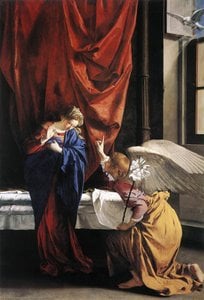
In the masterpiece The Annunciation, created in 1620, Giulio Cesare Procaccini captures the profound moment when the angel Gabriel announces to the Virgin Mary that she will bear a son, Jesus. The composition is defined by a sense of movement and energy, with the figures of Gabriel and Mary arranged along a diagonal line. Through the masterful use of chiaroscuro, the artist employs strong contrasts between light and dark to instill the scene with drama and tension, adding significant depth and volume to the figures.
The painting is rich with symbolic elements that deepen its narrative impact. A lily is featured as a symbol of purity and innocence, while a book represents knowledge and wisdom. The vibrant colors and intricate details highlight Procaccini's technical skill, particularly in how light and shadow interact within the frame.
The foreground of this oil on canvas features two central figures: a woman dressed in blue robes and a man wearing red garments. The woman is depicted kneeling before the man, who holds a book or manuscript, suggesting an interaction of revelation. Above these figures, three cherubs are seen playing with a butterfly, adding an element of joy and innocence to the scene.
The background presents a dark landscape situated under a cloudy sky, providing a sharp contrast to the brightly lit figures in the foreground. The use of vibrant blues and reds draws the viewer's attention to the importance of the central characters within the composition.
Giulio Cesare Procaccini imzalı "The Annunciation" eserinin baskın rengi Espresso (#462727)'dır.
Living Room içerisinde, "The Annunciation" adlı eserin Large baskı boyutunda olması önerilir.
"The Annunciation" eserinin Önizleme sayfası, sipariş vermeden önce eseri önizlemenize olanak tanır.

Giulio Cesare Procaccini stands as a pivotal figure in the burgeoning artistic landscape of early Baroque Milan, marking a decisive transition from Mannerist formalism to the expressive dynamism that would define an era. Born in Bologna in 1574, he descended from a lineage steeped in profound artistic tradition; his father, Ercole Procaccini the Elder, was himself a notable Mannerist painter. This heritage profoundly shaped his formative years, instilling within him an appreciation for nuanced stylistic complexities and a technical rigor that would later allow him to masterfully blend grace with grandeur. Around 1585, spurred by the influential patronage of Pierro Visconti, the family relocated to Milan, establishing a crucial connection with one of Italy’s wealthiest art collectors and fostering an environment ripe for the artistic experimentation that would become Procaccini's hallmark.
The artist's creative journey began not with the brush, but with the chisel. His early training was rooted in sculptural endeavors, primarily focused on the sacred spaces of the Milanese Duomo and Santa Maria presso San Celso. This tactile foundation in sculpture left an indelible mark on his later paintings, manifesting in a unique sense of volume, weight, and anatomical presence. However, he eventually transitioned to painting, recognizing its unparalleled capacity for conveying intense emotion and celestial light. During this period of development, Procaccini moved within the highest intellectual circles of Milan, associating with luminaries such as Giovanni Battista Crespi, known as Il Cerano, and Pier Francesco Mazzucchelli, or Il Morazzone. Under the spiritual and material guidance of Cardinal Federico Borromeo, Procaccini's creative output was propelled toward greatness, allowing him to capture the very spirit of the Counter-Reformation.
Procaccini’s mature style is a breathtaking synthesis of various European influences, most notably the vibrant colorism of the Venetian school and the sweeping, energetic compositions of Peter Paul Rubens. His works are characterized by a dramatic use of chiaroscuro, where deep shadows dance against luminous highlights to create a sense of theatrical movement. In masterpieces such as The Annunciation, one can witness this Baroque drama firsthand, as vibrant colors and swirling drapery evoke a profound sense of divine intervention. His ability to manipulate light allowed him to breathe life into religious narratives, transforming static icons into living, breathing moments of spiritual ecstasy.
His technical prowess is perhaps most evident in his large-scale religious commissions, which served both as artistic triumphs and instruments of faith. Notable examples include:
The historical significance of Giulio Cesare Procaccini lies in his role as a bridge between two worlds. He took the sophisticated, often artificial elegance of the Mannerist period and infused it with a new, visceral humanity that resonated with the religious fervor of 17th-century Italy. His work does not merely depict a scene; it invites the viewer into a sensory experience of the divine. Through his mastery of color, light, and movement, he helped establish Milan as a major center of Baroque excellence, leaving behind a legacy of altarpieces and frescoes that continue to captivate the modern imagination with their profound emotional depth and technical brilliance.

1574 - 1625 , Italy
 Gerçek Boyutta Önizle
 Paylaş
 Paylaş
 Detayları Gör
 Rehber

 İndir
İndir
 Benzer ürünler
 X-Işını
 Slayt Gösterisi
 Soru & Cevap
 İstatistikler


 Tümünü Gör