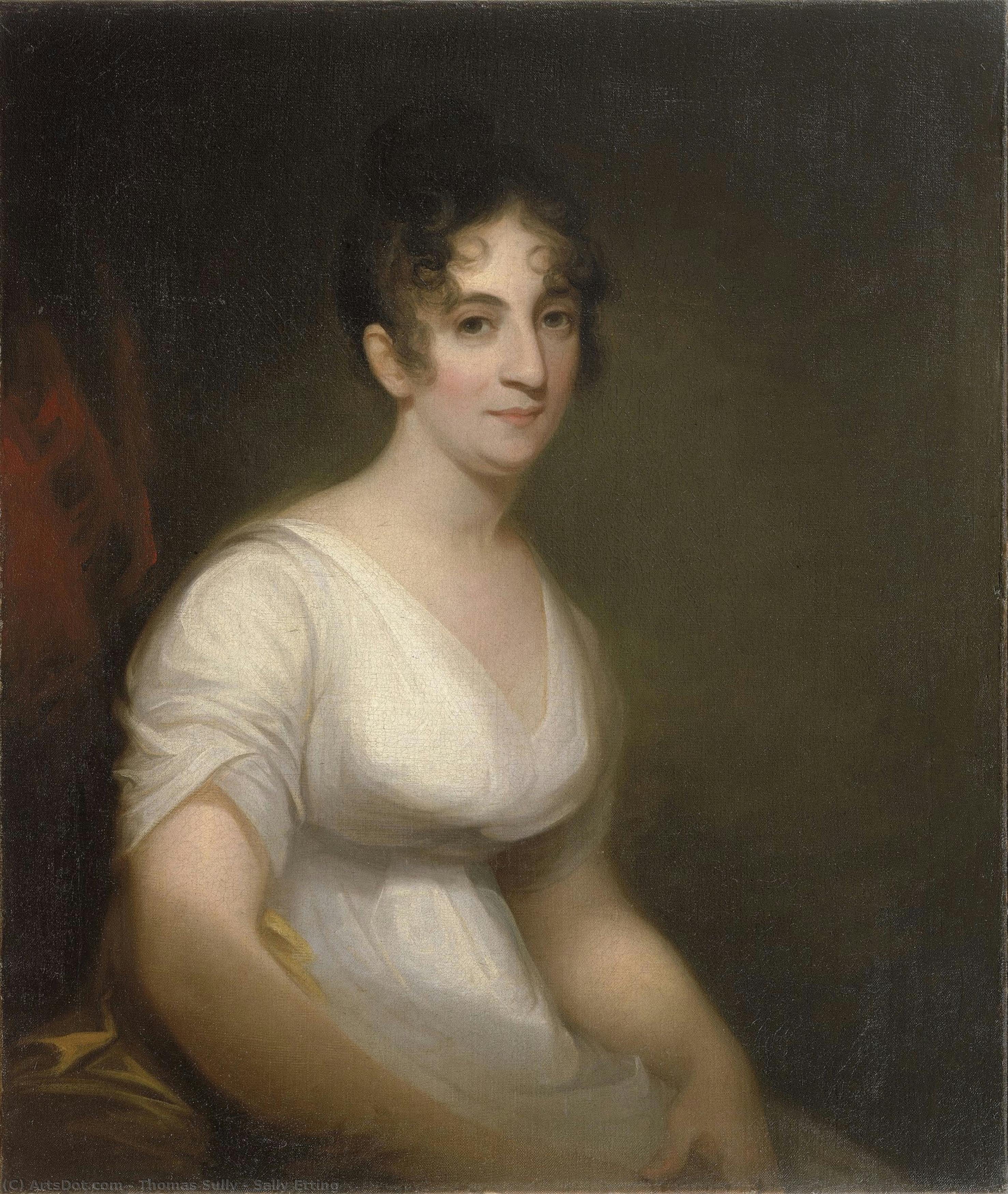
Thomas Sully’s Sally Etting: A Portrait of Refinement Amidst Republican Ideals
Sally Etting, painted in 1808 by Thomas Sully, stands as a testament to the burgeoning artistic spirit of early America—specifically, the neoclassical movement's fascination with idealized beauty and dignified portraiture. More than just a likeness of a young woman, this artwork embodies the aspirations of a nation striving for stability and moral virtue following the tumultuous years of revolution. Examining its composition, stylistic choices, and biographical context reveals layers of meaning that continue to resonate today.
- Subject Matter: The portrait depicts Sally Etting, born in York, Pennsylvania, daughter of Elijah Etting—a trader deeply connected to Native American communities—and Reuben Etting, a prominent political figure shaping the landscape of Philadelphia and Baltimore. This familial connection underscores the importance of social standing and lineage within the era’s artistic circles.
- Style: Sully's masterful execution aligns perfectly with the neoclassical aesthetic prevalent during the Federal period. Characterized by balanced compositions, serene gazes, and carefully rendered drapery—particularly the prominent red curtain in the background—the painting prioritizes elegance and restraint over dramatic gesture or emotional intensity.
- Technique: Sully employed oil paint on canvas, utilizing meticulous brushwork to achieve a luminous surface texture that captures subtle nuances of light and shadow. His attention to detail extends beyond mere representation; he strives to convey an inner state of contemplation—a hallmark of Romantic portraiture influenced by artists like Benjamin West—suggesting Sally Etting’s thoughtful gaze reflects the intellectual currents shaping American society at the time.
Historical Context: The painting was created shortly after Sully established himself in Philadelphia, cementing his reputation as one of America's foremost portraitists. His artistic development benefited greatly from the guidance of Charles Fraser, a fellow artist who championed Sully’s talent and encouraged him to study with Benjamin West—a pivotal figure in establishing American art alongside its British counterpart. The patronage of influential families like the Gratzes further propelled Sully’s career, demonstrating the interconnectedness between artistic ambition and social prestige during this formative period.
Symbolism: Beyond its formal beauty, Etting's portrait speaks to broader themes of femininity, virtue, and familial legacy. The Roman drapery—a deliberate stylistic choice—references classical ideals of grace and nobility, mirroring the republican aspirations for moral excellence that underpinned American culture. Sally Etting’s gaze directs outwards, symbolizing her engagement with the wider world while simultaneously conveying a sense of inner serenity—a reflection of the contemplative spirit favored by artists like Benjamin West. The inclusion of other figures in the scene – notably two men – subtly underscores the importance of social connections and relationships within the context of American society during this era.
Emotional Impact: Viewing Sally Etting evokes a feeling of quiet dignity and intellectual curiosity. Sully’s skillful portrayal captures not merely physical likeness but also an elusive psychological depth—a testament to his ability to convey emotion through subtle visual cues. The painting serves as a window into the values and sensibilities of early America, reminding us that art can transcend time to communicate enduring truths about human experience and aspiration.
Additional Resources:
Related Artwork:
- Gilbert Stuart: Another prominent portraitist of his time, known for capturing the likenesses of influential figures like George Washington.
- Rembrandt Peale: Celebrated for his scientific portraits and depictions of American life during the early Republic.