Gerhard Richter’s “July”: A Dance Between Chance and Memory
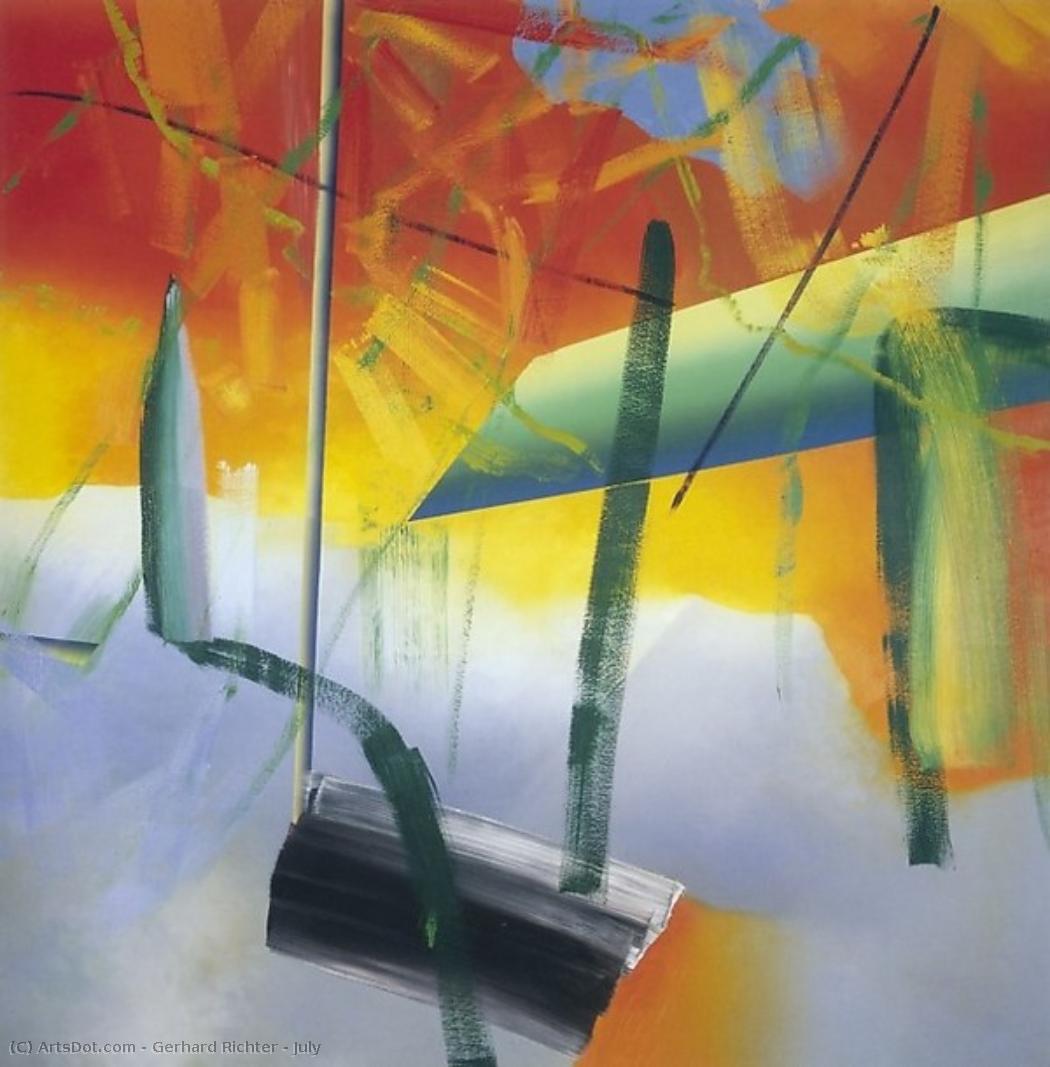
Gerhard Richter's "July," created in 1983, stands as a cornerstone of his oeuvre—a testament to his unwavering commitment to exploring the boundaries between representation and abstraction. Measuring an impressive 250 x 250 cm, this monumental canvas commands attention not merely for its size but for the profound emotional resonance it conveys. Richter’s artistic journey began in Dresden, Germany, amidst the turbulent backdrop of postwar Europe—a formative experience that instilled within him a deep skepticism toward ideological dogma and fueled an enduring fascination with uncertainty. This inherent restlessness is palpable throughout his work, including “July,” where he deliberately resists categorization, constantly shifting between approaches and blurring stylistic distinctions.
The Technique of Controlled Chaos: Squeegee and Layered Paint
At the heart of "July’s" visual impact lies Richter's groundbreaking technique—a method that defies conventional artistic conventions. Rather than meticulously recreating a photograph or adhering to a preconceived image, he initiates his creative process by applying paint thickly onto the canvas. Subsequently, he employs a squeegee—a tool traditionally used in printing—to scrape away portions of the pigment, generating a textured surface characterized by subtle blurring and layering. This seemingly paradoxical approach embodies Richter’s core philosophy: embracing chance while maintaining artistic control. The resulting surface is remarkably complex, revealing glimpses of underlying colors and forms beneath the uppermost layers—a deliberate disruption of visual clarity that invites prolonged contemplation. As Richter himself described it, “I don't want to paint what I see; I want to paint how I remember.” This technique speaks volumes about his artistic vision – a desire to capture not just the surface appearance of reality but also its intangible essence.
A Landscape Fragmented: Composition and Symbolism
The painting’s composition is equally significant in conveying its emotional depth. Dominating the canvas is a vertical element—often interpreted as a pole or stick—which serves as an anchor amidst swirling forms. Alongside this central axis resides a boat, positioned on the right side of the image, suggesting a serene waterscape and hinting at themes of journey and reflection. Scattered throughout the scene are hints of foliage and avian life—elements that contribute to the overall atmosphere and evoke memories of summertime tranquility. Two figures appear subtly integrated into the landscape, their presence adding a human scale to the expansive abstract space. These elements aren’t depicted with photographic precision; instead, they exist as fragments of recollection—symbols of experience filtered through time and perception.
Historical Context: Embracing Uncertainty Amidst Cold War Shadows
“July” was created during the early 1980s—a period marked by the lingering anxieties of the Cold War and a palpable sense of disillusionment following decades of ideological conflict. Richter’s artistic exploration coincided with a broader cultural shift toward questioning established norms and embracing ambiguity. His rejection of representational art aligns powerfully with this zeitgeist, reflecting a desire to grapple with existential questions about identity and perception—themes that resonate deeply within the artwork's visual language. The painting embodies a spirit of experimentation—a refusal to adhere to stylistic conventions—that anticipates the developments of postmodern art and cements Richter’s legacy as one of the most influential artists of our time.
Emotional Resonance: A Meditation on Memory and Perception
Ultimately, “July” transcends mere visual depiction; it functions as a meditation on memory and perception itself. The painting's muted palette—dominated by shades of green and gray—creates an atmosphere of contemplative stillness. Its textured surface invites viewers to engage in a tactile experience—to consider the materiality of art alongside its conceptual content. Like all of Richter’s work, “July” resists easy interpretation, prompting us to confront our own subjective understanding of reality. It's a painting that lingers in the mind long after viewing—a testament to Richter’s ability to capture not just what he sees but also how he feels—a profound achievement for an artist dedicated to exploring the complexities of human experience.
Soru ve Cevaplar
"Yedi" adlı eser, Gerhard Richter'in külliyatında nerede konumlanıyor?
"Yedi", Gerhard Richter'in diğer eserleriyle birlikte Contemporary Realism üslubunu ve işlenen temaları paylaşmaktadır: picasso legacy, postwar expression, german identity, formal experimentation, chance & control.
"Yedi" eserinin Contemporary Realism üslubuna hangi duygusal ton eşlik ediyor?
Contemporary Realism akımı içerisinde, "Yedi" eseri Düşünsel bir tonla kaydedilmiştir.
Gerhard Richter imzalı "Yedi" eserinin yönü nedir?
Gerhard Richter imzalı "Yedi", Kare bir kompozisyona sahiptir. Baskı boyutuna karar vermeden önce oranları kontrol etmeye değer.
Gerhard Richter imzalı "Yedi" eserinin el boyaması kopyalarını kim satıyor?
Gerhard Richter imzalı "Yedi" eserinin el boyaması reprodüksiyonunu, sipariş üzerine hazırlanan keten kanvas üzerine el boyaması yağlı boya reprodüksiyon üzerinden doğrudan bu sayfa adresinden sipariş edebilirsiniz.
"Yedi", Gerhard Richter’in sıkça işlediği konular arasında nerede duruyor?
"Yedi", color field, texture, landscape, pole, boat, figures, atmosphere, uncertainty konularını betimlerken; Gerhard Richter tarafından kaydedilen temalar picasso legacy, postwar expression, german identity, formal experimentation, chance & control şeklindedir. İkisini karşılaştırmak, eserin sanatçının alışılagelmiş konularıyla nasıl bir ilişki içinde olduğunu göstermektedir.
"Yedi" eserinin Kare formatı sergilemek için nerede önerilir?
Gerhard Richter imzalı "Yedi" için kaydedilen iki yerleşim bilgisi; format (Kare) ve önerilen alandır (Oturma Odası).
"Yedi" ne zaman ve hangi malzemelerle yapıldı?
"Yedi", 1983 yılında, Tuval Üzerine Akrilik Boya tekniğiyle yapılmıştır."
Gerhard Richter imzalı "Yedi" eserinin renk yoğunluğu nedir?
Gerhard Richter imzalı "Yedi" eserindeki renkler Canlı yoğunluğundadır.


 Önizle
 El Yapımı Tablo Satın Al
 Gönder
 Paylaş
 Detaylar
 Rehber

 Dosyayı İndir
 Benzerleri
 X-Işını
 Slayt Gösterisi
 İstatistikler


 Devamını Oku






































 Cam seçeneği yalnızca 110 cm altındaki boyutlar için mevcuttur.


