ÜCRETSİZ SANAT DANIŞMANLIĞI

x
Tabloyu Sipariş Et Tabloyu Sipariş EtGörseli Satın Al Görseli Satın Al PaylaşPaylaş
DetaylarDetaylar Favorilere ekle Favorilere ekle İndirİndir Benzerlerini görBenzerlerini gör X-IşınıX-Işını Slayt GösterisiSlayt Gösterisi

Ice

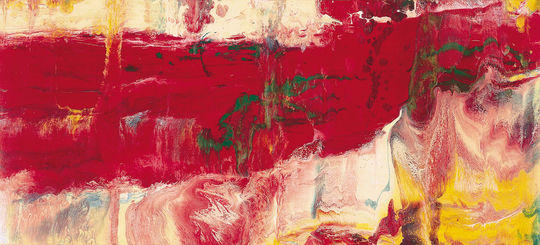
The artwork features red and yellow colors with some white accents.

Gerhard Richter’in eserleri (1932 doğumlu) soyut sanat ve fotoğraf gerçekçiliği ile bilinir. Kapitalist Realizm terimini Sigmar Polke ile birlikte ortaya koyarak çağdaş sanat üzerinde etkisini göstermiştir.

Giclée / Sanat Baskısı

Hızlı üretim ve esnek bitiş seçenekleriyle müze kalitesinde giclée veya kanvas baskı.

P118B $10
P118H $10
P118W $10
P438Z $10
P508JH $12
P508YH $12
P805H $10
P805Z $10
P919BZ $10
P919G $10
P919XJ $10
P959ZH $10
P968JZ $12
W106C $8
W218G $10
W218JH $8
W218Y $10
W307PJ $10
W316G $10
W316PJ $8
W316Y $10
W398PJ $8
W4111J $10
W500HY $15
W500JH $15
W692G $12
W849H $8
W940BG $15
W953PJ $8

Standard
custom
CM
INCH

Eserin orijinal oranlarıyla uyumlu, önceden belirlenmiş boyutlarımız arasından seçim yapın.

genişlik
yükseklik

Belirli bir çerçeveye veya alana uyması için kendi ölçülerinizi girebilirsiniz. Seçtiğiniz boyut orijinal görüntünün oranlarıyla eşleşmiyorsa, sanat eserini kırpacağız veya görüntüyü aynalanmış ya da düz dolgulu bir kenarlıkla genişleteceğiz. Üretim başlamadan önce onayınız için bir dijital taslak gönderilecektir.
Lütfen ekrandaki önizlemenin gerçek kırpma veya genişletmeyi yansıtmadığını unutmayın. Nihai kompozisyonu yalnızca taslak doğru bir şekilde gösterecektir.
Özel boyutlar mevcut olsa da, orijinal oranları korumak için önceden tanımlanmış listeden bir boyut seçmenizi öneririz.

Dünya Çapında Teslimat (); standart 4/5 hafta yerine 2 haftada. (3 Temmuz)

why_choose_icon
Dünya Çapında Ücretsiz Ekspres Kargo
why_choose_icon
Yüksek Kaliteli Keten Tuval
why_choose_icon
Tam Kapsamlı Nakliye Sigortası
why_choose_icon
Gümrük Vergisi İade Garantisi
why_choose_icon
Gerçek Renk Uyumu Garantisi
why_choose_icon
60 Günlük İade Politikası (Sadece Kusurlu Ürünler İçin)
why_choose_icon
%100 Para İade Garantisi
why_choose_icon
Toplu Alım İndirimi

Toplam Fiyat

-

reproduction

Ice

Giclée / Sanat Baskısı

Reproduksiyon Boyutu

-

Toplam Tutar

-

Eser Açıklaması

A Frozen Landscape of Emotion: Exploring Gerhard Richter’s ‘Ice’

Gerhard Richter's “Ice,” painted in 1981, isn’t merely a depiction of a seascape; it’s an immersion into the turbulent heart of memory and experience. This powerful abstract expressionist work, housed within a frame that subtly elevates its significance, invites viewers to confront the unsettling beauty of fractured recollections and the enduring impact of formative years. Richter, born in Dresden amidst the upheaval of post-war Germany, brought a uniquely sensitive perspective to his art – shaped by displacement, uncertainty, and a profound awareness of history’s weight. ‘Ice’ embodies this sensibility, utilizing bold color and dynamic brushwork to evoke not a literal scene, but rather the visceral feeling of a storm brewing beneath the surface.

The Language of Color and Texture

Dominating the canvas are washes of intense red and yellow, punctuated by strategic white accents. These aren’t colors that simply describe; they *feel*. The reds suggest both passion and danger, while the yellows carry a warmth tinged with melancholy. Richter masterfully employs a palette knife technique, creating thick, impasto strokes that build up layers upon layers of paint. This tactile approach is crucial to understanding the work's emotional resonance – it’s as if the painting itself is actively struggling against an unseen force. The visible brushstrokes aren’t accidental; they are deliberate marks of creation, a testament to the artist’s physical engagement with the medium and his desire to convey raw feeling.

Abstract Expressionism Rooted in Personal History

‘Ice’ firmly places Richter within the lineage of Abstract Expressionism, yet it transcends simple categorization. While influenced by artists like Rothko and Pollock – particularly in its exploration of color fields and gestural mark-making – Richter imbues his work with a distinctly German sensibility. The painting's fragmented quality, mirroring the fractured landscape of his childhood during wartime, speaks to a broader theme of displacement and the difficulty of constructing stable identities amidst chaos. The reference to a flag or fabric hints at a sense of lost order, a yearning for stability within a world perpetually in flux. Richter himself has often spoken about how his art is driven by an attempt to capture not what *is*, but what *feels* – a deeply personal and subjective experience.

Decoding the Symbolism: Waves of Memory

The swirling, layered forms within ‘Ice’ can be interpreted as waves, both literal and metaphorical. They represent the relentless force of memory, constantly shifting and reshaping our understanding of the past. The white accents, strategically placed, act like flashes of light breaking through a storm – moments of clarity amidst confusion. Some art historians suggest that the painting also alludes to the icy landscapes of Richter’s childhood home in Reichenau, evoking a sense of isolation and the stark beauty of the German countryside. However, it's crucial to remember that ‘Ice’ is not about literal representation; it’s about conveying an atmosphere, a mood, a complex emotional state.

Bringing ‘Ice’ into Your Space: A High-Quality Reproduction

WahooArt.com offers meticulously crafted hand-painted reproductions of Gerhard Richter's “Ice,” allowing you to experience the depth and power of this iconic work in your own home or office. Our skilled artists replicate Richter’s distinctive brushwork, color palette, and textural layering with exceptional accuracy, ensuring that your reproduction captures the essence of the original painting. Whether you are an art collector, a design enthusiast, or simply someone seeking to add a touch of emotional resonance to your surroundings, a WahooArt.com reproduction of ‘Ice’ is a stunning investment – a tangible connection to one of Germany's most significant contemporary artists.

Benzer Eserler


Sanatçı Özgeçmişi

A Life Shaped by Division: The Early Years and Artistic Formation of Gerhard Richter

Gerhard Richter’s artistic journey began in Dresden, Germany, amidst the turbulent backdrop of postwar Europe and the looming shadow of Soviet influence. Born on February 9, 1932, his childhood was profoundly impacted by displacement – his family repeatedly relocated during the Nazi era and subsequently under communist rule—experiences that instilled within him a fundamental skepticism toward ideological dogma and fueled an enduring fascination with uncertainty. His father, a schoolteacher navigating the constraints of East German society, fostered a love for literature and music in the home, while his mother nurtured a keen eye for detail and observation. These formative influences would prove crucial to Richter’s artistic sensibility, shaping his approach to representation and informing his exploration of complex themes throughout his career. Early Artistic Training: Socialist Realism and Beyond Richter commenced formal training at Dresden Academy of Fine Arts in 1951, initially immersing himself in the dominant aesthetic of socialist realism—a style dictated by the East German state that prioritized idealized depictions of labor and social harmony. Despite this initial engagement with established artistic conventions, Richter harbored a burgeoning desire for creative freedom, recognizing the limitations imposed by ideological constraints. He actively sought ways to transcend these boundaries, experimenting with diverse techniques and styles—from expressive brushstrokes to meticulous detail—demonstrating an early aptitude for artistic innovation. Recognizing the need for broader exposure, he relocated to Düsseldorf in 1961, joining a vibrant community of artists grappling with questions of identity and confronting the legacy of history. This pivotal move propelled him into the heart of West German art culture, where experimentation and critique flourished. The Düsseldorf School: Photorealism and Conceptual Inquiry Düsseldorf became Richter’s crucible for artistic transformation. He embraced photorealism—a style characterized by painstakingly accurate reproductions of photographic images—as a means of interrogating the nature of perception and representation. Simultaneously, he engaged in conceptual inquiry, questioning the very definition of painting itself through unconventional approaches like color charts and squeegee prints. His collaboration with Sigmar Polke yielded the provocative term ‘Capitalist Realism,’ encapsulating their shared disillusionment with prevailing artistic norms and their appropriation of imagery from advertising and mass media—a deliberate challenge to accepted aesthetic standards. Richter’s oeuvre reflects a continuous dialogue between observation and abstraction, realism and chance—a testament to his unwavering commitment to artistic exploration and his refusal to adhere to stylistic conventions. Major Achievements and Artistic Legacy Throughout his prolific career spanning decades, Gerhard Richter achieved remarkable success as both an artist and a cultural figure. His paintings consistently commanded record prices at auction, cementing his position among the most influential artists of our time—a testament to his technical virtuosity and intellectual rigor. However, Richter’s artistic legacy extends far beyond commercial acclaim; it resides in his profound engagement with historical and political themes—his willingness to confront uncomfortable truths and challenge conventional narratives. His work serves as a catalyst for critical dialogue, prompting viewers to contemplate the complexities of modern existence and questioning their own assumptions about reality. Richter's influence can be seen in the artistic endeavors of countless artists who have drawn inspiration from his pioneering techniques and his unwavering dedication to creative exploration—a legacy that transcends stylistic boundaries and affirms the enduring power of art to provoke thought and inspire action. Richter remains a vital voice in contemporary art, continuing to captivate audiences with his challenging and emotionally resonant creations—a testament to his artistic genius and his indelible mark on the history of visual culture.
  • Notable Paintings: Abstract Painting 610-1, Gilbert
  • Techniques Employed: Photorealism, Color Charts, Squeegee Prints
  • Influential Collaborations: Sigmar Polke
  • Conceptual Frameworks: Capitalist Realism
Richter’s enduring influence stems from his unwavering pursuit of artistic innovation and his profound engagement with the complexities of human experience.
Gerhard Richter

Gerhard Richter

1932 - , Almanya

Kısa Bilgiler

  • Artistic Movement Or Style:
    • Fotorealizm
    • Soyut sanat
  • Artists Or Movements Influenced By This Artist: ['Sigmar Polke']
  • Artists Who Influenced This Artist:
    • Jean Arp
    • Pablo Picasso
  • Date Of Birth: 9 Şubat 1932
  • Full Name: Gerhard Richter
  • Nationality: Alman
  • Notable Artworks:
    • Gilbert
    • S. ile Çocuk
  • Place Of Birth: Dresden, Almanya
Temalara, stillere ve özelliklere göre düzenlenmiş sanat eserlerini keşfedin.