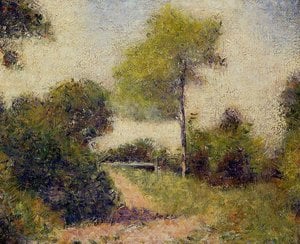
The Raw Essence of Labor: A Study in Tonal Depth
In the quiet, evocative depths of Georges Seurat’s "Stone Crusher," we encounter a moment frozen in time, stripped of the vibrant distractions of color to reveal the profound weight of human existence. Created during the artist's formative years around 1883-84, this work serves as a hauntingly beautiful precursor to his later, more famous Pointillist masterpieces. Rather than the shimmering light of a Parisian afternoon, Seurat directs our gaze toward the gritty, monochromatic reality of manual toil. The subject—a solitary laborer bent in rhythmic exertion—becomes an anchor for the viewer, pulling us into a space where the boundary between the human form and the earth itself begins to blur.
The artwork is a masterclass in the use of charcoal and crayon on paper, a medium that allows Seurat to explore the tactile boundaries of texture. There is an undeniable physicality to the piece; the dense, granular application of dark tones mimics the very substance the worker seeks to break. As the eye moves across the surface, one can almost feel the rough edges of the stone and the heavy, labored breath of the man. This textured approach creates a sense of immediacy, transforming a simple preparatory sketch into a powerful, atmospheric window into the industrial era's physical hardships.
A Symphony of Shadow and Scientific Precision
While many associate Seurat exclusively with the luminous dots of Pointillism, "Stone Crusher" reveals his foundational obsession with optical truth and structural integrity. Even in this monochromatic state, the artist employs a sophisticated understanding of light and shadow to sculpt the figure from the darkness. Through meticulous layering and overlapping strokes, Seurat achieves a range of grays that suggest volume and weight, imbuing the worker's posture with a palpable sense of fatigue and determination. This is not merely a drawing of a man; it is an architectural construction of light and shadow.
The composition is strikingly intimate, with the figure occupying much of the frame to create a feeling of closeness and inescapable presence. By obscuring the background in a soft, indistinct haze, Seurat ensures that nothing distracts from the central drama of the task at hand. This focus on the singular, monumental effort of the individual reflects a deeper, more symbolic exploration of the human condition—the struggle against gravity, time, and the relentless nature of work. For the collector or designer, this piece offers a sophisticated depth that transcends mere decoration, providing a focal point of contemplative strength.
Timeless Elegance for the Modern Interior
For those looking to curate a space with intellectual depth and emotional resonance, "Stone Crusher" offers an unparalleled opportunity. Its neutral, grayscale palette makes it a versatile masterpiece, capable of anchoring a minimalist contemporary room or adding a layer of historical gravity to a classic study. The artwork does not demand attention through loud colors, but rather commands respect through its quiet, brooding intensity and the sheer technical mastery of its execution.
Owning a high-quality reproduction of this work means bringing more than just an image into a home; it is about inviting the spirit of Neo-Impressionist innovation into one's daily environment. It serves as a reminder of the beauty found in the overlooked, the strength found in persistence, and the profound art that can be extracted from the most humble of subjects. Whether placed in a gallery-style hallway or as a centerpiece in a sophisticated living area, Seurat’s "Stone Crusher" remains a timeless testament to the power of light, shadow, and the human spirit.



 Önizleme yap
 Baskı Moduna Geç
 Paylaş
 Paylaş
 Detayları Gör

 İndir
İndir
 Benzerlerini gör
 X-Işını
 Slayt Gösterisi
 İstatistikler


 Tümünü Gör






































 Cam seçeneği yalnızca 110 cm altındaki boyutlar için mevcuttur.