ÜCRETSİZ SANAT DANIŞMANLIĞI

x
Baskıyı satın al Baskıyı satın alGörseli Satın Al Görseli Satın Al PaylaşPaylaş
DetailsDetails Favorilere ekle Favorilere ekle İndirİndir Benzerlerini görBenzerlerini gör X-RayX-Ray Slayt GösterisiSlayt Gösterisi

tenora

Georges Braque (1882-1963): Kübizm akımının kurucu üyesi ve fauvizm ustasıdır. İkonik eserleri arasında L'Estaque Evleri, Sabır ve Violin ve Palet bulunmaktadır. Modern sanatın temelini değiştiren yaratıcı bir sanatçı olarak tarihe geçmiştir.

El Yapımı Yağlı Boya Reproduksiyon

Sanatçılarımız tarafından sipariş üzerine hazırlanan; istediğiniz boyut ve çerçevede, tuval üzerine el boyaması yağlı boya.

P118B $10
P118H $10
P118W $10
P438Z $10
P508JH $12
P508YH $12
P805H $10
P805Z $10
P919BZ $10
P919G $10
P919XJ $10
P959ZH $10
P968JZ $12
W106C $8
W218G $10
W218JH $8
W218Y $10
W307PJ $10
W316G $10
W316PJ $8
W316Y $10
W398PJ $8
W4111J $10
W500HY $15
W500JH $15
W692G $12
W849H $8
W940BG $15
W953PJ $8

Standard
custom
CM
INCH

Eserin orijinal oranlarıyla uyumlu, önceden belirlenmiş boyutlarımız arasından seçim yapın.

genişlik
yükseklik

Belirli bir çerçeveye veya alana uyması için kendi boyutlarınızı girebilirsiniz. Seçtiğiniz boyut orijinal görüntünün oranlarıyla eşleşmiyorsa, sanat eserini kırparak veya ek el boyaması öğelerle resmi uzatarak ayarlayacağız. Üretim başlamadan önce onayınız için dijital bir taslak gönderilecektir.
Lütfen ekrandaki önizlemenin gerçek kırpmayı veya uzatmayı yansıtmadığını unutmayın. Nihai kompozisyonu yalnızca hazırlanan taslak doğru şekilde gösterecektir.
Özel boyutlar mevcut olsa da, orijinal oranları korumak adına önceden tanımlanmış listeden bir boyut seçmenizi öneririz.

Değiştirilebilecek örneklere dair: Yüzün müşteri fotoğrafıyla değiştirilmesi; Evcil hayvan eklenmesi (örneğin kedinin köpek ile değiştirilmesi); Arka plana gizli bir mesaj dahil edilmesi; Arka plan manzarasının veya öğelerinin değiştirilmesi.
Siparişten sonra, WahooArt.com ekibi talimatlar için müşteriye e-posta gönderecek ve bir taslak önizleme sunacaktır

Dünya Çapında Teslimat (); standart 5 hafta yerine 3/4 haftada. (1 Temmuz). Kaliteden ödün verilmez.

why_choose_icon
Dünya Çapında Ücretsiz Ekspres Kargo
why_choose_icon
Yüksek Kaliteli Keten Tuval
why_choose_icon
Tam Kapsamlı Nakliye Sigortası
why_choose_icon
Gümrük Vergisi İade Garantisi
why_choose_icon
Gerçek Renk Uyumu Garantisi
why_choose_icon
60 Günlük İade Politikası (Sadece Kusurlu Ürünler İçin)
why_choose_icon
%100 Para İade Garantisi
why_choose_icon
Toplu Alım İndirimi

Toplam Fiyat

-

reproduction

tenora

Reproduksiyon Tekniği

Reproduksiyon Boyutu

-

Toplam Tutar

-

Hızlı Bilgiler

  • Subject or theme: Musical Instrument
  • Location: Private Collection
  • Artistic style: Abstract Expressionism
  • Medium: Painting
  • Movement: Fauvism
  • Title: tenora

Eser Açıklaması

A Fragment of Fauvist Resonance: Exploring Georges Braque’s “Tenora”

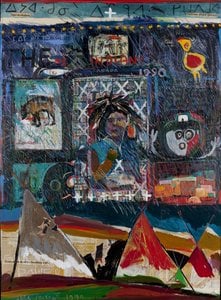
Georges Braque's "Tenora," a deceptively simple monochrome composition, transcends its apparent austerity to reveal layers of artistic innovation and profound contemplation. Captured in black and white photography—a deliberate choice that amplifies the painting’s textural qualities—this artwork embodies the core tenets of Fauvist art, marking it as a pivotal moment in the modernist movement. The photograph itself serves as an invitation into Braque's creative process, showcasing scattered sheets of paper bearing handwritten notations alongside the canvas and frame – elements that speak volumes about the artist’s intellectual engagement with his work.

The Style of Bold Color—Subdued Yet Powerful

Fauvism, originating in France around 1905-1908, represented a radical departure from Impressionism's preoccupation with capturing fleeting light and atmosphere. Artists like Braque rejected naturalistic representation altogether, prioritizing expressive color as the primary vehicle for conveying emotion and sensation. “Tenora” exemplifies this stylistic rebellion through its deliberate restriction to grayscale; however, it’s precisely this absence of color that intensifies the impact of Braque's masterful brushwork. Thick impasto—a technique characterized by applying paint in thick layers—dominates the surface, creating palpable ridges and valleys that capture the materiality of the canvas itself. These textured strokes aren’t merely decorative; they actively contribute to the painting’s emotional resonance, mirroring the artist’s internal state as he wrestled with artistic ideas.

Historical Context: Picasso's Influence and Artistic Dialogue

Braque’s exploration of color theory coincided closely with Pablo Picasso’s groundbreaking experiments in Cubism. The two artists engaged in a dynamic intellectual exchange, pushing each other to question established conventions and redefine the boundaries of visual perception. “Tenora,” like many of Braque’s works from this period, reflects the influence of Cubist principles—particularly the fragmentation of form—though it avoids the geometric abstraction championed by Picasso. Instead, Braque employs a more subtle approach, suggesting multiple viewpoints simultaneously through carefully positioned paper fragments and textural variations within the painting's surface. This technique underscores the artist’s desire to capture not just what is seen but also what is felt – an ambition that aligns perfectly with Fauvist aesthetics.

Symbolism Beyond Surface Appearance

While seemingly devoid of overt imagery, “Tenora” possesses a rich symbolic dimension. The handwritten notations on the paper fragments hint at Braque's ongoing conceptual process—a visual manifestation of his thoughts and investigations into artistic form and color. These marks serve as reminders that art is not merely about replicating reality but about communicating ideas and emotions. Furthermore, the juxtaposition of canvas and frame – a commonplace element in painting – becomes imbued with significance within the context of Fauvist aesthetics. It symbolizes the artist’s deliberate consideration of materiality and invites viewers to contemplate the relationship between perception and representation.

Emotional Impact: Quiet Intensity

Ultimately, “Tenora” achieves its emotional power through understated elegance. The monochrome palette fosters a contemplative mood, encouraging viewers to linger on the painting's surface and appreciate the nuances of Braque’s brushwork. Despite its lack of vibrant hues, the textured canvas radiates an inner luminescence—a testament to the artist’s ability to convey profound emotion without resorting to conventional stylistic devices. It is a piece that speaks to the core of Fauvist philosophy: prioritizing feeling over observation, and embracing materiality as a conduit for artistic expression. This artwork continues to inspire those who seek beauty in simplicity and intellectual depth.

Sanatçı Özgeçmişi

Georges Braque (1882–1963): Cubism Pioneer & Fauvist Master

Georges Braque, born in Argenteuil, France, on May 13, 1882, was a pivotal figure in the development of modern art. His upbringing within a family of house painters and decorators instilled in him not only a technical mastery of materials but also an early appreciation for form and structure. Though initially following in his father’s trade, Braque's inherent artistic inclinations soon led him to formal training at the École des Beaux-Arts in Le Havre, marking the beginning of his journey toward becoming one of the most influential painters of the 20th century. This foundation—a blend of practical craftsmanship and academic study—would prove crucial as he later deconstructed and reimagined traditional artistic conventions. Moving to Paris in 1902, Braque continued his studies at the Académie Humbert, immersing himself in the vibrant artistic milieu of the city. It was here that he encountered artists like Marie Laurencin and Francis Picabia, forging connections that would shape his early development. His initial works reflected the prevailing influences of Impressionism and Post-Impressionism, but a pivotal encounter with the bold colors and expressive freedom of Fauvism in 1905 ignited a new direction in his artistic exploration. This period saw him working alongside Henri Matisse and André Derain, experimenting with vibrant palettes and simplified forms—a conscious rejection of Cézanne’s meticulous realism in favor of capturing emotion through color. The Fauves championed an audacious approach to painting, prioritizing expressive intensity over accurate representation.

The Embrace of Fauvism and the Dawn of Cubism

Braque's adoption of Fauvist principles is vividly exemplified in paintings like *The Patience*. He sought to distill the essence of a subject into its most striking visual elements—primarily color—creating compositions that pulsed with emotional energy. This stylistic shift represented a decisive break from academic tradition, signaling Braque’s willingness to embrace innovation and challenge established artistic norms. Simultaneously, he began exploring Cézanne's groundbreaking ideas about multiple perspectives—a quest for spatial complexity that would ultimately propel him toward the development of Cubism. A transformative moment arrived in 1907 with his exposure to the retrospective exhibition of Paul Cézanne’s work at the Salon d’Automne. Cézanne’s insistence on geometric forms and simultaneous perspective profoundly impacted Braque, fundamentally altering his artistic trajectory. The exhibition served as a catalyst for rethinking traditional representation—a rejection of illusionistic space in favor of exploring underlying structural relationships. This intellectual engagement fueled Braque's burgeoning fascination with Cubism, marking the genesis of one of art history’s most revolutionary movements.

Innovation Through Fragmentation and Collage

The collaborative partnership between Braque and Pablo Picasso began in 1907, culminating in the co-founding of Cubism—a movement that irrevocably transformed European painting. Together, they embarked on a period of intense intellectual exchange that would give birth to Analytical Cubism, characterized by a radical simplification of form and a deliberate restriction of color palette. Works like *Houses at L'Estaque* exemplify this early phase, demonstrating Braque’s unwavering commitment to dismantling conventional perspective—a daring challenge to artistic conventions rooted in Renaissance ideals. The resulting images appeared to defy easy comprehension, inviting viewers to contemplate the multifaceted nature of visual perception. Furthermore, Braque pioneered the technique of *papier collé*, incorporating real-world materials such as newspaper clippings and textured paper into his canvases. This innovative approach disrupted the illusionistic space of traditional painting—blurring boundaries between art and life—and signaled a profound shift toward exploring materiality and texture as expressive elements. By juxtaposing disparate visual stimuli, Braque interrogated the relationship between representation and reality—a preoccupation that would persist throughout his artistic career.

Later Years and Enduring Legacy

Braque’s stylistic evolution continued beyond Analytical Cubism, incorporating influences from classical composition and revisiting themes of landscape and still life with renewed sensitivity. Despite abandoning the strict formalism of his initial explorations, he retained a core commitment to investigating fundamental principles—form, space, and representation—that underpinned his artistic vision. His later paintings—characterized by serene atmospheres and subtle harmonies of color—stand as testament to Braque’s enduring legacy as a pioneer of modernist art—a master who dared to transcend convention and redefine the possibilities of painting. His influence on subsequent generations of artists is undeniable, shaping the course of visual culture and inspiring countless painters, sculptors, and collagists. Georges Braque's unwavering dedication to artistic experimentation—coupled with his collaborative spirit—cemented his place as a true visionary—a figure whose groundbreaking contributions continue to resonate throughout the history of art.
Georges Braque

Georges Braque

1882 - 1963 , Fransa

Kısa Bilgiler

  • Artistic Movement Or Style: Cubism
  • Artists Who Influenced This Artist:
    • Henri Matisse
    • Paul Cézanne
  • Date Of Birth: May 13, 1882
  • Date Of Death: 1963
  • Full Name: Georges Braque
  • Nationality: French
  • Notable Artworks:
    • Houses at L'Estaque
    • The Patience
  • Place Of Birth: Argenteuil, France
Temalara, stillere ve özelliklere göre düzenlenmiş sanat eserlerini keşfedin.