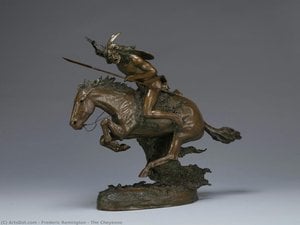
Batı’nın Kronikçisi: Frederic Remington’in Yaşamı ve Sanatı
Frederic Sackrider Remington, 4 Ekim 1861 tarihinde New York Canton şehrinde doğdu; canlı bir şekilde tasvir ettiği Vahşi Batı’nın ürünü değildi, aksine tutkuyla ve özveriyle sanatsal kimliğini şekillendiren Doğu kökenli bir sanatçıydı. Soyu, tozlu yollar ve süvari saldırılarıyla uzaktan ilişkili bir hayata işaret ediyordu – Fransız Bask kökleri, kararlı Cumhuriyetçi Yeni İngiltere kökleriyle karışmış, babası İç Savaş’ta görev yapmış bir albay ve gazete editörü, uzak kuzenler aracılığıyla ünlü Remington Silah Fabrikaları ile bağlantıları vardı. Ancak askeri temslere erken yaşta maruz kalması, huzursuz ruhu ve hikaye anlatma konusundaki keskin gözü, onu Amerikan Batı’sının en tanınmış sanatçısı olma yoluna soktu. Çocukluğu Bloomington, Illinois'e taşındı, sonra tekrar Canton'a ve sonunda Ogdensburg, New York'a geçti, ancak hayal gücü sınır yaşamının hikayeleriyle meşgul kaldı. Başlangıçta Vermont Episcopal Institute’de askeri eğitim alması yönlendirildi, ancak Remington’un gerçek çağrısı emirleri takip etmek değil, etrafındaki dünyayı gözlemlemek ve sanata aracılığıyla yorumlamaktı. Yale Üniversitesi'ndeki kısa bir süre bunu doğruladı; futbol ve eskizler resmi akademik çabalardan çok daha fazla çekicilik taşıyordu.
İllüstratörden Ressama: Sanatsal Bir Vizyonun Oluşturulması
Remington’ın sanatsal yolculuğu görkemli tuvallerle değil, mürekkep ve kağıtla başladı. *Yale Courant* için yayınlanan ilk eseri, aksiyonu ve anlatıyı yakalama konusunda erken bir yeteneği işaret etti. 1881'de Montana'ya yaptığı önemli bir gezi, Batı ile ömür boyu sürecek tutkusunu ateşledi. Bu sadece bir turistin bakışı değildi; Remington kültüre kendini kaptırmak, kovboyları, Yerli Amerikalıları ve manzarayı gözlemlemek istedi. Başlangıçta çiftçilik ve madencilik girişimlerinde bulundu, ancak bunlar başarısız oldu ve kendisini tamamen sanata adamasına izin verdi. Doğu'ya döndüğünde, *Harper’s Weekly* ve *Collier’s* gibi dergiler için bir illüstratör olarak hızla kendini yerleştirdi; sınır hikayelerine aç olan ulusal bir izleyici kitlesini büyüleyen Batı sahnelerinin dinamik tasvirleriyle tanındı. Bu çizimler sadece raporlama değildi; drama, enerji ve kamuoyunun hayal gücünde derin yankı uyandıran romantize edilmiş bir Batı vizyonuyla aşılanmıştı. Remington, kompozisyon becerilerini, hareketi yakalamayı ve duyguyu iletmeyi bu çalışmalar aracılığıyla geliştirdi – daha sonra resimlerini tanımlayacak nitelikler. Yale'deki bazı çizim dersleri ve Art Students League’de kısa bir süre dışında çok az resmi eğitim aldı; bunun yerine enerjik fırça darbeleri, cesur renkler ve dramatik bir havayla harmanlanmış gerçekçiliğe odaklanan kendine özgü bir stil geliştirdi.
Kaybolan Bir Dünyayı Yakalamak: Temalar ve Stil
Remington’ın sanatı, Amerikan tarihinin belirli bir anıyla ayrılmaz bir şekilde bağlantılıdır – Eski Batı’nın alacakaranlığı. Tuvaleri ikonik figürlerle dolu: sığır sürüsü süren sert kovboylar, yerinden edilmeyle yüzleşen stoik Yerli Amerikalılar ve hem kahramanca savaşlara hem de trajik çatışmalara giren ABD Süvarileri. Sınır yaşamının acı gerçeklerinden çekinmedi, ancak çalışması genellikle cesaret, macera ve kültürlerin çatışmasını vurgulayarak romantize edilmiş bir tasvire yönelir.
Resimleri sadece tarihi belgeler değildir; kahramanlık, kayıp ve kaçınılmaz ilerleme temalarını keşfeden etkileyici anlatılardır. Remington’ın stili zamanla gelişti, daha sıkı, daha akademik renderlamalardan daha gevşek, daha dışa dönük fırça darbelerine geçti. Atların ovalarda dört koşması, kovboyların boğalarla güreşmesi ve askerlerin savaşa atılması gibi hareketi yakalamada ustaydı.
Çoğunlukla hızlı eskizler ve fotoğraflar referans materyali olarak kullandı, ancak sanatı her zaman taklitten öteye geçti; kendi benzersiz vizyonu ve duygusal yoğunluğuyla aşılandı. *My Ranch*, *Waiting in the Moonlight*, *Ridden Down* (1905) ve *The Long-Horn Cattle Sign* (1908) gibi önemli eserler, Amerikan Batı’sının ihtişamını ve kırılganlığını yakalama yeteneğini örneklemektedir.
Mirası ve Kalıcı Etkisi
Frederic Remington, 48 yaşında beklenmedik bir şekilde 1909 yılında hayatını kaybetti ve günümüzde izleyicileri büyülemeye devam eden geniş bir eser bıraktı. Batı sanatı üzerindeki etkisi yadsınamaz; sadece Batı’yı tasvir etmekle kalmadı, aynı zamanda nesiller için *tanımlamaya* yardımcı oldu. Sınır için görsel bir dil kurdu – kovboyların, Kızılderililerin ve askerlerin ikonografisi popüler kültürün derinlerine yerleşti.
- Çalışmaları N.C. Wyeth ve Zane Grey dahil olmak üzere sayısız başka sanatçıyı etkiledi.
- New York Ogdensburg’daki Frederic Remington Sanat Müzesi, resimleri, heykelleri ve arşiv materyallerinden oluşan kapsamlı bir koleksiyonu koruyarak kalıcı mirasının kanıtı olarak duruyor.
- Sanatı Metropolitan Museum of Art ve Amon Carter Museum of American Art dahil olmak üzere ülkedeki büyük müzelerde sergilenmeye devam ediyor.
Remington’ın tasvirleri, bazen Batı’nın romantize edilmiş tasviri nedeniyle eleştirilse de, Amerikan tarihinin önemli bir dönemine değerli bir bakış sunuyor. Sadece *olanı* değil, aynı zamanda insanların Batı hakkında *inandıklarını* yakaladı – mitlerini, efsanelerini ve kalıcı çekiciliğini. Amerikan ruhunun güçlü bir sembolü olmaya devam ediyor—kaybolan bir dünyayı sonsuz sanatsal bir mirasa dönüştüren kronikçi.



 Baskı Moduna Geç
 Paylaş
 Paylaş
 Detayları Gör

 İndir
İndir
 Benzerlerini gör
 Slayt Gösterisi
 İstatistikler


 Tümünü Gör