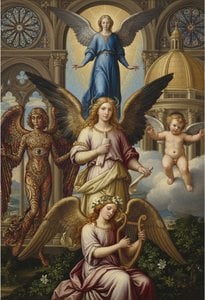
A Divine Encounter: The Profound Spirituality of Zurbarán’s ‘The Immaculate Conception’
Francisco de Zurbarán's “The Immaculate Conception,” a work often considered among the most arresting examples of Spanish Baroque art, isn’t merely a depiction of a biblical scene; it’s an immersive experience in piety and light. Painted around 1640, this monumental canvas transcends simple representation to become a powerful meditation on grace, purity, and divine presence. Zurbarán, deeply rooted in the austere religious traditions of Extremadura – a region known for its monastic orders and contemplative atmosphere – channeled that spirit into every brushstroke, creating an image that continues to resonate with viewers centuries later.
The composition immediately draws the eye towards Mary, presented not as a regal queen but as a humble, almost ethereal figure. She is bathed in a dramatic chiaroscuro—a stark contrast between intense light and deep shadow—that was a hallmark of Zurbarán’s style, heavily influenced by Caravaggio. This technique isn't simply for visual drama; it serves to heighten the sense of sacredness, isolating Mary within a pool of divine illumination. Her arms are outstretched in a gesture of profound reverence, cradling the infant Jesus with an expression of serene tenderness. The folds of her blue veil, rendered with meticulous detail, seem to ripple and flow as if imbued with a life of their own – a subtle testament to the miraculous nature of her conception.
The Angels: Guardians of Grace and Divine Intervention
Adding layers of symbolic depth are the two angels flanking Mary. One, positioned above her head, extends his hand in benediction, while the other is situated beneath her feet, seemingly offering support and protection. These figures aren’t merely decorative; they represent divine intervention and the safeguarding of Mary's purity. Their presence reinforces the idea that this event—the conception of Jesus—is not simply a human miracle but a direct act of God’s grace. The angels are painted with an almost sculptural quality, their forms rendered with remarkable precision and solidity – a deliberate contrast to the ethereal beauty of Mary and her child.
A Masterclass in Baroque Technique and Religious Symbolism
Zurbarán's mastery lies not only in his dramatic use of light and shadow but also in his incredibly detailed rendering of textures. Observe the delicate folds of Mary’s veil, the smooth contours of the infant Jesus, and even the subtle sheen on his skin. He achieved this level of realism through a painstaking process of layering thin glazes of paint—a technique known as ‘velatura’—allowing each layer to dry completely before adding the next. This meticulous approach is evident in every element of the painting, creating an image that feels both intensely immediate and profoundly timeless.
The symbolism within “The Immaculate Conception” is rich and layered. The crescent moon behind Mary represents her virginity—a concept central to the doctrine of the Immaculate Conception itself. Furthermore, the muted background, devoid of any earthly detail, emphasizes Mary’s separation from the material world and her elevation to a realm of divine grace. It's a scene that speaks not just to religious belief but also to fundamental human questions about purity, faith, and the nature of miracles.
A Legacy of Spiritual Intensity
“The Immaculate Conception” is more than just a beautiful painting; it’s a profound statement on faith and devotion. Born in 1598, Zurbarán spent his entire career exploring themes of religious austerity and spiritual intensity – qualities deeply rooted in the landscape and culture of Extremadura. His work, often compared to that of Caravaggio for its dramatic use of light, nevertheless possesses a uniquely Spanish sensibility—a quiet solemnity and an unwavering focus on the sacred. Reproductions of this masterpiece offer a remarkable opportunity to experience the power and beauty of Zurbarán’s vision, bringing a touch of timeless spirituality into any space.



 Önizleme yap
 Baskı Moduna Geç
 Paylaş
 Paylaş
 Detayları Gör

 İndir
İndir
 Benzerlerini gör
 X-Işını
 Slayt Gösterisi
 İstatistikler
 Tümünü Gör






































 Cam seçeneği yalnızca 110 cm altındaki boyutlar için mevcuttur.