The Soul of the Landscape: The Life and Vision of Francis van der Weegen
In the twilight of the nineteenth century, as the art world grappled with the rapid shifts of modernity, Francis van der Weegen emerged as a painter of profound psychological depth. Born around 1854 in Altona, Germany, his journey was one of crossing borders—not merely geographical ones between the Netherlands, Germany, and England, but also the boundaries between the external world and the internal psyche. While many of his contemporaries were consumed by the fleeting optical effects of Impressionism, Van der Weegen sought something far more enduring: a way to translate the invisible tremors of human emotion into the tangible textures of the natural landscape.
His artistic foundation was laid within the prestigious halls of Düsseldorf’s Kunstakademie, where he studied under masters such as Wilhelm Leibl and Anton Faigl. From Leibl, he inherited a rigorous devotion to detail and an acute sensitivity to the subtle interplay of light and atmosphere. This classical training provided him with the technical vocabulary necessary to execute his more ambitious conceptual goals. As his career progressed, he moved beyond simple representation, influenced by the burgeoning psychological theories of his era, including the early work of Sigmund Freud. He began to view the landscape not as a static backdrop, but as a mirror for human vulnerability, tension, and memory.
A Cartography of Emotion: From Alton to Grays
The heart of Van der Weegen’s oeuvre lies in his intimate connection to the English countryside, specifically the regions of Alton and Grays. These locations were more than mere subjects; they were vessels for his emotional explorations. In his depictions of Alton, one finds a masterful synthesis of observation and feeling. He did not merely paint vistas; he captured the palpable tension of an approaching storm or the quiet, heavy melancholy found in the twilight hours. His brushwork often reflected this duality, utilizing earthy tones to ground the viewer in reality while employing light to suggest a spiritual or psychological presence.
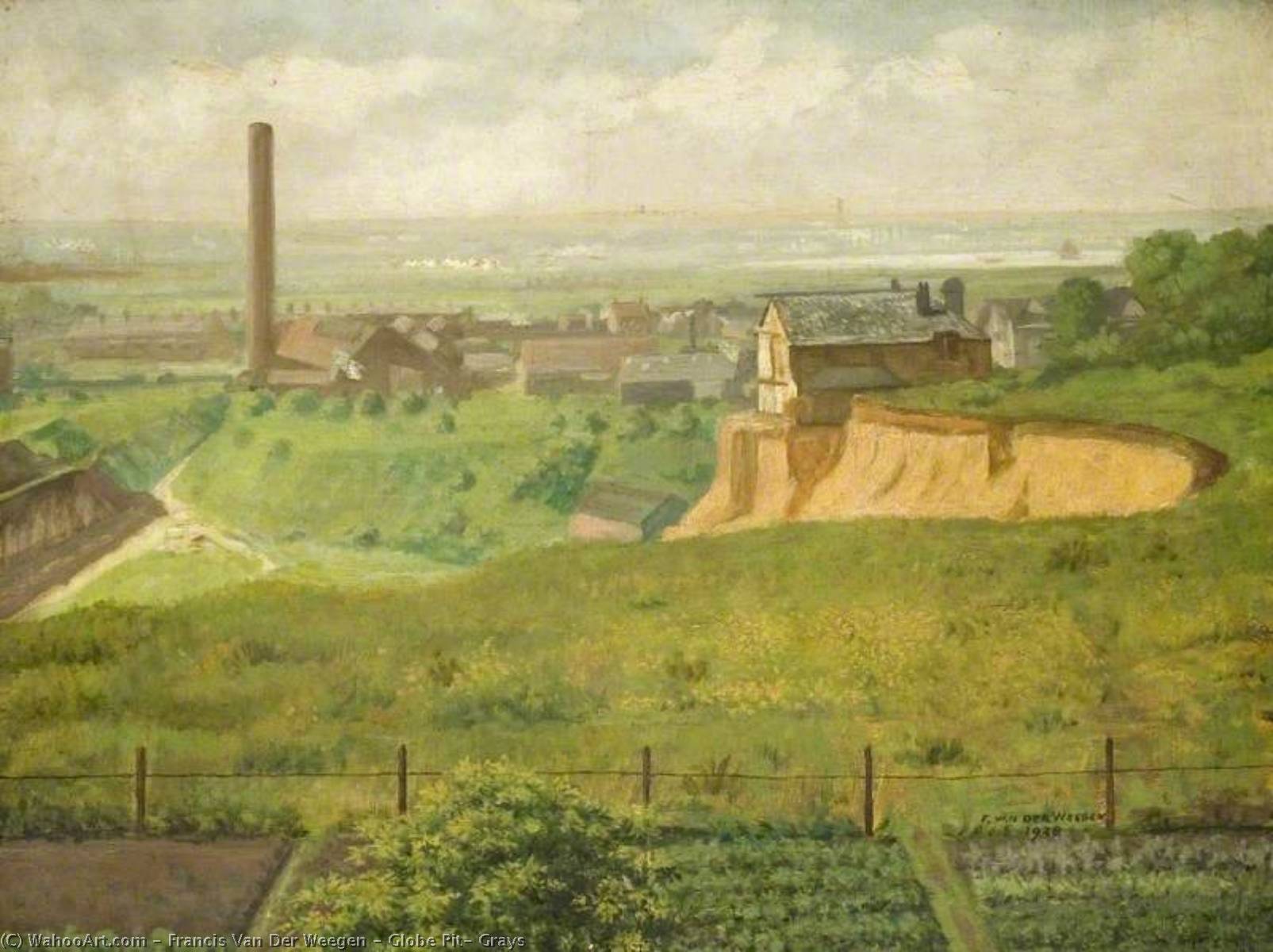
His time in Grays, Essex, offered another layer to his artistic narrative. Through works such as Globe Pit, Grays, he explored themes of isolation and the passage of time. His connection to the area was deeply personal, linked to his family ties through his daughter Gabriella’s marriage to the headmaster of Eggar's Grammar School in Alton. This proximity allowed him to document the changing face of rural life with a unique intimacy. Whether depicting the industrious energy of Allotments—where the rhythmic labor of man meets the fertile earth—or the quietude of a village lane, his work remains a testament to the dignity of the everyday and the profound emotions hidden within the mundane.
Legacy and Artistic Significance
The historical significance of Francis van der Weegen lies in his refusal to remain a mere observer. He stands as a pioneer of what might be termed psychological landscape painting, a bridge between the meticulous realism of the Düsseldorf school and the subjective explorations of modern art. His ability to imbue a scene of farmland or a roadside cottage with a sense of existential weight distinguishes him from the purely descriptive landscape artists of his time.
Though much of his work remains cherished in specialized collections like the Thurrock Museum, his contribution to the evolution of landscape art is undeniable. He taught us that a landscape is never just a collection of trees, fields, and skies; it is a living, breathing entity capable of expressing the deepest recesses of the human spirit. His legacy survives in every brushstroke that seeks to find the heartbeat within the horizon.


 Önizleme yap
 Baskı Moduna Geç
 Paylaş
 Paylaş
 Detayları Gör

 İndir
İndir
 Benzerlerini gör
 X-Işını
 Slayt Gösterisi
 İstatistikler

 Tümünü Gör






































 Cam seçeneği yalnızca 110 cm altındaki boyutlar için mevcuttur.


