A Descent into Shadow: Francis Bacon’s *Sphinx III*
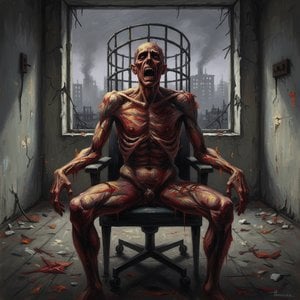
Francis Bacon, a name synonymous with unsettling beauty and profound psychological depth, possessed an extraordinary ability to distill the anxieties of modern existence onto canvas. His work isn't merely representation; it’s an excavation of the human psyche, rendered in visceral strokes and haunting color palettes. *Sphinx III*, created in 1954 and currently residing within the National Portrait Gallery in the United States, exemplifies this approach with remarkable intensity. The painting immediately confronts the viewer with a blue-toned tableau – not a serene landscape, but a claustrophobic room dominated by a seated figure, its features obscured behind a mask resembling an animal’s head. This isn't a portrait of identity; it’s a suggestion of something fractured, something struggling to articulate itself. The setting, a starkly simple space with a wall and strategically placed objects – two bottles and three books – feels deliberately sparse, amplifying the sense of isolation and unease. Bacon masterfully employs light and shadow, not to illuminate but to deepen the mystery, creating an atmosphere thick with unspoken dread. It’s a scene that invites contemplation, demanding that we confront our own anxieties about selfhood and the blurring lines between reality and nightmare.
Composition and Symbolism: A Labyrinth of Meaning
At first glance, *Sphinx III* appears deceptively simple – a man on a bench in a room. However, closer inspection reveals a meticulously constructed composition brimming with symbolic weight. The animal mask is the key to unlocking this complexity; it’s not merely decorative but a potent representation of primal instincts and suppressed desires. Bacon frequently used such masks in his work, suggesting a detachment from rational thought and an embrace of instinctual impulses. The seated figure itself embodies vulnerability and power simultaneously – slumped forward, almost defeated, yet retaining a defiant stillness. The placement of the bottles and books adds layers to this interpretation. They could represent the futile attempts at intellectual or emotional fulfillment, objects that fail to satisfy the underlying hunger for connection and meaning. The room, with its stark geometry, feels like a psychological space – a contained environment reflecting the internal struggles of the subject. It’s a deliberate echo of the labyrinthine nature of the human mind, where paths twist and turn, leading to unexpected and often unsettling discoveries.
Bacon's Technique: Light, Texture, and the Language of Pain
Francis Bacon’s artistic technique is instantly recognizable – characterized by loose, gestural brushstrokes that convey a sense of urgency and raw emotion. In *Sphinx III*, this is particularly evident in the handling of the paint. The blue tones dominate, creating a somber mood, but within this darkness, Bacon introduces subtle shifts in color and texture. He employs a technique reminiscent of his earlier works, notably *Figure with Meat* (1954), where he masterfully manipulates light and shadow to create a disturbing sense of volume and physicality. The figures aren’t rendered realistically; they are distorted and fragmented, reflecting the fractured nature of the subject's psyche. Bacon’s use of impasto – applying paint thickly – adds a tactile quality to the canvas, inviting the viewer to almost feel the weight and tension of the scene. The overall effect is one of intense physicality, as if the painting itself is writhing with suppressed emotion.
Cultural Echoes: The Sphinx and the Universal Quest for Identity
Bacon’s choice of the sphinx as a central motif isn't arbitrary; it taps into a rich vein of cultural symbolism. The sphinx, originating in ancient Egypt, represents both wisdom and danger – a guardian of sacred knowledge who demands an answer to a riddle. The animal mask immediately connects *Sphinx III* to this mythological figure, suggesting a struggle for understanding and the potential consequences of failing to grasp fundamental truths. Interestingly, Bacon’s use of tartan patterns—a motif strongly associated with Scotland—adds another layer of complexity. While traditionally linked to national identity, tartan has also appeared in various forms across different cultures, including Japanese kōshi fabrics and Russian textiles. This cross-cultural influence highlights the universal appeal of geometric designs and their ability to evoke a sense of mystery and intrigue. Ultimately, *Sphinx III* speaks to a fundamental human concern: the search for identity within a world filled with uncertainty and ambiguity—a quest that resonates across cultures and throughout history.
For those seeking a deeper understanding of Francis Bacon’s work or exploring the evocative power of light in painting, we encourage you to examine Figure with Meat and Light in Painting.
Soru ve Cevaplar
Orijinal Francis Bacon imzalı "Sphinx III" eserinin boyutları nedir?
Orijinal Francis Bacon imzalı "Sphinx III" eseri 199 x 137 cm boyutlarındadır.
Francis Bacon imzalı "Sphinx III" hangi akıma ve hangi döneme yerleştirilmektedir?
"Sphinx III", Expressionism akımına aittir ve yaratıcısı Modern Dönem döneminde eser vermiştir.
"Sphinx III" genel olarak ne kadar açık tonlu?
Algılanan parlaklık açısından, Francis Bacon imzalı "Sphinx III", derin gölge düzeyindedir.



 Önizle
 El Yapımı Tablo Satın Al
 Gönder
 Paylaş
 Detaylar
 Rehber

 Dosyayı İndir
 Benzerleri
 X-Işını
 Slayt Gösterisi
 İstatistikler


 Devamını Oku






































 Cam seçeneği yalnızca 110 cm altındaki boyutlar için mevcuttur.