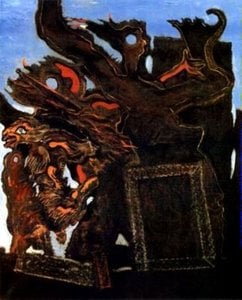
Fernand Léger tarafından yapılan Three figures and three portraits Study, usta bir sanatçı tarafından el ile boyanmış yağlı boya reprodüksiyon
Gerçek Boyutta Önizle AR ile önizle Baskı Satışına Geç Dijital Görsele Geç Paylaş
Detayları Gör Rehber Favorilere ekle İndir Benzer ürünler X-Işını Slayt Gösterisi Soru & Cevap Presentation İstatistikler

Three figures and three portraits Study El boyaması yağlı boya reprodüksiyon

The painting depicts three figures and three portraits arranged amidst scattered bottles and bowls, embodying Léger's modernist style and capturing the energy of industrial progress.

Fernand Léger (1881-1955): Kübizm ve 'Tübizm'in öncüsü! Modern yaşamı, makineleri ve insan formunu kutlayan cesur resimler keşfedin – Pop Art'ın kilit bir habercisi.

El Yapımı Yağlı Boya Reproduksiyon

Sanatçılarımız tarafından sipariş üzerine hazırlanan; istediğiniz boyut ve çerçevede, tuval üzerine el boyaması yağlı boya. ( Baskı Satışına Geç Dijital Görsele Geç)

Corner sample of the P118B picture frame: kalıplanmış polistiren, 5 cm wide and 3 cm thick
P118B ₺10
Corner sample of the P118H picture frame: kalıplanmış polistiren, 5 cm wide and 3 cm thick
P118H ₺10
Corner sample of the P118W picture frame: kalıplanmış polistiren, 5 cm wide and 3 cm thick
P118W ₺10
Corner sample of the P438Z picture frame: kalıplanmış polistiren, 5.5 cm wide and 3.5 cm thick
P438Z ₺10
Corner sample of the P508JH picture frame: kalıplanmış polistiren, 7 cm wide and 3.5 cm thick
P508JH ₺12
Corner sample of the P508YH picture frame: kalıplanmış polistiren, 7 cm wide and 3.5 cm thick
P508YH ₺12
Corner sample of the P805H picture frame: kalıplanmış polistiren, 5 cm wide and 3.5 cm thick
P805H ₺10
Corner sample of the P805Z picture frame: kalıplanmış polistiren, 5 cm wide and 3.5 cm thick
P805Z ₺10
Corner sample of the P919BZ picture frame: kalıplanmış polistiren, 7 cm wide and 3.5 cm thick
P919BZ ₺10
Corner sample of the P919G picture frame: kalıplanmış polistiren, 7 cm wide and 3.5 cm thick
P919G ₺10
Corner sample of the P919XJ picture frame: kalıplanmış polistiren, 7 cm wide and 3.5 cm thick
P919XJ ₺10
Corner sample of the P959ZH picture frame: kalıplanmış polistiren, 5 cm wide and 3 cm thick
P959ZH ₺10
Corner sample of the P968JZ picture frame: kalıplanmış polistiren, 6 cm wide and 4 cm thick
P968JZ ₺12
Corner sample of the W106C picture frame: masif ahşap, 5 cm wide and 3 cm thick
W106C ₺8
Corner sample of the W218G picture frame: masif ahşap, 5 cm wide and 3 cm thick
W218G ₺10
Corner sample of the W218JH picture frame: masif ahşap, 5 cm wide and 3 cm thick
W218JH ₺8
Corner sample of the W218Y picture frame: masif ahşap, 5 cm wide and 3 cm thick
W218Y ₺10
Corner sample of the W307PJ picture frame: masif ahşap, 6 cm wide and 3 cm thick
W307PJ ₺10
Corner sample of the W316G picture frame: masif ahşap, 6 cm wide and 3 cm thick
W316G ₺10
Corner sample of the W316PJ picture frame: masif ahşap, 6 cm wide and 3 cm thick
W316PJ ₺8
Corner sample of the W316Y picture frame: masif ahşap, 6 cm wide and 3 cm thick
W316Y ₺10
Corner sample of the W398PJ picture frame: masif ahşap, 5 cm wide and 3 cm thick
W398PJ ₺8
Corner sample of the W4111J picture frame: masif ahşap, 6.5 cm wide and 3.5 cm thick
W4111J ₺10
Corner sample of the W500HY picture frame: masif ahşap, 7 cm wide and 5 cm thick
W500HY ₺15
Corner sample of the W500JH picture frame: masif ahşap, 7 cm wide and 5 cm thick
W500JH ₺15
Corner sample of the W692G picture frame: masif ahşap, 8 cm wide and 4 cm thick
W692G ₺12
Corner sample of the W849H picture frame: masif ahşap, 5 cm wide and 3 cm thick
W849H ₺8
Corner sample of the W940BG picture frame: masif ahşap, 7.5 cm wide and 4.5 cm thick
W940BG ₺15
Corner sample of the W953PJ picture frame: masif ahşap, 6 cm wide and 3.5 cm thick
W953PJ ₺8

Standart
özel boyutlu
CM
INCH

Eserin orijinal oranlarıyla uyumlu, önceden belirlenmiş boyutlarımız arasından seçim yapın.

genişlik
yükseklik

Çerçevenize veya duvarınıza uygun olması için ihtiyacınız olan genişlik ve yüksekliği yazın. Bu eser el boyamasıdır; bu nedenle farklı bir formdaki boyutlar için sanatçı, resmin etrafına biraz daha fazla boya ekleyebilir veya kenarlardan biraz kırpabilir — seçim sizin. Boyama işlemi başlamadan önce onaylamanız için size bir dijital taslak gönderiyoruz. Bu sayfada gösterilen resim gerçek sonucu yansıtmamaktadır; gerçek sonucu yalnızca taslak göstermektedir.

Değiştirilebilecek örneklere dair: Yüzün müşteri fotoğrafıyla değiştirilmesi; Evcil hayvan eklenmesi (örneğin kedinin köpek ile değiştirilmesi); Arka plana gizli bir mesaj dahil edilmesi; Arka plan manzarasının veya öğelerinin değiştirilmesi.
Siparişten sonra, WahooArt.com ekibi talimatlar için müşteriye e-posta gönderecek ve bir taslak önizleme sunacaktır

Dünya Çapında Teslimat (); standart 5 hafta yerine 3/4 haftada. (6 Kasım). Kaliteden ödün verilmez.

Dünya Çapında Ücretsiz Ekspres Kargo
Yüksek Kaliteli Keten Kanvas
Tam Nakliye Sigortası
Gümrük Vergisi İadesi Garantisi
Gerçek Renk Uyumu Garantisi
100 Günlük İade Politikası (Sadece Kusurlu Ürünler İçin)
%100 Para İade Garantisi
Toplu Alım İndirimi

Toplam Tutar

₺ 13388

Three figures and three portraits Study

Reproduksiyon Tekniği

Reproduksiyon Boyutu

-

Toplam Tutar

₺ 13388

Hızlı Bilgiler

  • Influences:
    • Georges Braque
    • Pablo Picasso
  • Movement: Cubism
  • Artistic style: Constructivism
  • Year: 1930
  • Dimensions: 75 x 60 cm
  • Artist: Fernand Léger

Sanat Bilgisi Testi

Her soru için yalnızca bir doğru cevap bulunmaktadır.

Soru 1:
What artistic movement is Fernand Léger primarily associated with?
Soru 2:
The painting depicts a scene featuring what prominent element of the early 20th century?
Soru 3:
What is a notable characteristic of Léger's visual style, distinguishing it from many other artists of his time?
Soru 4:
The painting includes several bottles scattered throughout the area. What might these bottles symbolize in relation to Léger's artistic vision?
Soru 5:
Fernand Léger was born in Argentan, Normandy. What is significant about this location for understanding his artistic development?

A Symphony of Form and Industry

In Three Figures and Three Portraits Study, Fernand Léger presents far more than a mere arrangement of subjects; he offers a profound manifesto of engagement with the burgeoning industrial landscape of the early twentieth century. The painting invites viewers into a complex, rhythmic world where six individuals are depicted amidst a scattered collection of everyday objects, such as bottles and bowls. These elements serve as both compositional anchors and symbolic representations of life in motion. Through his unique method of constructive painting, Léger manages to retain essential visual references to the tangible world while simultaneously stripping away superfluous detail, creating a scene that feels both grounded in reality and elevated by abstraction.

The technique employed in this study is a masterful blend of geometric precision and organic texture. Léger’s distinctive style is characterized by bold shapes—cubes, cylinders, and spheres—arranged with meticulous care. Yet, these forms are far from sterile; they are brought to life through the use of impasto, where thick layers of paint create a palpable physicality on the canvas. This tactile quality conveys the raw energy and dynamism of industrial processes, hinting at an underlying organic rhythm that pulses beneath the surface of the mechanical aesthetic. For the collector or designer, this interplay of heavy texture and structured geometry offers a sophisticated visual depth that commands attention in any curated space.

The Pulse of the Machine Age

Emerging from a period of profound societal transformation, this work captures the very zeitgeist of the dawn of the machine age. As Léger witnessed the rapid urbanization and mechanization sweeping across Europe, his art became a mirror to the psychological impact of progress. In this composition, the scattered bottles are not merely decorative; they act as symbols of containment, perhaps representing the bottled-up anxieties and aspirations of humanity within an increasingly complex, modern world. The figures themselves embody a fascinating tension between human presence and mechanical influence, with faces presented as fragmented geometric shapes that suggest identity is subject to constant reconfiguration.

Despite its abstract leanings, Three Figures and Three Portraits Study possesses a remarkable emotional resonance. It exudes a subtle vibrancy—a quiet assertion of vitality that speaks to the transformative power of art. The painting invites contemplation not only of its visual spectacle but also of the deeper questions regarding human experience within an evolving, technological landscape. For those seeking inspiration through high-quality reproductions, this piece serves as a powerful window into a moment in history when the boundaries between humanity and industry began to dissolve, leaving behind a legacy of bold color, structural strength, and enduring spirit.

Soru ve Cevaplar

Fernand Léger imzalı "Three figures and three portraits Study" eserinin renkleri canlı mı yoksa mat mı?

Fernand Léger imzalı "Three figures and three portraits Study" eserinin renkleri Balanced Soft doygunluğa sahiptir. Doygunluk, renklerin ne kadar canlı veya mat olduğunu ifade eder.

Fernand Léger imzalı "Three figures and three portraits Study" eserinin parlaklık değeri nedir?

"Three figures and three portraits Study" eserinin renkleri Dark düzeyinde bir parlaklık sergiliyor.

"Three figures and three portraits Study" reprodüksiyonu evin hangi bölümünde şık durur?

Fernand Léger imzalı "Three figures and three portraits Study" için önerilen alan bir Living Room'dur. Bu öneri, elbette iç mekanınıza göre uyarlanabilir.


Sanatçı Özgeçmişi

Sanatın Kalbinde Makine Çağı: Fernand Léger’in Hayatı ve Eserleri

Fernand Léger, Joseph Fernand Henri Léger olarak 4 Şubat 1881'de Normandiya kırsalının sakin kasabası Argentan’da doğdu. Çiftçilikle geçen çocukluğu, onu daha sonra Paris sanat sahnesinin kalbine taşıyacak olan bir tutkuyla resme yönelmesine zemin hazırladı. Mimarlık eğitimi almayı düşündüyse de, Léger'in sanata olan ilgisi onu başkentte, çizim tekniklerini öğrenirken ve kendini ifade etmenin yollarını ararken destek işleriyle geçinen bir sanatçıya dönüştürdü. Paul Cézanne’ın eserleriyle tanışması ise hayatının dönüm noktası oldu; bu karşılaşma, Léger'i geleneksel temsilden uzaklaştırarak formların temel yapılarını analiz etmeye ve onları tuvalde yeni bir ifade biçimiyle yeniden inşa etmeye teşvik etti. Bu dönem, sanatçı için sadece teknik bir gelişme değil, aynı zamanda modern dünyanın estetik anlayışını kökten değiştirecek bir uyanışı temsil ediyordu.

Tübism’in Doğuşu ve Altın Oran Grubu

1907'de Cézanne’ın retrospektifi, Léger’i geleneksel sanatsal kalıpların ötesine taşıdı. Formları parçalamaya, yapılarını anlamaya ve onları hacim ve sağlamlık vurgusuyla yeniden oluşturmaya başladı. Bu keşifler onu Kübizm’in içine çekti, ancak Léger, Picasso veya Braque'ın izlerini takip etmek yerine kendi özgün dilini geliştirdi. Eleştirmenlerin “Tübism” olarak adlandırdığı bu stil, silindirsel formlar, düzleştirilmiş yüzeyler ve cesur renk kontrastlarıyla makinelerin estetiğini henüz yaygın bir sanat akımı haline gelmeden önce kutladı. Sanatçı, endüstrileşen dünyayı gözlemleyerek işlevsel şekillerde ve mekanik ritimlerde güzellik buldu. Léger, bu dönemde Jean Metzinger, Henri Le Fauconnier, Francis Picabia ve Marcel Duchamp gibi sanatçılarla birlikte Puteaux Grubu olarak bilinen Altın Oran Grubu’na katılarak sanatsal arayışlarını derinleştirdi. Grup, matematiğin uyum ve orantı ilkelerini sanata entegre etmeye çalışarak, soyut sanatın gelecekteki gelişimine zemin hazırladı.

Savaş, Mekanizasyon ve Yeni Bir Estetik

Birinci Dünya Savaşı Léger’in hayatını ve eserlerini derinden etkiledi. 1914'ten 1916'ya kadar cephede geçirdiği süre boyunca modern savaşın acımasız gerçekleriyle yüzleşti – topçu bombardımanları, hava savaşları ve mekanize çatışmanın insanlık dışı etkileri. Bu deneyim onu hayal kırıklığına düşürmek yerine, makinelerle olan ilgisini daha da pekiştirdi. Hizmet sırasında yaptığı çizimler, yıkımın araçlarını sanatsal düşüncenin konularına dönüştürerek askeri teknolojinin sert güzelliğini belgeledi. Savaştan sonra Léger’in estetiği daha da gelişti; resimleri, endüstriyel dünyanın dinamizmini ve verimliliğini kutlayan daha akıcı bir mekanik duyarlılıkla karakterize edildi. * Tüpköylü* (1916) bu değişimi örneklendirerek basitleştirilmiş formlar ve cesur renklerle mekanik hassasiyet hissini uyandırdı. Bu sadece estetik bir seçim değildi; aynı zamanda modernliğin ilerleme ve yenilenme potansiyelini, yıkıcı çatışmanın bile ardından onaylayan felsefi bir beyitti.

Mirası ve Kalıcı Etkisi

Savaş sonrası yıllarında Léger, sanat ile endüstri arasındaki kesişimi keşfetmeye devam ederek hem soyutlama hem de figüratif temsili benzersiz bir şekilde harmanlayan eserler yarattı. 1921’deki *Canlı Manzaralar* serisinde figürler ve hayvanlar, organik ve inorganik formlar arasındaki sınırları bulanıklaştıran akıcı kompozisyonlara kusursuzca entegre edildi. Heykelcilik ve film yapımıyla da denemeler yaparak sanatsal pratiğini geleneksel resmin sınırlarının ötesine taşıdı. Léger’in sonraki nesillerdeki sanatçılar üzerindeki etkisi yadsınamaz. Formların cesur basitleştirmesi, endüstriyel imgelerin benimsenmesi ve popüler kültüre olan ilgisi, Pop Art'ın ortaya çıkışını yıllar öncesinden haber verdi. Roy Lichtenstein ve Andy Warhol gibi sanatçılar, Léger’in öncü çalışmalarına açık bir borçluluk duyuyorlar. Soyut sanat ile figüratif temsili bir araya getirme becerisiyle hem entelektüel açıdan titiz hem de görsel olarak ilgi çekici eserler yaratmayı başardı. Bugün Fernand Léger'ın resimleri, Fransa’daki Musée d'Art et d'Histoire ve sadece onun çalışmalarına adanmış olan Musée National Fernand Léger dahil olmak üzere dünyanın dört bir yanındaki büyük müzelerde sergileniyor. O, 20. yüzyıl sanatının önemli bir figürü olarak kalıyor – makine çağında güzellik bulan ve enerjisini eşsiz cesaret ve özgünlükle tuvale aktaran bir vizyoner. Mirası sadece bir ressam olmakla sınırlı değil; aynı zamanda modernliğin peygamberi. Günümüzde de izleyicilerle yankılanmaya devam eden gerçek bir öncü.
Fernand Léger

Fernand Léger

1881 - 1955 , Fransa

Kısa Bilgiler

  • Artistic Movement Or Style: Kübizm, Tübism
  • Artists Or Movements Influenced By This Artist: ['Pop Art']
  • Artists Who Influenced This Artist: ['Paul Cézanne']
  • Date Of Birth: 4 Şubat 1881
  • Date Of Death: 17 Ağustos 1955
  • Full Name: Fernand Léger
  • Nationality: Fransız
  • Notable Artworks:
    • The Sitted Woman
    • Machine Element
    • The Great Parade
    • The City
  • Place Of Birth: Argentan, Fransa
Temalara, stillere ve özelliklere göre düzenlenmiş sanat eserlerini keşfedin.