Çevrimiçi önizlemeden çok daha yüksek kalitede, iyileştirilmiş ve yüksek çözünürlüklü bir dijital görüntü satın alın.
Her dosya, uzman ekibimiz tarafından gelişmiş araçlar ve titiz manuel rötuş teknikleri kullanılarak özenle hazırlanır. Her görüntünün olağanüstü netliğe, kusursuz renk doğruluğuna ve ince ayrıntılara sahip olduğundan emin oluruz.
Son dosya; profesyonel, editoryal ve baskı süreçlerinde anında kullanıma uygun şekilde optimize edilerek 72 saat içinde e-posta yoluyla teslim edilir. Bu, seçkin tasarım stüdyoları, yayıncılar ve galerilerin güvendiği aynı kalite standartlarındadır.
Kişisel kullanım, baskı ve yaratıcı projeleriniz için yüksek çözünürlüklü bir dosya indirin. ( Baskı Satışına Geç
El Yapımı Tablo Satın Al)
WahooArt.com seçtiğinizde, sadece bir görsel edinmekle kalmaz; titizlikle hazırlanmış, profesyonelce iyileştirilmiş dijital bir sanat eserine sahip olur ve memnuniyet garantisiyle güvence altına alınırsınız. Siparişinizle birlikte otomatik olarak sunulan her şey şunlardır:
Yüksek çözünürlüklü dijital görüntü dosyanız, siparişinizin ardından en geç 72 saat içinde e-posta ile size gönderilecek ve hemen kullanıma hazır olacaktır.
Sanat eseriniz; maksimum detay, netlik ve renk doğruluğu sağlamak amacıyla gelişmiş yapay zeka araçları ve manuel düzenleme kullanılarak profesyonelce optimize edilmektedir.
Dosyanızı yanlışlıkla mı sildiniz yoksa kayıp mı oldu? Endişelenmeyin; dosyanızı dilediğiniz zaman size ücretsiz olarak tekrar göndereceğiz.
Sanat eserinizin tadını gümrük vergisi, harç veya teslimat ücreti ödemeden anında çıkarın; dijital indirmeler her zaman vergiden muaftır.
Profesyonel araçlar ve renk yönetimi kullanarak dijital görselinizin orijinal renklere mümkün olduğunca yakın yansıtılmasını sağlıyoruz.
If you're not satisfied with your digital image, we'll revise it or refund 100% within 100 days - no questions asked.
Memnun kalmadınız mı? Dijital dosyanızı teslim aldıktan sonraki 100 gün içinde, hiçbir soru sorulmaksızın tam para iadesi alabilirsiniz.
Buy 3 images, save 10% - Buy 5, save 15% - Buy 10+, save 20%. Great for creative projects, galleries, and agencies.
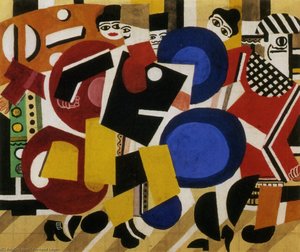
Fernand Léger's "The Level Crossing (Final State)," painted in 1919, isn’t merely a depiction of a railway crossing; it’s a vibrant manifesto of the burgeoning Tubism movement and a bold declaration of modernity. Emerging from the fertile ground of Argentan, Normandy – a region deeply rooted in agricultural tradition – Léger embarked on an artistic journey that propelled him to the heart of Parisian avant-garde circles. Unlike many artists retreating into abstraction as a refuge, Léger sought to actively *integrate* the dynamism and stark forms of the machine age into his visual language. This painting exemplifies that ambition with remarkable force, capturing not just the physical structure of the crossing but also the underlying rhythms and geometries of industrial life.
The work’s genesis lies in Léger's fascination with the burgeoning world of machinery – a subject he viewed as possessing an inherent beauty and power. He meticulously studied locomotives, factories, and other mechanical marvels, translating their angular forms and repetitive patterns into his art. “The Level Crossing” is thus a distillation of this observation, rendered in a strikingly simplified style. The dominant shapes are not organic or representational; instead, they’re cylindrical volumes, interlocking cones, and sharp-edged rectangles – elements that evoke the precision and efficiency of industrial design. This deliberate reduction to essential forms creates a sense of both immediacy and abstraction, drawing the viewer into a world where recognizable objects dissolve into pure geometric relationships.
“The Level Crossing” is a quintessential example of Tubism, a style developed by Léger alongside Robert Delaunay. Unlike Cubism’s fragmentation of form, Tubism sought to capture the *essence* of objects through simplified, cylindrical shapes – often referred to as “tubes.” These tubes aren't merely geometric forms; they possess an inherent sense of movement and energy, mirroring the relentless motion of machinery. Léger employed a bold palette of primary colors—yellows, reds, blues—interspersed with black and white, creating a dynamic visual rhythm that pulsates across the canvas. The use of flat planes and unmodulated color further emphasizes the two-dimensionality of the work, contributing to its overall sense of immediacy and dynamism.
Crucially, Léger wasn’t simply replicating mechanical forms; he was imbuing them with a new kind of beauty. He sought to elevate the mundane – the railway crossing, a symbol of industrial progress – into an object of aesthetic contemplation. The painting's composition is carefully balanced, creating a sense of visual harmony despite its fragmented and geometric nature. The central red pole acts as a focal point, drawing the eye through the complex arrangement of shapes and colors. It’s a deliberate gesture, directing the viewer’s gaze across the scene and reinforcing the painting’s overall message.
Beyond its formal qualities, “The Level Crossing” is rich in symbolic meaning. The railway crossing itself represents the intersection of two worlds: the rural past and the rapidly advancing industrial future. Léger's depiction suggests a transition – a moment of both disruption and potential. The simplified forms and bold colors evoke a sense of excitement and optimism about the possibilities of modernity, while the geometric structure also hints at the underlying order and logic of the machine age. The painting’s emotional impact is surprisingly powerful, conveying not just the visual spectacle of industrial progress but also a feeling of dynamism, energy, and even a touch of alienation.
Furthermore, the work can be interpreted as a commentary on the human condition within this new technological landscape. The figures, though abstracted, retain a sense of humanity, suggesting that individuals are both shaped by and contribute to the forces of industrialization. “The Level Crossing (Final State)” is therefore not just a depiction of a physical space; it’s a profound meditation on the relationship between humans, machines, and the evolving world around us – a timeless masterpiece that continues to resonate with viewers today.
Fernand Léger imzalı "The level crossing (final state)", Tubism akımına aittir. Bu akım, eserin üslup bağlamını sunmaktadır.
"The level crossing (final state)", 1919 yılına tarihlenmektedir. Bu tarih, eseri Fernand Léger kariyerinin ve dönemin içerisine yerleştirmektedir.
Fernand Léger imzalı "The level crossing (final state)" eserinin İstatistikler sayfası; bu eserin aylık ziyaret sayılarını, sanatçının en çok görüntülenen eserleriyle karşılaştırmasını ve ziyaretçilerin hangi bölgelerden geldiğini içeren halka açık ziyaret istatistiklerini sunar.
"The level crossing (final state)", Fransa doğumlu Fernand Léger tarafından Tubism akımı içerisinde yaratılmıştır. Sanatçının kökeni, eseri Tubism akımının Fransali sanatçılar tarafından uygulanan biçimine bağlamaktadır."
"The level crossing (final state)" adlı eser 1919 yılında yaratıldığında, 1881 yılında doğan Fernand Léger, 38 yaşındaydı.
"The level crossing (final state)", Fernand Léger kariyerinin Tubism Period dönemine aittir. Bu sınıflandırma, eseri sanatçının gelişim süreciyle ilişkilendirir.
"The level crossing (final state)" eserinin arkasındaki sanatçı Fernand Léger'tir. Eser, Fernand Léger adına kataloglanmıştır.
1881 - 1955 , Fransa