Web önizlemesinin çok ötesinde, baskıya hazır bir dosya edinin. Sattığımız her dijital görüntü, stok veri tabanımızdaki yüksek çözünürlüklü bir ana dosyadan —genellikle 5.000 ila 15.000 piksel genişliğinde— gelir; böylece büyük boyutlarda baskı alabilir, dar kırpmalar yapabilir veya ince detayları güvenle yeniden üretebilirsiniz.
Stüdyomuzdan çıkan hiçbir dosya işlenmeden çıkmaz. Bir dijital uzman, renkleri orijinal tabloyla karşılaştırarak kontrol eder ve gerekirse düzeltir; ardından profesyonel rötuş araçlarıyla netliği ve detayları artırır — bunu yaparken her zaman sanatçının fırça darbelerine ve üslubuna sadık kalır. Sonuç, filtrelenmiş bir tarama gibi değil, bizzat tablonun kendisi gibi görünen bir görüntüdür.
İşlem tamamlanmadan önce onayınız alınır: Uzmanımız, incelemeniz için görseli 72 saat içinde e-posta ile gönderir. Memnun kalmadınız mı? İyileştirme veya düzeltme talep edebilir ya da kalite beklentinizin altında kalırsa iade isteyebilirsiniz.
Yayıncıların, tasarım stüdyolarının, galerilerin ve matbaaların güvendiği kalite budur.
Kişisel kullanım, baskı ve yaratıcı projeleriniz için yüksek çözünürlüklü bir dosya indirin. ( Baskı Satışına Geç El Yapımı Tablo Satın Al)
WahooArt.com seçtiğinizde, sadece bir görsel edinmekle kalmaz; titizlikle hazırlanmış, profesyonelce iyileştirilmiş dijital bir sanat eserine sahip olur ve memnuniyet garantisiyle güvence altına alınırsınız. Siparişinizle birlikte otomatik olarak sunulan her şey şunlardır:
Yüksek çözünürlüklü dijital görüntü dosyanız, siparişinizin ardından en geç 72 saat içinde e-posta ile size gönderilecek ve hemen kullanıma hazır olacaktır.
Sanat eseriniz; maksimum detay, netlik ve renk doğruluğu sağlamak amacıyla gelişmiş yapay zeka araçları ve manuel düzenleme kullanılarak profesyonelce optimize edilmektedir.
Dosyanızı yanlışlıkla mı sildiniz yoksa kayıp mı oldu? Endişelenmeyin; dosyanızı dilediğiniz zaman size ücretsiz olarak tekrar göndereceğiz.
Sanat eserinizin tadını gümrük vergisi, harç veya teslimat ücreti ödemeden anında çıkarın; dijital indirmeler her zaman vergiden muaftır.
Profesyonel araçlar ve renk yönetimi kullanarak dijital görselinizin orijinal renklere mümkün olduğunca yakın yansıtılmasını sağlıyoruz.
If you're not satisfied with your digital image, we'll revise it or refund 100% within 100 days - no questions asked.
Memnun kalmadınız mı? Dijital dosyanızı teslim aldıktan sonraki 100 gün içinde, hiçbir soru sorulmaksızın tam para iadesi alabilirsiniz.
Buy 3 images, save 10% - Buy 5, save 15% - Buy 10+, save 20%. Great for creative projects, galleries, and agencies.
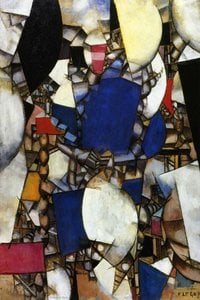
Fernand Léger's "The Flower That Walks," painted in 1953, isn’t merely a depiction of a flower; it’s an embodiment of the burgeoning modernist spirit grappling with the dynamism of the machine age. This vibrant canvas, brimming with bold geometric shapes and a playful energy, captures a pivotal moment in Léger's artistic evolution – his conscious effort to integrate the visual language of industry and technology into a distinctly personal aesthetic. Initially trained as an architect, Léger’s path shifted dramatically towards painting after arriving in Paris, drawn by the revolutionary currents swirling through the city’s avant-garde circles. Unlike many of his contemporaries who sought refuge in abstraction as a purely intellectual exercise, Léger embraced it as a means to represent the very essence of modern life – its rhythms, its structures, and its inherent movement.
The painting immediately commands attention with its audacious color palette: a joyous explosion of red, white, green, yellow, and orange. These aren’t delicate pastels; they're assertive, almost industrial hues, reminiscent of factory machinery and the vibrant signage that dominated the urban landscape of 1950s Paris. Léger deliberately avoided subtle gradations, favoring sharp contrasts and simplified forms. This stylistic choice reflects his fascination with the mechanics of the world around him – the precise angles of gears, the repetitive patterns of assembly lines, and the bold, unyielding structures of modern buildings. The central blue circle acts as a grounding element, a visual anchor amidst the swirling energy of the flower’s form.
“The Flower That Walks” is deeply rooted in the principles of Cubism, a movement that Léger championed alongside Pablo Picasso and Georges Braque. However, Léger pushed beyond the purely analytical deconstruction of traditional forms characteristic of early Cubism. Instead, he sought to synthesize fragmented perspectives into a new, unified visual experience – a concept he termed “Tubism.” This approach involved reducing objects to their essential geometric components, often depicting them as if viewed from multiple angles simultaneously. The flower itself is rendered through this lens: its petals are not smoothly curved but rather broken down into angular planes, suggesting both the organic and the mechanical.
Léger’s interest in machinery profoundly influenced his artistic vision. He saw a beauty in the precision and efficiency of industrial design, and he sought to capture that same sense of order and dynamism in his paintings. The flower's stylized form, with its simplified shapes and bold colors, echoes the aesthetic of early 20th-century automobiles and airplanes – symbols of technological progress and modernity. The suggestion of movement is particularly striking; the flower appears to be actively “walking,” a deliberate gesture that imbues the painting with a sense of life and vitality.
While Léger’s work is often associated with industrial imagery, it's crucial to recognize the underlying human element. The "flower" isn't simply an abstract form; it subtly evokes the human figure, particularly the torso and limbs. The petals can be interpreted as arms reaching out, while the central circle represents a head or chest. This deliberate ambiguity invites viewers to project their own interpretations onto the painting, fostering a sense of personal connection.
Furthermore, the flower’s “walking” action carries symbolic weight. It suggests a journey, a progression, and perhaps even a striving for something beyond the confines of its immediate surroundings. Léger himself described his work as an attempt to capture "the spirit of the machine age," but also to express a sense of optimism about the future – a belief that technology could be harnessed to create a more beautiful and fulfilling world. “The Flower That Walks” is, therefore, not just a depiction of a flower; it’s a visual manifesto for a new era.
WahooArt offers meticulously crafted hand-painted reproductions of Fernand Léger's "The Flower That Walks," allowing you to bring this iconic modernist masterpiece into your home or office. Our skilled artists replicate the painting’s vibrant colors, bold forms, and dynamic energy with exceptional attention to detail. Whether you are an art collector, interior designer, or simply someone who appreciates beautiful artwork, a WahooArt reproduction of “The Flower That Walks” is a stunning addition to any space – a testament to Léger's genius and a celebration of the spirit of modernism.
"The flower that walks", Fransa doğumlu Fernand Léger tarafından Cubism akımı içerisinde yaratılmıştır. Sanatçının kökeni, eseri Cubism akımının Fransali sanatçılar tarafından uygulanan biçimine bağlamaktadır.
Fernand Léger, "The flower that walks" adlı eserini 72 yaşındayken yaptı. Sanatçı 1881 yılında doğmuştur ve eser 1953 tarihine aittir.
Fernand Léger imzalı "The flower that walks", Cubism akımına aittir. Bu akım, eserin üslup bağlamını sunmaktadır.


1881 - 1955 , Fransa
 Gerçek Boyutta Önizle
 Paylaş
 Paylaş
 Detayları Gör
 Rehber

 İndir
İndir
 Benzer ürünler
 X-Işını
 Slayt Gösterisi
 Q&A
Q&A İstatistikler

 Tümünü Gör