A Portrait of Quietude: Exploring Edward Hopper’s “Untitled (6054)”
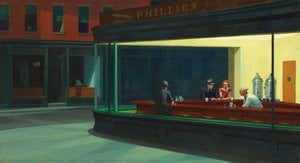
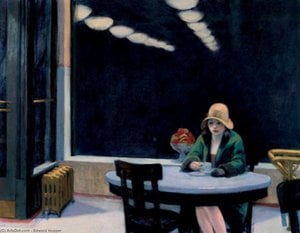
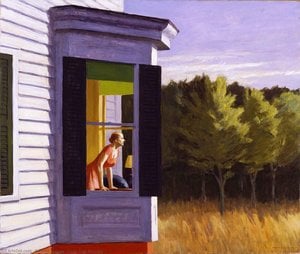
Edward Hopper's "Untitled (6054)" isn’t merely a depiction of a restaurant interior; it’s a masterful distillation of the anxieties and aspirations inherent in American modernism. Painted in 1952, this monochrome canvas captures a moment suspended between observation and detachment—a quintessential Hopper characteristic that continues to resonate with audiences today. The scene unfolds within a sparsely populated dining room, dominated by a counter where a woman attends to customers, her posture conveying both professionalism and palpable solitude. This careful positioning of the figure against the backdrop of bustling activity speaks volumes about Hopper’s preoccupation with themes of isolation and urban alienation—a sentiment powerfully conveyed through his masterful use of light and shadow.
- Style: Hopper's style is firmly rooted in Realism, albeit imbued with an expressive quality that transcends mere representation. He eschewed flamboyant brushstrokes or dramatic color palettes, favoring instead a restrained aesthetic that prioritized accuracy and psychological insight. This deliberate simplicity allows the viewer to focus on subtle nuances of form and texture, fostering contemplation rather than immediate visual gratification.
- Technique: Hopper employed oil paint on canvas with meticulous attention to detail. His technique involved layering thin washes of color—primarily muted browns and grays—to build up tonal gradations that sculpt the surfaces of objects and figures alike. The artist’s painstaking observation is evident in the precise rendering of architectural elements, furniture, and even the reflections on the countertop, creating a convincing illusion of depth and atmosphere.
Historical Context: The Shadow of Postwar America
“Untitled (6054)” emerged during the postwar period—a time marked by significant social and economic transformations yet simultaneously haunted by lingering uncertainties about identity and purpose. Hopper’s work reflects this pervasive mood of disillusionment, mirroring the anxieties experienced by many Americans grappling with the complexities of a rapidly changing world. The painting's quiet stillness contrasts sharply with the dynamism of contemporary urban life, prompting viewers to consider questions of connection and disconnection—themes that were central to Hopper’s artistic vision throughout his career. It stands as a poignant reminder of the pervasive sense of loneliness that characterized the era.
Symbolism: Light, Darkness, and Human Presence
The stark contrast between light and darkness within “Untitled (6054)” is not accidental but deliberately symbolic. The dominant illumination emanates from above—likely a recessed ceiling fixture—casting long shadows that delineate the contours of the room and subtly emphasizing the woman’s solitary figure. This interplay of light and shadow serves to heighten the emotional impact of the painting, conveying both vulnerability and resilience. Furthermore, the presence of individuals in the dining room underscores the paradoxical nature of human interaction: despite being surrounded by others, each person seems absorbed in their own thoughts and concerns—a motif that recurs frequently in Hopper’s oeuvre.
Emotional Impact: A Meditation on Existential Isolation
Ultimately, “Untitled (6054)” transcends its visual description to offer a profound meditation on existential isolation. Hopper's ability to capture the unspoken emotions of his subjects—the quiet sadness, the subtle apprehension—is remarkable. The painting invites viewers to contemplate their own experiences of solitude and contemplation, prompting reflection on the human condition. It’s a piece that lingers in the mind long after viewing, reminding us of the beauty found within moments of stillness and the enduring power of visual art to communicate complex psychological states. Its understated elegance ensures its place as an iconic representation of Hopper's distinctive artistic sensibility.