Count Harry Kessler
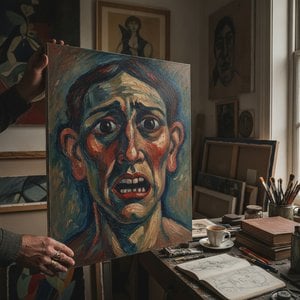
Edvard Munch, a Norwegian artist celebrated for his contributions to the Expressionism movement, stands as one of the most influential figures in modern art. His haunting exploration of psychological landscapes and visceral emotion continues to resonate with audiences worldwide. One of Munch’s notable works is the portrait of Count Harry Kessler, created in 1906—a piece that encapsulates the artist's distinctive style and profound thematic concerns. This oil on canvas painting resides at the Neue Nationalgalerie in Berlin, Germany, serving as a testament to Munch’s artistic vision and enduring legacy.
The Painting: A Detailed Analysis
Measuring 200 x 84 cm, Count Harry Kessler is rendered with broad strokes of warm colors—primarily ochre and crimson—creating an abstracted ambiance around the sitter. Munch's masterful technique employs impasto, layering thick paint onto the canvas surface to convey texture and dynamism. The figure of Count Harry Kessler dominates the composition, positioned centrally against a backdrop that eschews realistic representation in favor of expressive symbolism. His posture exudes confidence, hands clasped firmly on his hips—a gesture indicative of both authority and introspection. Dressed in a dark suit accented by a crisp white shirt and a dark tie, he embodies the elegance of German aristocratic culture during the early 20th century. The inclusion of a mustache adds to his characterization as an intellectual man of distinction.
Edvard Munch's Style and Influences
Munch’s artistic approach is characterized by its unwavering commitment to conveying inner emotional experience—a cornerstone of Expressionism. Like many artists of his time, Munch wrestled with anxieties about mortality, illness, and the human condition. His paintings frequently delve into themes of fear, grief, love, and despair, utilizing distorted forms and jarring color palettes to evoke intense psychological states. The Count Harry Kessler portrait demonstrates a fascinating interplay between influences—primarily Munch’s Norwegian heritage expressed through Symbolist aesthetics, combined with the iconography of German modernity represented by Kessler himself. This duality reflects Munch's broader engagement with cultural currents shaping his artistic worldview.
- Visit Edvard Munch: Count Harry Kessler to learn more about the painting and its significance.
- Discover more about Edvard Munch and his contributions to the Expressionism movement on WahooArt.com.
- Read about the Neue Nationalgalerie and its collection of modern and contemporary art on Wikipedia.
Expressionism is a modernist movement that emerged in the early 20th century, prioritizing subjective experience and emotional intensity above objective representation. Munch’s work—including Count Harry Kessler—stands as a prime exemplar of this stylistic paradigm. The painting's enduring power lies in its ability to capture the complexities of human psychology—a feat achieved through Munch’s masterful manipulation of color, texture, and form. As a masterpiece of Expressionism, Count Harry Kessler continues to captivate art enthusiasts and scholars alike, cementing Munch’s place as one of the most important artists of his era.
Soru ve Cevaplar
Edvard Munch imzalı "Count Harry Kessler" eserinin renkleri, barındırdığı duyguyla nasıl bir ilişki içinde?
Edvard Munch imzalı "Count Harry Kessler" eserinin Dark paleti, Melancholic duygusal tonuyla bir bütünlük sergiliyor. Renk, bir eserin duyguyu aktarma yollarından biridir.
"Count Harry Kessler" hangi tona daha yakın?
Edvard Munch imzalı "Count Harry Kessler" eserinin baskın rengi Amber to Saffron'dir. Bu renk, paletin temel tonunu oluşturur.
Öğrenciler için Edvard Munch imzalı "Count Harry Kessler" hakkında bir bilgi sayfası mevcut mu?
Edvard Munch imzalı "Count Harry Kessler" için bir Rehber sayfası mevcuttur: öğrenciler ve sınıf kullanımı için tasarlanmış, sanat eseri hakkında yazdırılabilir bir bilgi formu.



 Önizle
 El Yapımı Tablo Satın Al
 Gönder
 Paylaş
 Detaylar
 Rehber

 Dosyayı İndir
 Benzerleri
 X-Işını
 Slayt Gösterisi
 İstatistikler

 Devamını Oku






































 Cam seçeneği yalnızca 110 cm altındaki boyutlar için mevcuttur.