A Moment Frozen in Light: Claude Monet’s “Untitled (3238)”
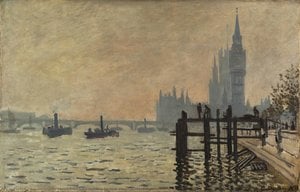
Claude Monet's "Untitled (3238)," a captivating work from the heart of the Impressionist movement, isn’t merely a depiction of a woman in a field; it’s an invitation to experience a fleeting moment, captured with the artist’s signature broken color and atmospheric sensitivity. Painted around 1907, this piece embodies Monet's lifelong pursuit of translating the ephemeral effects of light and atmosphere onto canvas – a core tenet of his revolutionary approach to art. The painting immediately draws the viewer in with its serene palette dominated by pale yellows, soft greens, and hazy blues, creating an immediate sense of tranquility and quiet contemplation. It’s a world bathed in diffused sunlight, suggesting either an overcast day or the gentle glow of early morning or late afternoon.
At first glance, the composition appears simple: a solitary female figure stands within a field of grasses, sheltered beneath an elegant umbrella. However, closer observation reveals a masterful manipulation of form and space. Monet eschews sharp outlines, instead employing loose, flowing brushstrokes to define the woman’s dress, the umbrella's delicate structure, and the undulating forms of the vegetation. This technique, characteristic of Impressionism, prioritizes capturing the *impression* of these objects rather than their precise representation. The background melts into a soft blur, emphasizing the figure in the foreground and creating a sense of depth through atmospheric perspective – a subtle layering of colors that mimics the way light scatters in the air.
The Language of Light: Monet’s Impressionistic Technique
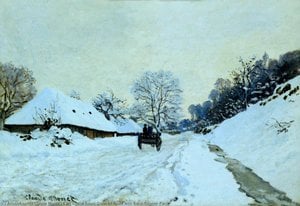
Monet's technique is inextricably linked to his philosophy. He famously abandoned traditional studio painting, opting instead to work *en plein air* – directly from nature. This practice allowed him to observe and record the constantly shifting qualities of light with unparalleled accuracy. In "Untitled (3238)," this dedication is evident in the vibrant yet delicate application of paint. Thick impasto strokes build up texture on the canvas, particularly noticeable in the grasses and umbrella, creating a palpable sense of surface and inviting the viewer to almost feel the warmth of the sun. The broken color—small, distinct brushstrokes of pure pigment applied side-by-side—is key to Monet’s style. Rather than blending colors seamlessly, he deliberately left visible traces of each stroke, allowing them to interact optically on the eye, creating a shimmering effect and conveying the vibrancy of light.
The painting's color choices are not arbitrary; they contribute significantly to its emotional impact. The muted yellows and greens evoke a sense of pastoral beauty and tranquility, while the blues suggest distance and atmospheric haze. Monet’s masterful use of complementary colors—the juxtaposition of yellow and blue, for instance—intensifies the vibrancy of each hue and creates visual harmony within the composition. It's a testament to his ability to capture not just what he *saw*, but also how it *felt* – the warmth, the stillness, the fleeting beauty of a summer’s day.
Symbolism and Narrative in a Fleeting Moment
While seemingly straightforward, "Untitled (3238)" invites contemplation on deeper themes. The umbrella, a recurring motif in Monet's work, can be interpreted as a symbol of protection – shielding the figure from the elements or perhaps representing a desire for solitude and introspection. The woman herself remains enigmatic, her gaze directed towards an unseen horizon. She embodies a sense of quiet contemplation, lost in thought amidst the beauty of nature. The painting’s lack of specific narrative detail encourages viewers to project their own emotions and experiences onto the scene, transforming it into a personal meditation on themes of memory, solitude, and the transient nature of beauty.
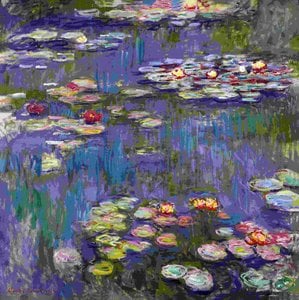
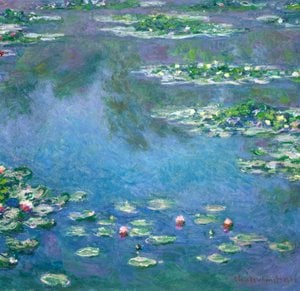
Considering Monet's broader oeuvre, particularly his series of paintings depicting water lilies at Giverny, this work resonates with a similar exploration of light, color, and the natural world. It’s a poignant reminder that art can capture not just appearances but also the very essence of a moment in time – a fleeting glimpse of beauty preserved forever on canvas.
Historical Context and Legacy
Painted during a period of significant artistic innovation, "Untitled (3238)" stands as a pivotal example of Impressionism. Emerging in France in the mid-19th century, this movement challenged traditional academic painting conventions by prioritizing subjective perception and capturing the immediate effects of light and color. Monet, along with artists like Renoir and Degas, played a crucial role in establishing Impressionism’s core principles. His dedication to *en plein air* painting, his exploration of optical mixing, and his focus on capturing fleeting moments profoundly influenced subsequent generations of artists.
Today, "Untitled (3238)" is held within the collection of Musée de l'Orangerie in Paris, where it continues to captivate audiences with its luminous beauty and evocative atmosphere. Reproductions of this iconic work are highly sought after by collectors and interior designers alike, offering a chance to bring a touch of Monet’s serene vision into any space.