Carl Chiarenza: Architect of Abstract Silence
Born in Rochester, New York, in 1935, to Italian immigrant parents, Carl Chiarenza’s artistic journey began not with landscapes or portraits, but with a profound dissatisfaction with the traditional representation of nature. This initial unease—a rejection of the established visual language—would become the cornerstone of his distinctive and deeply personal style. His early studies at the Rochester Institute of Technology under Minor White and Ralph Hattersley provided a foundational understanding of photography’s potential beyond mere documentation, but it was in Boston, beginning in 1957, that Chiarenza truly began to forge his own path, establishing himself as a significant figure in American abstract art.
Chiarenza's artistic evolution is marked by a deliberate shift away from external observation. He recognized the constructed nature of photographic reality—the way landscapes are perceived and rendered through lenses—and sought to create images that bypassed this intermediary layer, speaking directly to the viewer’s subconscious. This led him to abandon outdoor photography in 1979, transitioning entirely to studio work where he meticulously assembled abstract compositions using unconventional materials: torn paper, aluminum foil, and other discarded elements. These weren't simply collages; they were carefully orchestrated arrangements designed to evoke mood, emotion, and a sense of timelessness—a deliberate attempt to capture the essence of experience rather than its literal depiction.
The ‘Noumenon’ Series: A Universe Within
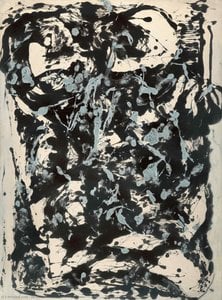
Chiarenza is perhaps most renowned for his “Noumenon” series, initiated in 1984 and continuing to this day. These works represent a culmination of his artistic explorations, embodying the core principles that define his practice. The term "noumenon," derived from Greek philosophy, refers to things beyond our immediate perception—the underlying reality that shapes our experience. Chiarenza’s photographs strive to capture this elusive realm, presenting fragmented forms and ambiguous textures that invite viewers into a meditative state. The images are often characterized by stark contrasts of black and white, creating a dramatic interplay of light and shadow that amplifies their emotional impact.
Within the “Noumenon” series, recurring motifs—geometric shapes, layered textures, and subtle shifts in tone—suggest a complex system of relationships. These elements aren’t arranged randomly; they are carefully positioned to create a sense of spatial depth and psychological resonance. Chiarenza himself has described his process as akin to sculpting with light and shadow, manipulating materials to evoke specific moods and sensations. The absence of recognizable subjects—no faces, no landscapes, no clear narratives—forces the viewer to engage actively with the work, projecting their own emotions and interpretations onto the surface.
Influences and Artistic Roots
Chiarenza’s artistic lineage is complex and multifaceted, drawing inspiration from a diverse range of sources. His early exposure to Minor White's emphasis on photography as a means of spiritual exploration profoundly influenced his approach to image-making. The concept of “seeing”—not just observing—became central to his practice. He also cites Ralph Hattersley’s work with collage and assemblage as a key influence, demonstrating an interest in disrupting traditional photographic conventions.
Beyond photography, Chiarenza has been influenced by the works of artists who explored abstraction and symbolism, including Aaron Siskind, whose use of fragmented forms and textural surfaces resonated deeply with his own aesthetic. Furthermore, he’s drawn inspiration from the principles of Gestalt psychology, which examines how humans perceive patterns and relationships in visual information. This understanding informs his deliberate arrangement of elements within his compositions—creating a sense of coherence and meaning through subtle visual cues.
Legacy and Critical Recognition
Carl Chiarenza’s work has garnered widespread critical acclaim and is held in the collections of major museums worldwide, including the Museum of Modern Art, the Art Institute of Chicago, and the Getty Center. His influence extends beyond the realm of photography, impacting contemporary artists working in a variety of media. His commitment to pushing the boundaries of photographic expression—his willingness to challenge conventional notions of representation—has cemented his place as a pivotal figure in American art history.
Chiarenza’s ongoing practice continues to evolve, reflecting a lifelong dedication to exploring the complexities of human experience through abstract imagery. His work serves as a powerful reminder that photography can be more than just a tool for documenting reality; it can be a vehicle for accessing deeper levels of consciousness and creating works of profound emotional resonance.



 Önizle
 Baskı Satışına Geç
 Gönder
 Paylaş
 Detaylar
 Rehber

 Dosyayı İndir
 Benzerleri
 X-Işını
 Slayt Gösterisi
 İstatistikler


 Devamını Oku