Çevrimiçi önizlemeden çok daha yüksek kalitede, iyileştirilmiş ve yüksek çözünürlüklü bir dijital görüntü satın alın.
Her dosya, uzman ekibimiz tarafından gelişmiş araçlar ve titiz manuel rötuş teknikleri kullanılarak özenle hazırlanır. Her görüntünün olağanüstü netliğe, kusursuz renk doğruluğuna ve ince ayrıntılara sahip olduğundan emin oluruz.
Son dosya; profesyonel, editoryal ve baskı süreçlerinde anında kullanıma uygun şekilde optimize edilerek 72 saat içinde e-posta yoluyla teslim edilir. Bu, seçkin tasarım stüdyoları, yayıncılar ve galerilerin güvendiği aynı kalite standartlarındadır.
Kişisel kullanım, baskı ve yaratıcı projeleriniz için yüksek çözünürlüklü bir dosya indirin. ( Baskı Satışına Geç
El Yapımı Tablo Satın Al)
WahooArt.com seçtiğinizde, sadece bir görsel edinmekle kalmaz; titizlikle hazırlanmış, profesyonelce iyileştirilmiş dijital bir sanat eserine sahip olur ve memnuniyet garantisiyle güvence altına alınırsınız. Siparişinizle birlikte otomatik olarak sunulan her şey şunlardır:
Yüksek çözünürlüklü dijital görüntü dosyanız, siparişinizin ardından en geç 72 saat içinde e-posta ile size gönderilecek ve hemen kullanıma hazır olacaktır.
Sanat eseriniz; maksimum detay, netlik ve renk doğruluğu sağlamak amacıyla gelişmiş yapay zeka araçları ve manuel düzenleme kullanılarak profesyonelce optimize edilmektedir.
Dosyanızı yanlışlıkla mı sildiniz yoksa kayıp mı oldu? Endişelenmeyin; dosyanızı dilediğiniz zaman size ücretsiz olarak tekrar göndereceğiz.
Sanat eserinizin tadını gümrük vergisi, harç veya teslimat ücreti ödemeden anında çıkarın; dijital indirmeler her zaman vergiden muaftır.
Profesyonel araçlar ve renk yönetimi kullanarak dijital görselinizin orijinal renklere mümkün olduğunca yakın yansıtılmasını sağlıyoruz.
If you're not satisfied with your digital image, we'll revise it or refund 100% within 100 days - no questions asked.
Memnun kalmadınız mı? Dijital dosyanızı teslim aldıktan sonraki 100 gün içinde, hiçbir soru sorulmaksızın tam para iadesi alabilirsiniz.
Buy 3 images, save 10% - Buy 5, save 15% - Buy 10+, save 20%. Great for creative projects, galleries, and agencies.
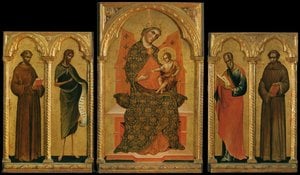
In the heart of the Venetian Renaissance, where the light of the lagoons meets the profound devotion of the era, Bartolomeo Vivarini crafted a masterpiece of spiritual storytelling. His Polyptych, completed in 1464, is not merely a painting but a sacred window into the late Gothic and early Renaissance soul. This exquisite tempera on panel work, measuring an intimate yet commanding 132 x 41 cm, serves as a breathtaking testament to the artist's ability to weave together human emotion and divine iconography. As one gazes upon these five interconnected panels, they are transported to an era where art served as the primary bridge between the earthly realm and the heavens.
The composition is a rhythmic dance of figures, structured with the architectural grace typical of the period. At its heart sits the Virgin Mary, cradling the Christ Child upon a throne, her presence radiating a maternal tenderness that anchors the entire work. Surrounding this central miracle are four saints, each meticulously rendered to evoke their unique sanctity. From the scholarly gravity of the bearded figures holding sacred manuscripts to the youthful, haloed innocence of the surrounding saints, Vivarini utilizes a sophisticated use of perspective and human anatomy to breathe life into the divine. The golden backgrounds do more than just signify holiness; they create an eternal, unshakeable space that transcends time, reflecting the light in a way that would have mesmerized 15th-century worshippers.
To behold this Polyptych is to witness the mastery of tempera technique. Vivarini’s hand is evident in the delicate transitions of skin tones and the heavy, sculptural folds of the garments. The artist employs a rich, saturated palette where deep blues and regal golds dominate, creating a visual hierarchy that guides the eye through the narrative. The interplay between the dark, somber robes of the male figures and the vibrant pinks and yellows of others creates a chromatic tension that is both harmonious and stimulating. This careful balance of color ensures that each panel retains its individual identity while contributing to a unified, symphonic whole.
For the discerning collector or interior designer, this work offers an unparalleled opportunity to introduce a sense of historical weight and classical elegance into a space. The intricate details—the fine lines of a beard, the subtle glow of a halo, the texture of a manuscript—provide endless points of visual interest. A high-quality reproduction of this piece does more than decorate a wall; it anchors a room with a sense of permanence and cultural depth. Whether placed in a quiet study or as a focal point in a grand hall, the Polyptych invites contemplation, offering a serene yet powerful presence that resonates with the timeless beauty of the Italian Renaissance.
Bartolomeo Vivarini imzalı "Polyptych" eserinin algılanan parlaklığı deep_shadow düzeyindedir. Bu değer, kullanılacağı mekanın ışığıyla uyumlu hale getirilebilir.
Bartolomeo Vivarini imzalı "Polyptych" eserinin telif hakkı durumu nettir: eser kamu malıdır - telif hakkı süresi dolmuştur kapsamındadır. Eserin Gallerie dell'Accademia bünyesinde bulunması bu durumu değiştirmez.
"Polyptych", Driftwood (#af9465) tarafından yönetilen Earthy bir palet ile tanımlanmaktadır."

In the vibrant, shimmering atmosphere of the Quattrocento, Bartolomeo Vivarini emerged as a pivotal figure in the evolution of Venetian painting. Born in the storied glassmaking hub of Murano, Italy, he was part of an influential dynasty of artists that helped shape the visual identity of the Republic of Venice. As a member of the Vivarini family, his life and work were deeply intertwined with the artistic pulse of his homeland, bridging the transition from the ornate, gilded traditions of the late Gothic period to the burgeoning humanism of the early Renaissance.
The artistry of Vivarini is characterized by a profound sense of spiritual depth and technical precision. While he was a master of tempera, often utilizing gold leaf to imbue his compositions with a celestial luxury, he was also an innovator in the use of new mediums. It is noted that he learned the art of oil painting from Antonello da Messina, and he is credited with producing what is believed to be the first oil painting in Venice around 1473. This mastery allowed him to manipulate light and texture in ways that brought a new level of intimacy and serenity to his religious subjects.
Vivarini’s work often presents a striking balance between hard, defined outlines and a rich, emotive color palette. His figures frequently possess a dignified and devout expression, capturing the solemnity required for the altarpieces that adorned Venetian basilicas. This ability to convey human emotion through structured forms made him a sought-after painter for significant religious commissions. A notable example of his skill is found in his Madonna and Child, where he uses light entering through windows and deep red drapery to create a sense of sacred space.
Beyond the figures themselves, Vivarini’s paintings are often layered with symbolic meaning:
The historical importance of Bartolomeo Vivarini lies in his role as a bridge between eras. He stood at the crossroads of the Byzantine-influenced traditions of his predecessors and the revolutionary Renaissance styles brought by artists like Fra Angelico and Giovanni Bellini. By blending these diverse influences, he helped establish a unique Venetian visual language—one that prioritized luminous color and emotional resonance.
His influence extended through his family lineage, notably impacting the work of his nephew, Alvise Vivarini, who would become a leading artist in Venice before the rise of Bellini. Through his meticulous detail and his pioneering adoption of oil techniques, Bartolomeo Vivarini left an indelible mark on the history of Italian art, ensuring that the spiritual and aesthetic grandeur of Murano and Venice would be preserved for generations to come.
1440 - 1499 , İtalya