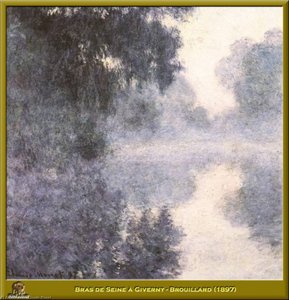
Anton Heinrich Dieffenbach: A Master of Light and Childhood
Anton Heinrich Dieffenbach, born in Wiesbaden, Germany in 1831, was a remarkably prolific and beloved painter whose career spanned over six decades. He is primarily remembered for his charming depictions of children – scenes of idyllic domesticity, playful moments, and the quiet beauty of childhood innocence. Yet, to reduce his oeuvre solely to these sentimental portraits would be a profound disservice; Dieffenbach’s work reveals a sophisticated understanding of light, color, and composition that elevates his subjects beyond mere illustration, establishing him as a significant figure in 19th-century German landscape and genre painting.
Dieffenbach's early artistic training was shaped by the prevailing trends of his time. He initially studied with Charles Duhamel in Straßburg, absorbing the influence of Romanticism’s emphasis on emotion and nature. However, it was his subsequent move to Düsseldorf and his association with the local Kunstakademie that proved pivotal. Here, he encountered a more rigorous approach to art education, honing his technical skills while also encountering artists like Christian Köhler and Rudolf Jordan who encouraged him to develop his own distinct style. This period marked a shift towards greater realism and a keen observation of everyday life – a foundation upon which he would later build his celebrated depictions of children.
A crucial element in Dieffenbach’s artistic development was his engagement with the “Malkasten” (paintbox) group, a collective of progressive artists who championed a more accessible and emotionally resonant form of art. This association exposed him to new ideas about subject matter and technique, encouraging him to move beyond purely academic pursuits. His decision to relocate to Paris in 1863 provided further exposure to the artistic currents of Europe, allowing him to refine his skills and broaden his perspective. It was during this time that he developed a particular fondness for capturing the fleeting effects of light – a hallmark of his distinctive style.
The Language of Childhood
Dieffenbach’s most enduring legacy lies in his portrayals of children. These are not simply charming illustrations; they possess a remarkable depth and psychological insight. He meticulously observed the nuances of childhood behavior, capturing moments of quiet contemplation, playful interaction, and innocent joy with astonishing accuracy. His subjects – often members of his own family or friends – appear remarkably lifelike, radiating warmth and vulnerability. He avoided overly sentimental depictions, instead focusing on honest portrayals of children’s natural expressions and gestures.
The composition of these scenes is equally noteworthy. Dieffenbach frequently employed a shallow depth of field, drawing the viewer's attention to the central figures while subtly blurring the background. This technique creates a sense of intimacy and immediacy, as if we are privileged witnesses to these private moments. His use of light is particularly masterful – he skillfully manipulated shadows and highlights to create a luminous quality that imbues his paintings with an ethereal beauty. The windows in many of his works—as evidenced by “Window”—are not merely decorative elements but serve as portals to another world, suggesting both confinement and the promise of escape.
Landscapes and the Vosges
While Dieffenbach is best known for his genre paintings, he was also a skilled landscape painter. His depictions of the Vosges mountains in eastern France became a recurring theme throughout his career. He spent many summers in this region, meticulously sketching the dramatic landscapes – the rolling hills, dense forests, and rugged peaks – capturing their essence with remarkable precision. These landscapes are not simply backdrops to his scenes of childhood; they are integral components of his artistic vision, providing a sense of scale and context.
His approach to landscape painting was deeply influenced by the Romantic tradition, but he tempered this influence with a more observational realism. He avoided overly dramatic or idealized depictions, instead focusing on capturing the subtle variations in light, color, and texture that characterize the natural world. The “Window” exemplifies this perfectly; it’s not just a view of foliage, but an evocation of atmosphere and mood, suggesting a yearning for connection with nature.
Legacy and Influence
Anton Dieffenbach enjoyed considerable success during his lifetime, exhibiting his work in major galleries throughout Germany and France. He was recognized as a master of genre painting and a skilled landscape artist, earning numerous commissions and accolades. His paintings were highly sought after by wealthy collectors and members of the royal court, solidifying his reputation as one of the leading artists of his generation.
Dieffenbach’s influence on subsequent generations of German painters is undeniable. His emphasis on realism, psychological insight, and masterful use of light paved the way for a new era in genre painting. His depictions of children continue to resonate with viewers today, evoking feelings of nostalgia, warmth, and innocence. He left behind a substantial body of work – over 500 paintings – that offers a unique glimpse into the world of 19th-century German art and culture. His legacy endures as a testament to his artistic talent, his keen observation skills, and his profound understanding of the human condition.



 Önizleme yap
 Baskı Moduna Geç
 Paylaş
 Paylaş
 Detayları Gör

 İndir
İndir
 Benzerlerini gör
 X-Işını
 Slayt Gösterisi
 İstatistikler


 Tümünü Gör