Önizleme yap AR ile önizle Baskı Moduna Geç El yapımı tablo satın al Paylaş
Detayları Gör Rehber Favorilere ekle İndir Benzerlerini gör X-Işını Slayt Gösterisi İstatistikler

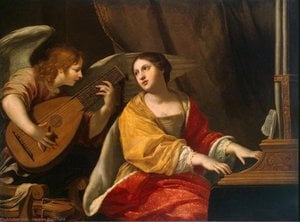
St Cecilia with Two Angels

This painting portrays St Cecilia surrounded by two angels, symbolizing musical devotion. Executed in oil on canvas around 1620, it exemplifies Gramatica's meticulous technique and reflects the intellectual fervor of the Baroque era.

Discover antiveduto grammatica: a pioneering Italian painter of the early Baroque. Explore his captivating portraits & religious scenes, showcasing unique style & historical significance.

Çevrimiçi önizlemeden çok daha üstün, yüksek çözünürlüklü ve iyileştirilmiş bir dijital görüntü satın alın.

Her dosya, uzman ekibimiz tarafından gelişmiş araçlar ve titiz manuel rötuş teknikleri kullanılarak özenle hazırlanır. Her görüntünün olağanüstü netliğe, kusursuz renk doğruluğuna ve ince ayrıntılara sahip olduğundan emin oluruz.

Son dosya; profesyonel, editoryal ve baskı süreçlerinde anında kullanıma uygun şekilde optimize edilerek 72 saat içinde e-posta yoluyla teslim edilir. Bu, seçkin tasarım stüdyoları, yayıncılar ve galerilerin güvendiği aynı kalite standartlarındadır.

Dijital Görsel

Kişisel sergileme, baskı ve yaratıcı projeleriniz için yüksek çözünürlüklü bir dosya indirin. ( Baskı Moduna Geç El yapımı tablo satın al)

Toplam Tutar

$ 24,90

Her Dijital Görüntü Siparişinde Dahil Olanlar

Uzman Dijital Teslimat, Garantili

WahooArt.com seçtiğinizde, sadece bir görsel edinmekle kalmaz; titizlikle hazırlanmış, profesyonelce iyileştirilmiş dijital bir sanat eserine sahip olur ve memnuniyet garantisiyle güvence altına alınırsınız. Siparişinizle birlikte otomatik olarak sunulan her şey şunlardır:

shipping_icon
Hızlı E-posta ile Teslimat

Yüksek çözünürlüklü dijital görüntü dosyanız, siparişinizin üzerinden en geç 72 saat geçmeden e-posta ile size gönderilecektir; hemen kullanıma hazırdır.

canvas_icon
Yapay Zeka İle İyileştirilmiş Dijital Dosya

Sanat eseriniz; maksimum detay, netlik ve renk doğruluğu sağlamak amacıyla gelişmiş yapay zeka araçları ve manuel düzenleme kullanılarak profesyonelce optimize edilmektedir.

insurance_icon
Ömür Boyu Ücretsiz Yeniden Gönderim

Dosyanızı yanlışlıkla mı sildiniz yoksa kayıp mı oldu? Endişelenmeyin; dosyanızı dilediğiniz zaman size ücretsiz olarak tekrar göndereceğiz.

tax_icon
Hiçbir Zaman İthalat Ücreti Ödemeyin

Sanat eserinizin tadını gümrük vergisi, harç veya teslimat ücreti ödemeden anında çıkarın; dijital indirmeler her zaman vergiden muaftır.

color_icon
Renk Doğruluğu Garantisi

Profesyonel araçlar ve renk yönetimi kullanarak dijital görselinizin orijinal renklere mümkün olduğunca yakın yansıtılmasını sağlıyoruz.

return_icon
100 Günlük Memnuniyet Garantisi

If you're not satisfied with your digital image, we'll revise it or refund 100% within 100 days - no questions asked.

guarantee_icon
100% Para İadesi Garantisi

Memnun kalmadınız mı? Dijital dosyanızı teslim aldıktan sonraki 100 gün içinde, hiçbir soru sorulmaksızın tam para iadesi alabilirsiniz.

discount_icon
Toplu Sipariş İndirimleri

Buy 3 images, save 10% - Buy 5, save 15% - Buy 10+, save 20%. Great for creative projects, galleries, and agencies.

Hızlı Bilgiler

  • Subject or theme: Religious iconography
  • Artistic style: Portraiture
  • Year: 1620
  • Title: St Cecilia with Two Angels
  • Medium: Oil on canvas
  • Movement: Baroque
  • Location: Kunsthistorisches Museum, Vienna

A Quiet Voice Amidst Baroque Splendor: Exploring Antiveduto Gramatica’s St Cecilia

Antiveduto Gramatica (1571-1626) stands as a fascinating figure in the burgeoning Italian Baroque, an artist whose output, though relatively modest compared to contemporaries like Caravaggio or Bernini, possesses a distinctive aesthetic and a profound connection to the intellectual currents of his time. Born in Siena—though precise details regarding his birthplace remain elusive—Gramatica’s early life was shaped by familial aspirations for artistic renown, foreshadowing a career dedicated to mastering the craft of painting. His apprenticeship with Giovanni Domenico Angelini in Perugia provided invaluable foundational experience, primarily focused on producing small-scale copper engravings – a technique that would inform his later stylistic choices and demonstrate an understanding of visual communication beyond mere fresco decoration. Gramatica’s artistic journey unfolded amidst a period marked by dramatic shifts in European art and culture. The Baroque era championed grandeur, emotion, and theatricality, yet Gramatica carved out a space for himself within this opulent movement by prioritizing subtlety and meticulous observation. Unlike the flamboyant displays of his peers, Gramatica favored a restrained palette and precise draughtsmanship, reflecting the humanist ideals prevalent during his lifetime—a fascination with human anatomy and psychological realism that distinguished him from many other artists of the period. His engravings served as crucial training for developing his painting skills, honing his ability to capture nuanced expressions and conveying complex narratives through visual imagery. The painting itself, “St Cecilia with Two Angels,” exemplifies Gramatica’s signature style: a portrait imbued with serene dignity and infused with Byzantine influences subtly blended into Italian realism. Executed in oil on canvas around 1620-25 and housed at the Kunsthistorisches Museum in Vienna, this artwork depicts Saint Cecilia—a revered figure venerated for her musical piety—surrounded by two angelic attendants. Gramatica skillfully rendered Cecilia’s pose with grace and composure, capturing a moment of contemplative devotion. The angel figures are depicted with ethereal beauty, their drapery flowing delicately against the backdrop of a muted tonal range. A careful examination reveals Gramatica's masterful technique. He employed glazing—a layering process where thin translucent washes of color are applied over underlying layers—to achieve luminous effects and imbue the painting with depth. This technique is particularly evident in Cecilia’s robe, which glows softly with subtle hues of gold and crimson, conveying a sense of spiritual radiance. Furthermore, Gramatica meticulously rendered anatomical details, demonstrating an understanding of human form that aligns with the scientific advancements of the Renaissance—a testament to his intellectual curiosity and artistic ambition. Beyond its technical prowess, “St Cecilia” resonates deeply with symbolic meaning. Saint Cecilia’s association with music symbolizes divine inspiration and spiritual contemplation—themes central to Christian theology. The angelic figures represent purity and grace, serving as guardians of Cecilia's sanctity. The composition itself is carefully balanced, reflecting the harmonious order characteristic of Byzantine art, which Gramatica skillfully adapted to his own artistic vision. Ultimately, “St Cecilia with Two Angels” transcends mere representation; it communicates an emotion—a profound stillness and reverence—that captivates the viewer. It invites contemplation on faith, beauty, and the transformative power of artistic expression. Like Cimabue’s “Madonna Enthroned,” Gramatica's work speaks to a timeless fascination with spiritual symbolism and visual storytelling, offering a glimpse into the quiet brilliance of an artist who dared to forge his own path amidst the exuberant splendor of the Baroque.

Sanatçı Özgeçmişi

Antiveduto Gramatica: A Quiet Voice Amidst Baroque Splendor

Antiveduto Gramatica (1571-1626) stands as a fascinating figure in the burgeoning Italian Baroque, an artist whose output, though relatively modest compared to contemporaries like Caravaggio or Bernini, possesses a distinctive aesthetic and a profound connection to the intellectual currents of his time. Born in Siena—though precise details regarding his birthplace remain elusive—Gramatica’s early life was shaped by familial aspirations for artistic renown, foreshadowing a career dedicated to mastering the craft of painting. His apprenticeship with Giovanni Domenico Angelini in Perugia provided invaluable foundational experience, primarily focused on producing small-scale copper engravings—a technique that would inform his later stylistic choices and demonstrate an understanding of visual communication beyond mere fresco decoration.

Gramatica quickly established himself as an independent artist in Rome around 1591, capitalizing on the burgeoning artistic environment fostered by papal patronage. He gained renown for his skill in crafting portraits of prominent men, earning him the moniker “gran capadamente,” referencing his specialization in heads of figures. This mastery of portraiture allowed him to navigate the complex social hierarchies of Rome, capturing not just the likeness but the very essence of the era's elite. His association with the Accademia di San Luca proved pivotal, cementing his ties to Cardinal Francesco Maria del Monte—a figure whose influence extended far beyond artistic circles and who championed humanist ideals amidst the turbulent political landscape of Rome. Gramatica’s election as “principe” of the academy in 1624 reflected this connection and underscored the importance of scholarly pursuits alongside artistic creation.

The Artistry of Detail and Devotion

Gramatica's artistic style is characterized by a meticulous attention to detail and an understated elegance that distinguishes him from the more flamboyant expressions of Baroque art. Unlike many artists of his era who embraced dramatic chiaroscuro to create theatrical tension, Gramatica often employed a more controlled light, allowing for a clarity that highlights the textures of fabric, the warmth of skin, and the profound emotion within his subjects. This is perhaps most movingly seen in works such as Mary Magdalene at the Tomb, where he captures a poignant moment of grief and faith, utilizing rich detail to ground a sacred historical scene in a palpable, human reality.

His repertoire extended beautifully from religious iconography to secular portraiture and allegorical studies. In his depictions of musicality, such as The Theorbo Player, one can observe the rich Baroque textures and the intimate connection between the performer and their instrument. Furthermore, his ability to weave intellectual symbolism into his work is evident in pieces like La Musa Urania, where a woman with a mirror reflects the introspective and scholarly spirit of the age. Through these varied subjects, Gramatica demonstrated a versatile hand capable of both the sacred and the cerebral.

Legacy and Historical Significance

The historical significance of Antiveduto Gramatica lies in his role as a bridge between the late Renaissance traditions and the emerging Baroque sensibility. While he did not seek to overturn the established order with radical naturalism, his refined technique and ability to infuse portraiture with psychological depth contributed significantly to the Roman school's evolution. His life and work serve as a testament to the importance of the Accademia di San Luca in fostering an environment where art and intellect could coexist.

To reflect on Gramatica's contributions is to appreciate the subtle nuances of the Italian Baroque:

  • Technical Precision: His background in engraving brought a unique, fine-lined clarity to his oil paintings.
  • Intellectual Depth: His connection to humanist patrons like Cardinal Del Monte infused his work with layers of symbolic meaning.
  • Portraiture Mastery: He remains a vital figure for studying the evolution of character studies and the depiction of status in 17th-century Rome.
Though often overshadowed by the giants of his era, Gramatica’s legacy endures through the quiet power of his compositions, offering a window into a period of profound cultural transformation.

antiveduto gramatica

antiveduto gramatica

1571 - 1626 , Italy

Kısa Bilgiler

  • Artistic Movement Or Style: Proto-Baroque
  • Artists Or Movements Influenced By This Artist: Raphael
  • Artists Who Influenced This Artist: Giovanni domenico angelini
  • Date Of Birth: 1571 Siena Italy
  • Date Of Death: 1626
  • Full Name: antiveduto gramatica
  • Nationality: Italian
  • Notable Artworks:
    • St. Cecília and two musician angels
    • Mary Magdalene at the Tomb
    • Virgin and Child with Saint Anne
  • Place Of Birth: Siena Italy