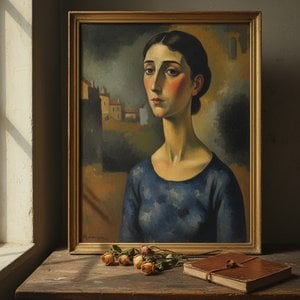
Jeanne Hebuterne by Amedeo Modigliani: An Intimate Portrait of Love and Loss
Amedeo Modigliani's Jeanne Hebuterne, painted in 1918, is a poignant and deeply personal portrait that encapsulates the artist’s signature style and reflects a period of both intense creativity and profound sorrow. This oil on canvas work, measuring 46 x 29 cm and residing within the esteemed collection of the Israel Museum, offers a glimpse into the life of Jeanne Hebuterne, Modigliani's lifelong companion and wife. More than just a likeness, it is an exploration of intimacy, vulnerability, and the complexities of human connection.
Artistic Style and Technique: The Essence of Expressionism
Modigliani’s artistic style, firmly rooted in Expressionism, is immediately recognizable in Jeanne Hebuterne. His signature elongated forms—the slender neck, the oval face—are present, creating a sense of ethereal grace while simultaneously hinting at an underlying fragility. The portrait eschews strict realism; instead, Modigliani prioritizes conveying emotion and inner state through simplified shapes and expressive lines. The use of earthy tones – browns, beiges, and subtle pinks – lends warmth to the composition, yet the overall palette remains muted, reflecting a melancholic atmosphere. Noticeable brushstrokes add texture and dynamism, preventing the image from appearing static. The limited depth of field focuses attention entirely on Jeanne’s face, drawing the viewer into her gaze.
The Subject: Jeanne Hebuterne – Artist and Muse
Jeanne Hebuterne was not merely Modigliani's muse; she was a talented artist in her own right. Born in Paris in 1898, she studied at the Académie Matisse and shared Modigliani’s passion for art. Their relationship was passionate but turbulent, marked by financial struggles and Modigliani’s bouts of illness. Tragically, Jeanne took her own life just days after Modigliani's death in 1920, a devastating event that casts a long shadow over their artistic legacy. This portrait serves as a powerful testament to their intertwined lives and the profound emotional bond they shared. The sadness subtly conveyed in her eyes speaks volumes about the challenges they faced.
Symbolism and Emotional Impact: A Reflection of Human Condition
Beyond its aesthetic qualities, Jeanne Hebuterne resonates with deeper symbolic meaning. The elongated neck, a recurring motif in Modigliani’s portraits, has been interpreted as representing both elegance and vulnerability. The downward gaze suggests introspection and perhaps a sense of quiet resignation. The dark background serves to isolate Jeanne, emphasizing her solitude while simultaneously highlighting the intensity of her presence. Ultimately, the painting transcends a simple portrait; it becomes an exploration of universal themes such as love, loss, and the human condition—themes that continue to captivate viewers today.
Historical Context: Paris in the Early 20th Century
Created during the tumultuous years leading up to and following World War I, Jeanne Hebuterne reflects the artistic climate of early 20th-century Paris. Modigliani was part of a vibrant community of artists experimenting with new forms of expression, including Cubism and Futurism. While influenced by these movements, he developed his own unique style that prioritized emotional depth over purely formal innovation. The painting’s understated elegance and introspective mood are characteristic of the period's shift away from traditional academic art towards more subjective and expressive modes of representation.



 Önizleme yap
 Baskı Moduna Geç
 Paylaş
 Paylaş
 Detayları Gör

 İndir
İndir
 Benzerlerini gör
 X-Işını
 Slayt Gösterisi
 İstatistikler


 Tümünü Gör






































 Cam seçeneği yalnızca 110 cm altındaki boyutlar için mevcuttur.