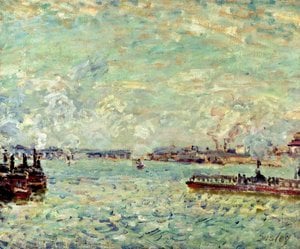
Alfred Sisley: Işığın ve Manzaranın Sessiz Üstadı
Alfred Sisley, Monet, Renoir ve Pissarro gibi isimlerle yan yana anılan, Empresyonist hareketin içinde kendine özgü ve derin bir yere sahip olan bir sanatçı. 30 Ekim 1839’da Paris'te, İngiliz anne babanın – ipek ticaretiyle uğraşan William Sisley ve müzikle ilgilenen Felicia Sell – çocuğu olarak dünyaya geldi. Hem İngiliz hem de Fransız kimliklerini taşıyan Sisley, hayatının büyük bir bölümünü Fransa’da geçirse de, Britanya vatandaşlığını korudu; bu durum, daha sonra Fransız vatandaşlığına başvurusunun reddedilmesiyle kişisel hayal kırıklığına yol açtı. Erken yaşamı, onu ticari bir kariyere yönlendirmeyi amaçlayan rahat ve mütevazı bir ortamda geçti. Ancak sanatın cazibesi o kadar güçlüydü ki, 1861’de Paris'e geri dönerek École des Beaux-Arts’ta Marc-Charles-Gabriel Gleyre yönetiminde resim eğitimi almaya başladı. İşte tam da bu dönemde, sanatsal devrimin kıpır kıpır olduğu ortamda Monet, Renoir ve Bazille gibi önemli isimlerle tanışarak hayatı boyunca etkileşim içinde olacağı dostluklar kurdu. Bu arkadaş grubu, akademik resmin katı geleneklerini reddederek doğadan doğrudan ışığın geçici etkilerini yakalamaya odaklanan bir ruhu paylaşıyordu.
Empresyonizme Bağlılık ve Sanatsal Gelişim
Sisley’in *plein air* (açık havada) resim yapma konusundaki bağlılığı sarsılmazdı. Çağdaşlarının farklı türlerle denemeler yaptığı bir dönemde, Sisley hayatı boyunca manzara resmine sadık kaldı. Bu odaklanmış tutku, ona dinginlik, zarif renk paletleri ve ışığın ince işçiliğini karakterize eden kendine özgü bir tarz geliştirmesi için olanak sağladı. Tuvaleri genellikle soluk yeşil, pembe, mor, tozlu mavi ve kremin tonlarıyla yıkanarak huzurlu bir düşünce atmosferi yaratır. Erken dönem çalışmaları büyük ölçüde kaybolmuş olsa da, olgun eserleri doğanın dikkatli gözlemlerini şiirsel bir duyarlılıkla birleştiriyor. Sisley, ne büyük anlatılara ne de dramatik jestlere ilgi duyuyordu; bunun yerine gündelik yaşamın – nazik akan nehirlerin, ağaçlar arasından süzülen ışığın ve kırsal yaşamın sessiz çekiciliğinin – güzelliğini buldu. 1870’teki Fransız-Prusya Savaşı'nın ardından babasının yaşadığı mali zorluklar nedeniyle tanınma mücadelesi daha da karmaşıklaştı ve Sisley, hayatını sanat eserlerini satarak geçirmek zorunda kaldı; bu durum kariyerinin büyük bir bölümünü gölgede bıraktı. O gerçekten de bir Empresyonistti, ancak yaşamı boyunca göreceli olarak bilinmeyen bir sanatçıydı.
Nehirler, Kanallar ve Yerlerin Özü
Sisley’in eserlerinde tekrar eden temalar, özellikle suya olan ilgisiyle öne çıkar. Nehir manzaraları, onun imzasını taşıyan bir konu haline geldi; 1874'te İngiltere gezisi sırasında Molesey yakınlarındaki Thames Nehri boyunca oluşturduğu resim serileri bunun en güzel örneklerinden. Bu çalışmalar, nehrin ve çevresinin sakin güzelliğini yakalıyor ve sanat tarihçisi Kenneth Clark’ın "Empresyonizmin mükemmel bir anı" olarak tanımladığı eserler arasında yer alıyor. Sisley ayrıca uzun yıllar yaşadığı Moret-sur-Loing ile derin bir bağ kurdu; bu kasabanın kanallarını, köprülerini ve çevresindeki kırsal alanları sayısız tuvalde ölümsüzleştirdi. "Moret Yakınındaki Su Değirmeni", "İlkbahar Loing Kanalı Üzerinde Gemiler" ve “Orman Etrafındaki Tarlalar” gibi resimler, sıradan sahneleri şiirsel bir zarafetle canlandırma yeteneğini sergiliyor. O sadece bu yerleri tasvir etmiyor; onların *özünü* yakalıyor – sadece nasıl göründüklerini değil, aynı zamanda nasıl hissettiklerini de aktarıyordu: hafif esinti, güneşin sıcaklığı ve suyun sessiz fısıltısı. Bu atmosfer ve ruh hali hassasiyeti, Sisley’in en kalıcı mirasıdır.
Etkiler ve Kalıcı Miras
Sisley'nin sanatsal etkileri çok yönlüydü. Gleyre’in akademik eğitimi teknik bir temel sağlarken, Monet, Renoir ve Bazille ile olan dostluğu Empresyonist ilkeler konusundaki ortak bağlılığı pekiştirdi. Onların ışığın geçici anlarını yakalama vurgusunu özümsedi ancak kendine özgü bir ses geliştirdi – tutumluluk ve incelikle karakterize edilen bir ses. Yaşamı boyunca göreceli olarak bilinmeyen bir sanatçı olmasına rağmen, Sisley’in çalışmaları güzelliği, hassasiyeti ve doğayı tasvir etme konusundaki sarsılmaz bağlılığıyla kutlanıyor. Onun etkisi, ışığın ve atmosferin geçici niteliklerini benzer nüanslarla yakalamaya çalışan daha sonraki manzara ressamlarının eserlerinde görülebilir. 29 Ocak 1899'da Moret-sur-Loing’de elli dokuz yaşında hayatını kaybetti; geride, hayranlık ve takdiri uyandıran bir sanat eseri yığını bıraktı. Alfred Sisley, sessiz gözlem gücünün ve gerçek sanatsal ustalığın büyük jestlerde değil, sıradan dünyanın içindeki olağanüstü güzelliği ortaya çıkarma yeteneğinde yattığını kanıtlayan bir örnektir. O, Barbizon okulunun gerçekçi manzara resmine olan vurgusu ile Empresyonizmin tam anlamıyla çiçek açması arasında önemli bir köprüdür.
Süregelen Önemi
Sisley’nin tarihsel önemi sadece teknik becerisine ve estetik duyarlılığına değil, aynı zamanda *plein air* resim yapma konusundaki sarsılmaz bağlılığına da dayanır; bu bağlılık, mali zorluklar ve eleştirel ilgisizlik karşısında bile gelecek nesil sanatçılar için bir yol açtı. Onun resimleri hızla değişen bir dünyaya – modernliğin eşiğindeki bir dünyaya – dair bir bakış sunuyor ve sanata, en mütevazı manzaralarda bile bulunabilen güzellik ve dinginliği yakalama gücünü hatırlatıyor. O, ışık, atmosfer ve doğanın sessiz şiiri konusunda bir ustadır.
- Başlıca Temalar: Manzara resimleri, nehir manzaraları, kanallar, kırsal yaşam, atmosferik etkiler.
- Temel Özellikler: Zarif renk paletleri, ışığın ince işçiliği, huzurlu bir ruh hali, *plein air* resim yapma.
- Etkiler: Marc-Charles-Gabriel Gleyre, Claude Monet, Pierre-Auguste Renoir, Frédéric Bazille, Barbizon okulu ressamları.



 El yapımı tablo satın al
 Paylaş
 Paylaş
 Detayları Gör
 Rehber

 İndir
İndir
 Benzerlerini gör
 Slayt Gösterisi
 İstatistikler


 Tümünü Gör






































 Cam seçeneği yalnızca 110 cm altındaki boyutlar için mevcuttur.