ÜCRETSİZ SANAT DANIŞMANLIĞI

x
Tabloyu Sipariş Et Tabloyu Sipariş EtGörseli Satın Al Görseli Satın Al PaylaşPaylaş
Detayları GörDetayları Gör Favorilere ekle Favorilere ekle İndirİndir Benzerlerini görBenzerlerini gör X-IşınıX-Işını Slayt GösterisiSlayt Gösterisi

Étagère

Alexandre Roux'un eşsiz Rococo Revival tarzında tasarladığı bu görkemli étagère, Amerikan dekoratif sanatının zirvesini temsil ediyor. Müzedeki eser detaylı ahşap oyma teknikleriyle dikkat çekiyor.

Alexandre Roux (1813-1886) was a renowned French cabinetmaker in New York, celebrated for exquisite Rococo Revival furniture. Discover his ornate designs & American Victorian masterpieces. #cabinetmaking #RococoRevival #VictorianFurniture

Giclée / Sanat Baskısı

Hızlı üretim ve esnek bitiş seçenekleriyle müze kalitesinde giclée veya kanvas baskı.

P118B $10
P118H $10
P118W $10
P438Z $10
P508JH $12
P508YH $12
P805H $10
P805Z $10
P919BZ $10
P919G $10
P919XJ $10
P959ZH $10
P968JZ $12
W106C $8
W218G $10
W218JH $8
W218Y $10
W307PJ $10
W316G $10
W316PJ $8
W316Y $10
W398PJ $8
W4111J $10
W500HY $15
W500JH $15
W692G $12
W849H $8
W940BG $15
W953PJ $8

Standard
custom
CM
INCH

Eserin orijinal oranlarıyla uyumlu, önceden belirlenmiş boyutlarımız arasından seçim yapın.

genişlik
yükseklik

Belirli bir çerçeveye veya alana uyması için kendi ölçülerinizi girebilirsiniz. Seçtiğiniz boyut orijinal görüntünün oranlarıyla eşleşmiyorsa, sanat eserini kırpacağız veya görüntüyü aynalanmış ya da düz dolgulu bir kenarlıkla genişleteceğiz. Üretim başlamadan önce onayınız için bir dijital taslak gönderilecektir.
Lütfen ekrandaki önizlemenin gerçek kırpma veya genişletmeyi yansıtmadığını unutmayın. Nihai kompozisyonu yalnızca taslak doğru bir şekilde gösterecektir.
Özel boyutlar mevcut olsa da, orijinal oranları korumak için önceden tanımlanmış listeden bir boyut seçmenizi öneririz.

Dünya Çapında Teslimat (); standart 4/5 hafta yerine 2 haftada. (12 Temmuz)

why_choose_icon
Dünya Çapında Ücretsiz Ekspres Kargo
why_choose_icon
Yüksek Kaliteli Keten Tuval
why_choose_icon
Tam Kapsamlı Nakliye Sigortası
why_choose_icon
Gümrük Vergisi İade Garantisi
why_choose_icon
Gerçek Renk Uyumu Garantisi
why_choose_icon
60 Günlük İade Politikası (Sadece Kusurlu Ürünler İçin)
why_choose_icon
%100 Para İade Garantisi
why_choose_icon
Toplu Alım İndirimi

Toplam Fiyat

-

reproduction

Étagère

Giclée / Sanat Baskısı

Reproduksiyon Boyutu

-

Toplam Tutar

-

Hızlı Bilgiler

  • Notable elements or techniques: Intricate carvings; Glazing techniques
  • Subject or theme: Furniture decoration; Symbol of affluence
  • Artist: alexandre roux
  • Location: The Metropolitan Museum of Art
  • Dimensions: 86 x 79 1/2 x 31 3/4 in.
  • Title: Étagère
  • Influences: French Régence models

Sanat Bilgisi Testi

Her soru için yalnızca bir doğru cevap bulunmaktadır.

Soru 1:
What artistic style is prominently featured in Alexandre Roux’s étagère?
Soru 2:
The étagère at the Metropolitan Museum of Art shares a striking similarity with what other piece of furniture?
Soru 3:
What materials were primarily used in constructing Alexandre Roux’s étagère?
Soru 4:
The photograph depicts the étagère in what type of setting?
Soru 5:
What was a characteristic feature of Rococo Revival style furniture during the mid-nineteenth century?

Eser Açıklaması

Étagère: A Reflection of Rococo Elegance

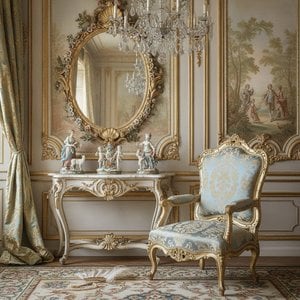
The photograph presents a painting of an ornate antique étagère by Alexandre Roux. It’s displayed in what appears to be a museum setting, evidenced by the lighting and background. The piece is richly detailed with intricate carvings and a decorative mirror. This exquisite example embodies the spirit of the Rococo Revival style—a movement that sought to recapture the grandeur and ornamentation of eighteenth-century France, specifically the Régence period. Roux’s masterful craftsmanship elevates this simple console table into a symbol of refined taste and aristocratic aspiration.
  • Artist: Alexandre Roux
  • Born Year: 1813
  • Death Year: 1886
  • Birth City: Paris
  • Birth Country: France

Alexandre Roux’s artistic journey began in the bustling ateliers of Parisian cabinetmaking, where he honed his skills and absorbed the traditions of classical design. However, his ambition extended beyond national boundaries; he embraced the opportunity to forge a new path as an immigrant artist in America during the mid-nineteenth century.

Roux’s influence on American interior decoration is undeniable. He championed the Rococo Revival style—characterized by curving lines, lavish floral motifs, and cherubic figures—creating furniture that transported viewers back to the opulent salons of Versailles. This aesthetic resonated deeply with wealthy patrons who sought to emulate the elegance and grandeur of European aristocracy.

The étagère itself exemplifies Roux’s dedication to meticulous detail. Observe the delicate carvings adorning the wooden supports, mirroring the intricate ornamentation found in Rococo sculptures and paintings. The mirror surface reflects light, enhancing the sense of space and creating a captivating interplay of textures—smooth glass juxtaposed against rich mahogany. This careful consideration of materials and technique underscores Roux’s commitment to producing works that were both aesthetically pleasing and technically impressive.

Furthermore, consider the symbolic significance of this piece. The étagère represents more than just functional furniture; it embodies a broader cultural preoccupation with beauty, refinement, and aristocratic ideals. Like many artworks from its era, it speaks to a desire for escapism—a longing for a bygone age of splendor and artistic patronage.

Notably, Roux’s work aligns closely with the celebrated Étagère at The Metropolitan Museum of Art – a testament to his enduring legacy as one of America's foremost furniture makers. Its meticulous execution and stylistic adherence to Rococo Revival principles continue to inspire admiration and serve as a reminder of the transformative power of art.

  • Style: Rococo Revival
  • Medium: Rosewood, chestnut, poplar, bird’s-eye maple
  • Dimensions: 86 x 79 1/2 x 31 3/4 in. (218.4 x 201.9 x 80.6 cm)
  • Credit Line: Sansbury-Mills Fund, 1971
  • Object Number: 1971.220

The artist’s skill in rendering the intricate details of the wood carving is remarkable—a testament to Roux's dedication to achieving artistic excellence.

Benzer Eserler


Sanatçı Özgeçmişi

Alexandre Roux: The Parisian Cabinetmaker Who Shaped American Style

Born in the heart of Paris in 1813, Alexandre Roux’s journey from a skilled craftsman to a celebrated furniture maker in New York City is a testament to ambition, talent, and an astute understanding of evolving aesthetic tastes. Initially trained within the traditional workshops of his native France, Roux’s career took a pivotal turn when he immigrated to America in 1844, establishing himself as a prominent figure in the burgeoning world of American furniture design. His legacy isn't defined by grand, revolutionary movements but rather by a consistent dedication to exquisite detail and a masterful command of the Rococo Revival style – a style that profoundly influenced the interiors of wealthy homes across the United States during the mid-19th century.

Roux’s early life instilled in him a deep appreciation for craftsmanship. While specific details about his family are scarce, it's clear he was raised within a lineage of artisans, absorbing techniques and an inherent understanding of materials. This foundation proved invaluable as he navigated the challenges of establishing a business in a new country. New York City, with its rapid growth and influx of European immigrants, presented both opportunities and competition. Roux quickly distinguished himself through his commitment to quality, utilizing premium materials like black walnut and incorporating intricate carvings that echoed the elegance of 18th-century France. His workshops became renowned for producing furniture that was not merely functional but also a statement of refined taste – a direct reflection of the Rococo Revival’s emphasis on ornamentation, curves, and luxurious finishes.

Notable Works and Artistic Style

Roux's work is characterized by an almost obsessive attention to detail. He wasn’t simply replicating historical styles; he was interpreting them with a distinctly American sensibility. His pieces often featured elaborate motifs – shells, scrolls, floral patterns – meticulously carved into the wood and finished with lustrous varnish. The “Parlor Cabinet,” perhaps his most celebrated creation, exemplifies this perfectly. This stunning piece showcases Roux's ability to seamlessly blend intricate designs with exquisite materials, creating a work that is both visually arresting and remarkably tactile. The inclusion of a bowl on one side and a mirror on the other adds an element of surprise and sophistication, demonstrating Roux’s understanding of how furniture could function as a sculptural object within a room.

Beyond the Parlor Cabinet, works like “Still Life Fish” offer further insight into Roux's artistic approach. While categorized as an oil painting, this piece reveals his keen eye for texture and light – qualities he undoubtedly translated to his furniture designs. The meticulous rendering of scales and reflections suggests a desire to capture not just the appearance but also the essence of the subject matter. This attention to realism, combined with a subtle impressionistic touch, sets Roux apart from purely academic painters.

Influence and Historical Context

Alexandre Roux’s rise coincided with a significant shift in American interior design. Following the War of 1812, there was a renewed interest in European styles, particularly those of the French monarchy. The Rococo Revival, characterized by its ornate detailing and emphasis on luxury, became immensely popular among wealthy Americans seeking to emulate the elegance of European aristocracy. Roux’s furniture played a crucial role in shaping this trend, providing a tangible link to the past while simultaneously reflecting the aspirations of the burgeoning American elite.

His work was showcased at the 1853 New York Crystal Palace Exhibition, a pivotal event that brought together innovations from across the globe. This exposure undoubtedly solidified Roux’s reputation and contributed to the growing demand for his furniture. The commission from the Astor family—a testament to his skill—further elevated his status within the American design community.

Legacy and Recognition

While Alexandre Roux may not be as widely recognized as some of his contemporaries, his contributions to American furniture design are undeniable. His pieces can be found in prestigious collections such as the Musée Baron Gérard in Bayeux, France, a testament to their enduring quality and artistic merit. The Metropolitan Museum of Art also holds an example of his work – a sideboard that provides valuable insight into his craftsmanship and stylistic choices. His influence extends beyond individual pieces; Roux helped establish a precedent for American furniture makers who sought to blend European tradition with local sensibilities, ultimately shaping the evolution of American design.

Alexandre Roux’s story is one of transatlantic ambition, artistic dedication, and a profound understanding of the power of beauty. His legacy lives on in the exquisite furniture he created – pieces that continue to inspire admiration for their craftsmanship, elegance, and enduring appeal.

alexandre roux

alexandre roux

1813 - 1886 , France

Kısa Bilgiler

  • Artistic Movement Or Style: Rococo Revival, Victorian Furniture
  • Date Of Birth: 1813, Paris, France
  • Date Of Death: 1886
  • Full Name: Alexandre Roux
  • Nationality: French
  • Notable Artworks:
    • Parlor Cabinet
    • Still life fish
  • Place Of Birth: Paris, France
Temalara, stillere ve özelliklere göre düzenlenmiş sanat eserlerini keşfedin.