Web önizlemesinin çok ötesinde, baskıya hazır bir dosya edinin. Sattığımız her dijital görüntü, stok veri tabanımızdaki yüksek çözünürlüklü bir ana dosyadan —genellikle 5.000 ila 15.000 piksel genişliğinde— gelir; böylece büyük boyutlarda baskı alabilir, dar kırpmalar yapabilir veya ince detayları güvenle yeniden üretebilirsiniz.
Stüdyomuzdan çıkan hiçbir dosya işlenmeden çıkmaz. Bir dijital uzman, renkleri orijinal tabloyla karşılaştırarak kontrol eder ve gerekirse düzeltir; ardından profesyonel rötuş araçlarıyla netliği ve detayları artırır — bunu yaparken her zaman sanatçının fırça darbelerine ve üslubuna sadık kalır. Sonuç, filtrelenmiş bir tarama gibi değil, bizzat tablonun kendisi gibi görünen bir görüntüdür.
İşlem tamamlanmadan önce onayınız alınır: Uzmanımız, incelemeniz için görseli 72 saat içinde e-posta ile gönderir. Memnun kalmadınız mı? İyileştirme veya düzeltme talep edebilir ya da kalite beklentinizin altında kalırsa iade isteyebilirsiniz.
Yayıncıların, tasarım stüdyolarının, galerilerin ve matbaaların güvendiği kalite budur.
Kişisel kullanım, baskı ve yaratıcı projeleriniz için yüksek çözünürlüklü bir dosya indirin. ( Baskı Satışına Geç El Yapımı Tablo Satın Al)
WahooArt.com seçtiğinizde, sadece bir görsel edinmekle kalmaz; titizlikle hazırlanmış, profesyonelce iyileştirilmiş dijital bir sanat eserine sahip olur ve memnuniyet garantisiyle güvence altına alınırsınız. Siparişinizle birlikte otomatik olarak sunulan her şey şunlardır:
Yüksek çözünürlüklü dijital görüntü dosyanız, siparişinizin ardından en geç 72 saat içinde e-posta ile size gönderilecek ve hemen kullanıma hazır olacaktır.
Sanat eseriniz; maksimum detay, netlik ve renk doğruluğu sağlamak amacıyla gelişmiş yapay zeka araçları ve manuel düzenleme kullanılarak profesyonelce optimize edilmektedir.
Dosyanızı yanlışlıkla mı sildiniz yoksa kayıp mı oldu? Endişelenmeyin; dosyanızı dilediğiniz zaman size ücretsiz olarak tekrar göndereceğiz.
Sanat eserinizin tadını gümrük vergisi, harç veya teslimat ücreti ödemeden anında çıkarın; dijital indirmeler her zaman vergiden muaftır.
Profesyonel araçlar ve renk yönetimi kullanarak dijital görselinizin orijinal renklere mümkün olduğunca yakın yansıtılmasını sağlıyoruz.
If you're not satisfied with your digital image, we'll revise it or refund 100% within 100 days - no questions asked.
Memnun kalmadınız mı? Dijital dosyanızı teslim aldıktan sonraki 100 gün içinde, hiçbir soru sorulmaksızın tam para iadesi alabilirsiniz.
Buy 3 images, save 10% - Buy 5, save 15% - Buy 10+, save 20%. Great for creative projects, galleries, and agencies.
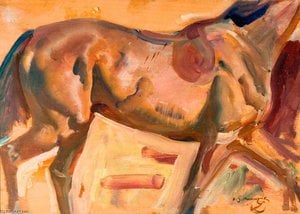
Adrian Jones imzalı "The Soarer", balanced parlaklık ve Gentle Luminance düzeyinde bir lüminans ile kaydedilmiştir.
Adrian Jones imzalı "The Soarer", eserin Slayt Gösterisi sayfasında bir slayt gösterisi olarak görüntülenebilir.
"The Soarer", Academic Realism akımına aittir ve yaratıcısı 19th Century döneminde eser vermiştir.

Born in the quiet landscape of Ludlow, Shropshire, on February 9, 1845, Adrian Jones possessed a spirit that was as much defined by scientific precision as it was by artistic passion. The son of James Brookholding Jones and Jane Marshall, his early years were steeped in an intense fascination with the animal kingdom, particularly the noble horse. While his father harbored reservations about a life dedicated to the arts, Jones pursued a path that would uniquely bridge the gap between science and aesthetics. By enrolling in the Royal Veterinary College in London in 1866, he secured his qualification as a veterinary surgeon, a decision that would later provide him with an unparalleled advantage in the studio. This deep, foundational knowledge of equine anatomy allowed him to perceive the subtle musculature, the tension of a tendon, and the rhythmic grace of a gallop with a clarity that few of his contemporaries could replicate.
His journey was not merely confined to the lecture halls of London; it was forged in the heat of global service. Joining the British Army as a veterinary officer in 1867, Jones’s life became an odyssey through Ireland, India, Abyssinia, Egypt, and South Africa. These years of military service instilled in him a profound sense of movement and a rugged, adventurous spirit. The diverse landscapes and cultures he encountered subtly permeated his artistic vision, lending a worldly depth to his later works. It was during this period of transition that he began to cultivate his sculptural talents, encouraged by the sculptor Charles Bell Birch. This mentorship helped transform a skilled surgeon into a rising star of the British art scene, leading to his triumphant debut at the Royal Academy in 1884 with A Hunter, one of the right sort.
As Jones transitioned from the battlefield to the studio, his reputation as a master of equestrian subjects grew with remarkable speed. His ability to capture the majesty and vitality of horses became his hallmark. In 1887, his bronze group Gone Away earned him first prize in the prestigious Goldsmiths’ Company competition, a milestone that solidified his standing among Britain's elite sculptors. His work was characterized by an extraordinary attention to detail and an ability to convey energy and motion within the stillness of bronze or the fluid strokes of oil on canvas. Whether depicting the spirited The Soarer or the joyful Merry Gal, Jones possessed a rare gift for imbuing his subjects with a sense of individual character and unbridled freedom.
His artistic repertoire extended beyond the sculptural medium into captivating paintings that are still celebrated today. In works such as Coronet, Merryman and Dewdrop, one can observe his mastery over light, shadow, and color. His paintings often feature:
The later years of Adrian Jones's life were marked by significant public contributions that moved beyond the purely aesthetic into the realm of national memory. Following the profound losses of the Boer War and World War I, Jones undertook several monumental commissions, creating war memorials that served as poignant tributes to fallen soldiers and their equine companions. These works, including his notable involvement with the Royal Marines Memorial, showcased his ability to use sculpture as a medium for collective mourning and historical preservation. His work became a permanent fixture in the British landscape, bridging the gap between private emotion and public commemoration.
By the time of his passing in 1938, Adrian Jones had left an indelible mark on the history of British art. He remains a singular figure—a man who could dissect the physical form with the precision of a surgeon and reimagine it with the soul of a poet. His legacy lives on through the countless admirers of his equine masterpieces, which continue to evoke the timeless beauty, strength, and spirit of the horse.

1845 - 1938
 Gerçek Boyutta Önizle
 Paylaş
 Paylaş
 Detayları Gör
 Rehber

 İndir
İndir
 Benzer ürünler
 X-Işını
 Slayt Gösterisi
 Soru & Cevap
 İstatistikler


 Tümünü Gör