


Handmålad olja på duk i din valda storlek och ram, tillverkad efter beställning av våra konstnärer. ( Beställ tryck Köp högupplöst bild)





























Välj bland våra förinställda storlekar som motsvarar konstverkets ursprungliga proportioner.

Du kan ange egna mått för att passa en specifik ram eller yta. Om den valda storleken inte matchar originalbildens proportioner kommer vi antingen att beskära konstverket eller utöka målningen med ytterligare handmålade element. En digital skiss skickas till dig för godkännande innan produktionen påbörjas.
Observera att förhandsvisningen på skärmen inte återspeglar den faktiska beskärningen eller utökningen. Endast skissen visar den slutgiltiga kompositionen korrekt.
Även om anpassade storlekar är möjliga, rekommenderar vi att du väljer en dimension från den fördefinierade listan för att bevara originalproportionerna.
Leverans över hela världen () på 3–4 veckor istället för standard 5 veckor. (7 september). Inga kompromisser med kvaliteten.


Weaver
Storlek på reproduktion
The painting "Weaver" is a black and white drawing created in 1884 using ink. It depicts a man working on a loom in a workshop, surrounded by various objects that add depth to the scene. The man wears a hat and sits at the loom, which is positioned centrally in the image. Two other figures are visible in the background, one standing closer to the left side and another further back on the right side. The workshop is filled with several objects, including a bowl near the bottom left corner and a cup towards the top right corner. Notably, there are two clocks in the scene: one above the loom and another further back on the right side. These details reflect Van Gogh's attention to realism and his ability to capture everyday life.
Van Gogh was known for his innovative use of color and bold brushstrokes, but in "Weaver," he opted for a more subdued approach using ink. This choice allows the viewer to focus on the intricate details and textures within the scene. The drawing showcases Van Gogh's skill in creating depth and dimension through shading and line work.
During his time in Nuenen, Netherlands, Van Gogh was inspired by the local weavers and their traditional crafts. He often visited workshops to observe and sketch the weavers at work. This series of paintings reflects his admiration for the hardworking people who maintained these ancient traditions.
"Weaver" is part of a larger collection of Van Gogh's works that highlight the lives of ordinary people engaged in their daily activities. These paintings not only capture the essence of realism but also serve as a testament to the artist's empathy for his subjects. Today, Van Gogh’s "Weaver" can be found in various museums and collections around the world.


1853 - 1890 , Nederländerna

Explore the profound emotional depth of Van Gogh's impasto technique. Discover how his sculptural brushstrokes and textured oil layers define Post-Impressionism through an expert art-historical lens, perfect for discerning collectors and fine art enthusiasts.
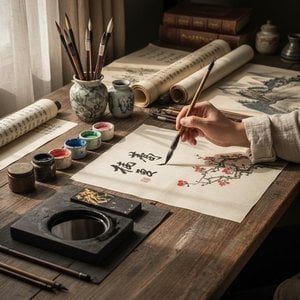
Embark on a sophisticated exploration of ink wash painting and Sumi-e. Uncover the profound historical lineages, Zen philosophies, and technical mastery behind this timeless medium in our authoritative guide for fine art enthusiasts.

 Förhandsvisa
 Skicka
 Dela
Dela
 Visa detaljer

 Ladda ner
 Liknande objekt
 Röntgen
 Bildspel

 Visa mer







 Glasalternativet är endast tillgängligt i storlekar under 110 cm.


