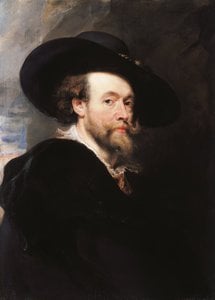
A Life Forged in Baroque Splendor
Sir Peter Paul Rubens, ett namn som resonerar med själva essensen av Barockdynamik, var mycket mer än bara en målare. Han var en diplomat, en lärd och en kulturell arkitekt som fundamentalt förändrade den konstnärliga landskapet i 1600-talets Europa. Född i Siegen, Tyskland, 1577, präglades hans tidiga liv av förflyttning – en formativ upplevelse som subtilt infiltrerade hans senare verk med en underström av drama och emotionell djup. Hans far, Jan Rubens, en jurist på flykt från religiös förföljelse för sina kalvinistiska övertygelser, försköt familjen från deras födelsestad Antwerpen, då under spansk styre. Denna initiala exil väckte hos den unga Peter Paul en känsla av motståndskraft och anpassningsförmåga – kvaliteter som skulle tjäna honom väl genom hans mångfacetterade karriär. Efter sin fars död 1587 återvände familjen till Antwerpen, där han fick en humanistsk utbildning innan han började sin konstnärliga träning omkring 1590, och lärde sig under Tobias Verhaecht och Adam van Noort, och skärpte sina grundläggande färdigheter i ritning och målarkonsttekniker. Det var dock hans tid med Otto van Veen som visade sig vara avgörande, och exponerade honom för det rika arv av renässanskonst – en värld han snart skulle omfamna helhjärtat.
Den Italienska Uppvakningen och Konstnärlig Syntes
År 1600 företog Rubens en transformativ resa till Italien, en pilgrimsfärd som oåterkalleligt formade hans konstnärliga vision. I åtta år fördjupade han sig i mästerverken av Michelangelo, Raphael och Titian, absorberade deras behärskning av form, färg och komposition. Den italienska geniernas inflytande är tydligt synligt i hans tidiga italienska verk, karaktäriserade av klassiska teman och idealiserade figurer. Rubens kopierade inte bara; han syntesade dessa influenser med sin egen inneboende talang, utvecklade en distinkt stil präglad av livfulla färger, dynamiska kompositioner och en sinnlig skildring av den mänskliga formen. Han studerade anatomi noggrant, vilket resulterade i figurer som hade både fysisk realism och emotionell kraft – robusta kroppar fyllda med liv och rörelse. Denna period var inte bara en konstnärlig utveckling; det var en djupgående intellektuell uppvakning, som främjade en genuin uppskattning för klassisk mytologi och litteratur – teman som skulle återkomma i hans verk. Återvändningen till Antwerpen 1608 innebar att Rubens snabbt etablerade sig som den ledande konstnären på sin tid, och mottog en ström av uppdrag som vittnade om hans växande rykte och befäste hans position i frontlinjen av flamländsk konst.
En Mästare i Många Former: Målning Utöver Gränser
Rubens konstnärliga produktion var otroligt mångsidig och produktiv. Han begränsade sig inte till en enda genre; istället utmärkte han sig inom historiemåleri, mytologiska scener, porträtt, landskap och religiösa verk – ett testamente till sin mångfald och oändliga kreativitet. Hans stora dukar, ofta avsedda för kyrkor, palats och allmänna platser, var betagande utställningar av teknisk skicklighet och dramatisk berättelseförmåga.
Nedstigningen från Korset (c. 1612-1614) exemplifierar hans mästerliga användning av ljus och skugga för att skapa en scen med djup emotionell intensitet, och drar betraktarna in i hjärtat av berättelsen.
Uppstigningen från Korset (1610-1611), med sina virvlande figurer och dynamiska kompositioner, visar upp hans förmåga att förmedla rörelse och energi – en kännetecken för hans Barockstil. Även i synes statiska ämnen som
Parisdomen (c. 1636) fyllde Rubens med liv och vitalitet genom sin livfulla färgpalett och sinnliga skildring av den mänskliga formen. Hans teknik var lika imponerande – en mästervracks i oljemåleri, som använde impasto för att skapa textur och djup, tillsammans med delikata glaseringstekniker för att uppnå ljusa effekter. Han använde ofta allegoriska figurer och symbolisk bildspråk, vilket lagrade berättelser med komplexa betydelser som inbjöd till eftertanke och tolkning.
Diplomati, Arv och Bestående Inverkan
Rubens inflytande sträckte sig långt bortom konstvärlden. Hans diplomatiska färdigheter var högt efterfrågade av de söderländska områdena (moderna Belgien), och han genomförde flera uppdrag till England, Frankrike och Spanien, förhandlade om fredsavtal och främjade politiska allianser – en unik dubbel roll som gav honom en nyanserad syn på europeiska angelägenheter och ytterligare förstärkte hans rykte som en man av intelligens och inflytande. År 1622 utsågs han till hovmålare för Maria de Medici, drottningen i exil av kung Henrik IV i Frankrike. Två hela gallerier var att dekoreras med scener från drottningens och hennes avlidne makes liv. Uppdraget var en svår period. Drottningen var obekväm och förändrande; och hennes favorit, kardinal Richelieu, såg Rubens som ett politiskt hot. Efter år av förhandlingar lämnades projektet halvfärdigt när Maria blev avvisad från tronen. År 1625 drabbade feber Antwerpen av pest. Rubens flyttade sin familj till Bryssel tills det värsta hade passerat. De återvände sedan till Antwerpen där hans första fru dog, troligen av feber. Vanligtvis en man som var stolt över sin stoicism, blev Rubens förkrossad av förlusten av ‘den enda jag måste älska och vårda så länge jag lever’. Han kastade sig in i sitt diplomatiska arbete för att distrahera sig själv. Han tillbringade flera månader i England där han utförde flera uppdrag åt kung Karl I. I både Frankrike och England blev Rubens en förtrogen av de mäktiga och farliga. I sina resor förhandlade han allianser för Isabella Clara Eugenia, den guvernör över det spanska Nederländerna. I gengäld beviljades hon sin lojala målare riddarvärdighet, och konstnären blev Sir Peter Paul Rubens.
Nyckeldrag i Rubensocks Stil
- Dynamisk Komposition: Rubensocks målade verk är kända för sina energiska och dramatiska arrangemang av figurer.
- Livfull Färgpalett: Han använde en rik, varm färgskala som gav hans dukar liv.
- Sinnliga Figurer: Hans skildringar av den mänskliga formen karaktäriserades av fullhet, vitalitet och ofta, öppen sensualitet.
- Mästlig Användning av Ljus och Skugga: Rubens behärska ljus och skugga för att skapa djup, drama och emotionell effekt.
- Allegorisk Symbolism: Hans verk innehöll ofta allegoriska figurer och symboliskt bildspråk, vilket lagrade berättelser med komplexa betydelser som inbjöd till eftertanke och tolkning.



 Förhandsvisa
 Byt till tryck
 Skicka
 Dela
Dela
 Visa detaljer

 Ladda ner
 Liknande objekt
 Röntgen
 Bildspel
 Statistik


 Visa mer






































 Glasalternativet är endast tillgängligt i storlekar under 110 cm.