FörhandsvisaFörhandsvisa Förhandsgranska i ARFörhandsgranska i AR Byt till tryck Byt till tryckBeställ handmålad reproduktion Beställ handmålad reproduktion SkickaSkicka
Visa detaljerVisa detaljer Lägg till i favoriter Lägg till i favoriter Ladda nerLadda ner Liknande objektLiknande objekt RöntgenRöntgen BildspelBildspel StatistikStatistik

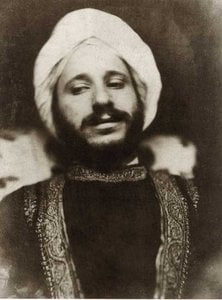
Faust and Marguerite

Simeon Solomon’s ‘Faust & Marguerite’ (1856) – a haunting pen & ink drawing of Victorian romance & transgression. Pre-Raphaelite style, opulent details, & somber mood. Explore this unique artwork.

Utforska Pre-Raphaelitisk konst av Simeon Solomon (1840–1905). Känd för sina bilder över judiskt liv och homosexuell kärlek samt klassiska teman – hans verk erbjuder ett unikt viktorianskt perspektiv. Upptäck hans konst på museer som V&A.

Köp en högupplöst, förbättrad digital bild med betydligt högre kvalitet än förhandsvisningen online.

Varje fil är noggrant förberedd av våra interna specialister med hjälp av avancerade verktyg och professionell manuell retuschering. Vi säkerställer att varje bild har exceptionell skärpa, exakt färgåtergivning och fina detaljer.

Den slutgiltiga filen levereras via e-post inom 72 timmar, optimerad för omedelbar användning i professionella sammanhang, redaktionellt bruk och tryckmiljöer. Detta är samma kvalitet som med förtroende används av ledande designstudior, förlag och gallerier.

Digital bild

Ladda ner en högupplöst fil för personlig visning, utskrift och kreativa projekt. (Byt till tryck Byt till tryckBeställ handmålad reproduktion Beställ handmålad reproduktion)

Totalpris

$ 24,90

Ingår i varje beställning av digital bild

Professionell digital leverans, garanterad

När du väljer WahooArt.com får du inte bara en bild – du får ett professionellt förädlat digitalt konstverk, skapat med precision och med en garanterad tillfredsställelse. Här är allt som ingår i din beställning, automatiskt:

shipping_icon
Snabb leverans via e-post

Din högupplösta digitala bild skickas till dig via e-post inom 72 timmar efter beställning – redo för omedelbar användning.

canvas_icon
AI-förbättrad digital bild

Ditt konstverk optimeras professionellt med hjälp av avancerade AI-verktyg och manuell redigering, vilket garanterar maximal detaljrikedom, skärpa och färgnoggrannhet.

insurance_icon
Gratis livstidsåterutskick

Har du råkat radera eller tappa bort din fil? Ingen oro – vi skickar den kostnadsfritt till dig när som helst.

tax_icon
Inga importavgifter – någonsin

Njut av ditt konstverk omedelbart utan tull, importavgifter eller leveranskostnader – digitala nedladdningar är alltid skattefria.

color_icon
Garanterad färgåtergivning

Vi säkerställer att din digitala bild återger de ursprungliga färgerna så exakt som möjligt med hjälp av professionella verktyg och färghantering.

return_icon
100 dagars nöjdhetsgaranti

Om du inte är nöjd med din digitala bild kommer vi att revidera den eller återbetala 100% inom 100 dagar – utan frågor.

guarantee_icon
100% pengarna-tillbaka-garanti

Inte nöjd? Få full återbetalning inom 100 dagar efter att du mottagit din digitala fil – utan frågor.

discount_icon
Rabatt vid storköp

Köp 3 bilder, spara 10% – Köp 5, spara 15% – Köp 10+, spara 20%. Perfekt för kreativa projekt, gallerier och byråer.

Snabbfakta

  • Movement: Pre-Raphaelite
  • Year: 1856
  • Influences: Victorian era
  • Dimensions: 25.4 x 20.2 cm
  • Notable elements: Opulent details, figures
  • Title: Faust and Marguerite
  • Artist: Simeon Solomon

Konstquiz

Det finns endast ett korrekt svar på varje fråga.

Fråga 1:
What artistic movement is most closely associated with Simeon Solomon’s ‘Faust and Marguerite’?
Fråga 2:
The drawing primarily utilizes which technique to create texture and form?
Fråga 3:
What is a symbolic element in the artwork that suggests worldly pleasures?
Fråga 4:
In what year was ‘Faust and Marguerite’ created?
Fråga 5:
Simeon Solomon's life was significantly impacted by which event?

A Shadowed Romance: Simeon Solomon’s ‘Faust and Marguerite’

Simeon Solomon’s “Faust and Marguerite,” painted in 1856, is not merely a depiction of a biblical tale; it's a haunting meditation on desire, transgression, and the perilous allure of forbidden love. This exquisite pen and ink drawing, rendered with meticulous detail and a distinctly Pre-Raphaelite sensibility, transports us to a richly appointed chamber where the tragic romance between Faust and Marguerite unfolds within a carefully constructed world of opulent symbolism. Solomon, a figure shrouded in both artistic brilliance and scandalous notoriety, masterfully captures the emotional intensity of their illicit affair, imbuing the scene with a palpable sense of foreboding and doomed passion.

The composition itself is deliberately flattened, suggesting a stage-like setting rather than a fully immersive three-dimensional space. This choice directs our attention to the central figures – Faust and Marguerite – locked in an embrace that speaks volumes about their desperate connection. The perspective subtly emphasizes the intimacy of the moment, drawing us into their world while simultaneously hinting at the consequences awaiting them. Architectural details—a grand fireplace, richly patterned wallpaper, and a partially obscured window—create a sense of both grandeur and confinement, mirroring the characters’ entrapment within their shared secret.

A Pre-Raphaelite Vision: Technique and Style

Solomon's technique is characterized by an extraordinary level of precision and control. He employs hatching and cross-hatching with remarkable skill to build up tonal variations and texture, creating a remarkably tactile surface despite the medium being solely ink on paper. The lines are predominantly fine and deliberate, meticulously defining every contour of the figures and objects within the scene. This linear approach, combined with his masterful use of shading, lends the drawing a dignified solemnity, reminiscent of classical portraiture while retaining the vibrant emotionalism associated with the Pre-Raphaelite movement.

The color palette is almost entirely monochromatic—a carefully orchestrated blend of browns and beiges—which contributes significantly to the artwork’s somber mood. This deliberate restriction of color focuses our attention on form, line, and texture, amplifying the drama of the scene and evoking a sense of timelessness. The muted tones also subtly hint at the decay and corruption that lie beneath the surface of their passionate union.

Symbolism and Historical Context

“Faust and Marguerite” is deeply rooted in the legend of Goethe’s “Faust,” but Solomon imbues it with a distinctly Victorian sensibility. The opulent setting—a lavish chamber filled with luxurious furnishings—represents the seductive allure of worldly pleasures, while the shadowed corners and obscured details suggest the moral compromises inherent in Faust's pursuit of knowledge and experience. Marguerite, often depicted as a fallen angel or a victim of circumstance, embodies innocence corrupted by desire. Her pose, vulnerable yet defiant, speaks to her tragic fate.

Simeon Solomon’s life was inextricably linked with scandal. His arrest for attempted sodomy in 1873 and subsequent trials cast a long shadow over his career, ultimately curtailing his artistic output. Despite this personal tragedy, his work continues to fascinate art historians and collectors alike. “Faust and Marguerite” stands as a poignant testament to Solomon’s extraordinary talent—a masterpiece of Pre-Raphaelite romanticism that explores the darkest corners of human desire with breathtaking beauty and unsettling honesty.

A Timeless Masterpiece: Reproduction & Legacy

Reproductions of "Faust and Marguerite" offer a remarkable opportunity to bring this evocative artwork into your home or office. The meticulous detail captured by Solomon’s original drawing is faithfully reproduced, allowing you to appreciate the nuances of his technique and the depth of his symbolism. Whether displayed in a formal study or a more casual living space, this image will undoubtedly serve as a conversation starter—a reminder of the enduring power of love, loss, and the complexities of human experience.

Consider commissioning a hand-painted reproduction from WahooArt.com to ensure that you own an authentic piece of art history, meticulously crafted by skilled artists who honor Solomon’s legacy. The rich textures and subtle tonal variations will faithfully recreate the original's atmosphere, bringing this captivating scene to life in your space.


Konstnärsbiografi

A Life Shrouded in Beauty and Scandal: The World of Simeon Solomon

Simeon Solomon, a name whispered with both reverence and regret within the annals of Victorian art, occupies a unique and often tragic position amongst the Pre-Raphaelites. Born in London in 1840 into a prominent Jewish family – the eighth and final child of merchant Michael (Meyer) Solomon and artist Catherine (Kate) Levy – his life was one of remarkable artistic promise tragically curtailed by societal prejudice and personal demons. Unlike many of his contemporaries who enjoyed long and celebrated careers, Solomon’s trajectory was abruptly altered by scandal, yet his work continues to captivate with its delicate beauty, evocative symbolism, and poignant exploration of themes often considered taboo for the era. He wasn't merely a painter; he was a cultural mirror reflecting the complexities of Victorian England, grappling with faith, desire, and identity in a rapidly changing world.

Early Influences and Artistic Development

Solomon’s artistic education began within his own family circle. His mother possessed an amateur talent for miniature painting, while his elder siblings, Abraham and Rebecca Solomon, were both established artists exhibiting at the Royal Academy. It was from them, particularly his brother Abraham, that Simeon received his initial training, learning the fundamentals of draftsmanship and composition. He formally studied at Carey’s Art Academy in 1852 before entering the prestigious Royal Academy Schools in 1856. This period proved pivotal, as it introduced him to the burgeoning Pre-Raphaelite Brotherhood through Dante Gabriel Rossetti. The encounter with Rossetti, along with friendships forged with Edward Burne-Jones and Algernon Charles Swinburne, profoundly shaped Solomon’s artistic sensibilities. He embraced their commitment to detailed realism, vibrant color palettes, and a fascination with literature, mythology, and religious narratives. Early works like *Isaac Offered* (1858) demonstrate this initial influence, showcasing a meticulous attention to detail and a dramatic narrative style characteristic of the Pre-Raphaelites. However, Solomon quickly began to forge his own path, infusing his paintings with a distinctly personal vision.

The Pre-Raphaelite Brotherhood and Artistic Style

Solomon’s connection to Rossetti and Burne-Jones was instrumental in shaping his artistic style. The Pre-Raphaelites rejected the academic conventions of their time, advocating for an idealized depiction of nature and literature—drawing inspiration from medieval art and folklore. Solomon absorbed these principles, prioritizing meticulous observation and expressive color alongside a deep understanding of symbolism. His canvases often featured luminous landscapes bathed in ethereal light, mirroring the Romantic ideals prevalent during his era. He skillfully blended elements of Gothic and Renaissance aesthetics, creating compositions that were both visually stunning and intellectually stimulating. The influence of Swinburne’s poetry—particularly its exploration of homoerotic themes—became a significant catalyst for Solomon's artistic experimentation.

Themes of Faith, Desire, and Identity

Solomon’s oeuvre explored profound philosophical questions concerning morality, spirituality, and human sexuality. He tackled biblical narratives with sensitivity and nuance, portraying figures like Moses and Jeremiah with remarkable psychological depth. Simultaneously, he engaged in a daring dialogue with Victorian societal norms by depicting homosexual relationships—often veiled in classical allegory or biblical allusion—a practice that was considered scandalous at the time. His paintings *Sappho and Erinna in a Garden at Mytilene* (1864) exemplify this courageous artistic stance, reflecting his fascination with beauty and desire while simultaneously challenging conventional notions of gender roles. Solomon’s exploration of these themes cemented his place as one of the Pre-Raphaelites' most controversial yet intellectually stimulating artists.

Later Years and Legacy

Despite achieving considerable acclaim during his formative years, Solomon’s life took a tragic turn in 1873 when he was arrested for attempting to engage in homosexual acts—a conviction that irrevocably altered his artistic trajectory and tarnished his reputation. The ensuing scandal effectively ended his public career, plunging him into poverty and alcoholism. Nevertheless, Solomon persevered in his artistic endeavors, producing works under difficult circumstances and finding solace in the companionship of fellow artists and intellectuals who recognized his talent. His death in 1905 from complications related to alcohol marked the end of a life tragically cut short—yet his paintings continue to resonate with audiences today, securing his legacy as a pioneering Pre-Raphaelite artist who dared to confront societal prejudices and explore the complexities of human experience. Simeon Solomon’s art stands as a testament to artistic integrity and a poignant reminder of the enduring power of beauty to transcend boundaries.
Simeon Solomon

Simeon Solomon

1840 - 1905 , Storbritannien

Snabbfakta

  • Artistic Movement Or Style: Pre-Raphaelites
  • Artists Who Influenced This Artist:
    • Rossetti
    • Burne-Jones
  • Date Of Birth: 1840-10-09
  • Date Of Death: 1905-08-14
  • Full Name: Simeon Solomon
  • Nationality: Brittisk
  • Notable Artworks:
    • Babylon hath been...
    • Socrates and Agathodemos
    • Ruth and Naomi
    • Shadrach, Meshach...
    • In the Temple of Venus
  • Place Of Birth: London, UK