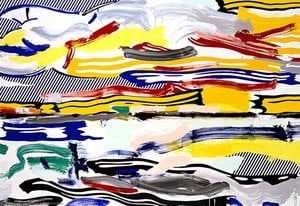
Roy Lichtenstein: En Popkonstrevolutionär
Roy Fox Lichtenstein, född i den pulserande metropolen New York City 27 oktober 1923, förändrade radikalt konstens landskap under det 20:e århundradet. Han steg fram som en nyckelperson inom Pop Art-rörelsen och gjorde inte bara blick för sin tid – han ifrågasatte den aktivt, omvandlade vardagliga bilder till kraftfulla konstnärliga uttalanden. Hans barndom i en välbärgad judisk familj i Manhattan gav både kulturell medvetenhet och en tidig konstnärlig benägenhet. Tidiga exponeringar för museer och konserter, kombinerat med en djup uppskattning för jazzmusik, lade grunden för ett kreativt geni som skulle utmana konventionella synsätt på fin konst. Trots att han i början var intresserad av realistisk teckning och målning under sina tidiga år, inleddes hans formella utbildning vid Art Students League 1939 under Reginald Marsh, följt av studier vid Ohio State University – som avbröts kortvarigt av krigstjänst i armén. Dessa erfarenheter gav en robust teknisk grund som senare briljant omformades genom linsen av masskultur och kommersiella estetik. Fröen till hans signaturstil sågs inte inom de heliga hallen av konsttraditionen utan snarare i den ofta förbisedda världen av vardagliga bilder, särskilt serietidningar och reklam.
Från Abstraktion till Appropriation: En Nyckelövergång
Lichtensteins tidiga verk visade en tydlig engagemang med Abstrut Expressionism, speglande de dominerande estetiska trenderna efter kriget. Men denna fas var övergångsrik, ett stegstensverk för hans revolutionära stil. Ett avgörande ögonblick inträffade under hans tid vid Rutgers University där han mötte Allan Kaprow, vars inflytande tändes Lichtensteins återintresse för proto-popbilder. Denna kontakt utlöste en kritisk förändring i hans konstnärliga bana och ledde honom att ifrågasätta de etablerade gränserna mellan "hög" och "låg" konst. Han började leta bortom den subjektiva expressionen av Abstrut Expressionism mot det objektiva språket av populärkultur – specifikt serietidningar och reklam. Året 1961 markerades av *Look Mickey*, ett verk som vågat approprierade karaktärer från Disney-serier, vilket signalerade början på hans signaturstil. Detta var inte bara imitation utan en konstnärlig omvärdering, lyftande vardagliga bilder till statusen av fin konst. Han kopierade inte bara serietidningar; han skapade dem minutiöst med tekniker som efterliknade den mekaniska tryckningen som användes för kommersiell grafik – ett medvetet gränsdragning mellan originalkonst och massproduktion. Denna appropriation var inte avsiktad att ocritiskt fira konsumtion utan snarare att undersöka dess allestädes närvarande inflytande på amerikansk samhälle och utmana traditionella konstnärliga hierarkier.
Språket med Ben-Day Dots och Kraftfulla Linjer
Lichtensteins konstnärliga vokabulär är omedelbart igenkännbar: djärva, primära färger, tjocka svarta konturer och framför allt Ben-Day dots – en teknik som hämtades direkt från den mekaniska reproduktionen av serietidningar. Dessa prickar var inte bara dekorativa utan integrerade i hans konceptuella ramverk, representerade själva processen för massproduktion och utmanade den traditionella betoningen på konstnärens hand. Hans målningar var ofta monumentala representationer av serietidningsdetaljer, vilket tvingade betraktare att konfrontera de estetiska kvaliteterna hos en konstform som vanligtvis avvisades som trivial. Verk som *Whaam!* (1963), *Drowning Girl* (1963) och *Oh, Jeff…I Love You, Too…But…* (1964) blev ikoniska representationer av Pop Art, fångade ångesterna och önskningarna i en snabbt föränderlig konsumtionssamhälle. Dessa var inte bara skildringar av serietidningsscener utan snarare kommentarer till teman som krig, romantik och samhällsbegränsningar, filtrerade genom det visuella språket av massmedia. Han syftade på att ta bort all pretention om konstnärlig subjektivitet, presentera sitt verk som objektiva reflektioner av amerikansk samhälle – en spegel som hölls upp mot dess egen tillverkade verklighet. Den medvetna plattheten och bristen på målerisk gest förstärkte detta avstånd, efterliknade den opersonliga naturen hos kommersiell tryckning.
Arv och Bestående Inverkan
Roy Lichtensteins inflytande sträcker sig långt bortom konstens sfär. Hans innovativa användning av kommersiella tekniker och appropriation banade väg för nya generationer av konstnärer som utforskade teman som konsumtion, mediemättnad och kulturell identitet. Försäljningen av *Masterpiece* 2017 för 165 miljoner dollar bekräftade hans position som en av de mest framgångsrika amerikanska konstnärerna genom tiderna, men hans arv definieras inte bara av monetära värden. Han utmanade traditionella synen på konstnärlig auktoritet och originalitet, vilket tvingade omvärdera vad som utgör "konst" i sig. Hans verk fortsätter att inspirera grafiska designers, illustratörer och visuella konstnärer över olika discipliner.
- Viktiga prestationer: Pionjär inom Pop Art-stil; uppnådde internationellt erkännande med banbrytande utställningar.
- Kända verk: *Whaam!*, *Drowning Girl*, *Oh, Jeff…I Love You, Too…But…*, *Masterpiece*.
- Lärarekarriär: Påverkade aspirerande konstnärer vid SUNY Oswego och Rutgers University.
Lichtenstein dog den 29 september 1997 och lämnade efter sig ett verk som är lika relevant och provocerande idag som det var under Pop Art-rörelsens höjdpunkt. Hans konst fungerar som en kraftfull påminnelse om mediernas allestädes närvarande inflytande och dess förmåga att forma våra uppfattningar om verkligheten. Han reflekterade inte bara sin tid utan ifrågasatte den aktivt, lämnade ett bestående avtryck på konsthistorien och fortsätter att inspirera kritisk dialog om relationen mellan konst, kultur och handel.



 Förhandsvisa
 Byt till tryck
 Skicka
 Dela
Dela
 Visa detaljer

 Ladda ner
 Liknande objekt
 Röntgen
 Bildspel
 Statistik

 Visa mer






































 Glasalternativet är endast tillgängligt i storlekar under 110 cm.