Förhandsvisa Förhandsgranska i AR Beställ handmålad reproduktion Byt till digital bild Skicka
Visa detaljer Guide Lägg till i favoriter Ladda ner Liknande objekt Röntgen Bildspel Frågor och svar Ladda ner presentation Statistik

Melita

Mått
51.0 x 41.0 cm

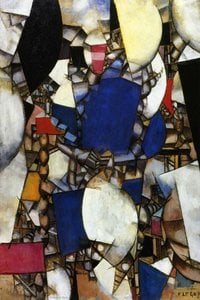
A contemplative portrait of a woman in blue by Ronald Ossory Dunlop captures a soulful 1931 mood through masterful oil textures, inviting you to bring this piece of Irish artistic history into your private collection.

Utforska Ronald Ossory Dunlops livfulla landskap och porträtt! En irländsk målare känd för sin 'alla prima'-stil, medlem i Royal Academy & författare. Upptäck hans verk på Tate & mer!

Konstverket som visas på denna sida skyddas av upphovsrättslagen, vilket innebär att vi inte lagligt kan skapa eller sälja en identisk reproduktion. Detta skydd upprätthålls genom internationella avtal såsom den Bernkonventionen och genom nationella lagar, inklusive de som fastställs av Amerikansk upphovsrättslag – Titel 17. Alla rättigheter förbehållna. Återgivning av konstverk är förbjuden utan skriftligt tillstånd från WahooArt.

Denna metod följer fullt ut upphovsrättsliga regler eftersom den inte innebär kopiering eller duplicering av det skyddade konstverket. Istället är det en kreativ nytolkning – en ny målning som är influerad av originalet men inte identisk med det.

Giclée / Konsttryck

Giclée- eller canvasprint av museumskvalitet med snabb produktion och flexibla ytbehandlingsalternativ. ( Beställ handmålad reproduktion Byt till digital bild)

Corner sample of the P118B picture frame: formgjuten polystyren, 5 cm wide and 3 cm thick
P118B Skr10
Corner sample of the P118H picture frame: formgjuten polystyren, 5 cm wide and 3 cm thick
P118H Skr10
Corner sample of the P118W picture frame: formgjuten polystyren, 5 cm wide and 3 cm thick
P118W Skr10
Corner sample of the P438Z picture frame: formgjuten polystyren, 5.5 cm wide and 3.5 cm thick
P438Z Skr10
Corner sample of the P508JH picture frame: formgjuten polystyren, 7 cm wide and 3.5 cm thick
P508JH Skr12
Corner sample of the P508YH picture frame: formgjuten polystyren, 7 cm wide and 3.5 cm thick
P508YH Skr12
Corner sample of the P805H picture frame: formgjuten polystyren, 5 cm wide and 3.5 cm thick
P805H Skr10
Corner sample of the P805Z picture frame: formgjuten polystyren, 5 cm wide and 3.5 cm thick
P805Z Skr10
Corner sample of the P919BZ picture frame: formgjuten polystyren, 7 cm wide and 3.5 cm thick
P919BZ Skr10
Corner sample of the P919G picture frame: formgjuten polystyren, 7 cm wide and 3.5 cm thick
P919G Skr10
Corner sample of the P919XJ picture frame: formgjuten polystyren, 7 cm wide and 3.5 cm thick
P919XJ Skr10
Corner sample of the P959ZH picture frame: formgjuten polystyren, 5 cm wide and 3 cm thick
P959ZH Skr10
Corner sample of the P968JZ picture frame: formgjuten polystyren, 6 cm wide and 4 cm thick
P968JZ Skr12
Corner sample of the W106C picture frame: massivt trä, 5 cm wide and 3 cm thick
W106C Skr8
Corner sample of the W218G picture frame: massivt trä, 5 cm wide and 3 cm thick
W218G Skr10
Corner sample of the W218JH picture frame: massivt trä, 5 cm wide and 3 cm thick
W218JH Skr8
Corner sample of the W218Y picture frame: massivt trä, 5 cm wide and 3 cm thick
W218Y Skr10
Corner sample of the W307PJ picture frame: massivt trä, 6 cm wide and 3 cm thick
W307PJ Skr10
Corner sample of the W316G picture frame: massivt trä, 6 cm wide and 3 cm thick
W316G Skr10
Corner sample of the W316PJ picture frame: massivt trä, 6 cm wide and 3 cm thick
W316PJ Skr8
Corner sample of the W316Y picture frame: massivt trä, 6 cm wide and 3 cm thick
W316Y Skr10
Corner sample of the W398PJ picture frame: massivt trä, 5 cm wide and 3 cm thick
W398PJ Skr8
Corner sample of the W4111J picture frame: massivt trä, 6.5 cm wide and 3.5 cm thick
W4111J Skr10
Corner sample of the W500HY picture frame: massivt trä, 7 cm wide and 5 cm thick
W500HY Skr15
Corner sample of the W500JH picture frame: massivt trä, 7 cm wide and 5 cm thick
W500JH Skr15
Corner sample of the W692G picture frame: massivt trä, 8 cm wide and 4 cm thick
W692G Skr12
Corner sample of the W849H picture frame: massivt trä, 5 cm wide and 3 cm thick
W849H Skr8
Corner sample of the W940BG picture frame: massivt trä, 7.5 cm wide and 4.5 cm thick
W940BG Skr15
Corner sample of the W953PJ picture frame: massivt trä, 6 cm wide and 3.5 cm thick
W953PJ Skr8

Standardstorlek
skräddarsydd
CM
INCH

Välj bland våra förinställda storlekar som motsvarar konstverkets ursprungliga proportioner.

bredd
höjd

Ange den bredd och höjd du behöver för att passa din ram eller vägg. Ett tryck kan endast beskäras, aldrig göras större än originalbilden, vilket innebär att ett format med en annan proportion leder till att en del av bilden går förlorad. Vi skickar en digital mockup för godkännande innan vi påbörjar tryckningen. Bilden som visas på denna sida visar inte den faktiska beskärningen — det är endast mockuppen som gör det.

Leverans över hela världen () på 2 veckor istället för standard 4/5 veckor. (10 november)

Fri expressfrakt över hela världen
Högkvalitativ linnecanvas
Fullständig fraktförsäkring
Garantier för återbetalning av tullavgifter
Garantier för exakt färgåtergivning
100 dagars returrätt (endast vid fel)
100% pengarna tillbaka-garanti
Mängdrabatt erbjuds

Totalt pris

Skr 690

Melita

Giclée / Konsttryck

Storlek på reproduktion

-

Slutgiltigt pris

Skr 690

Kortfakta

  • Location: Leeds Art Gallery, United Kingdom
  • Artistic style: Portraiture
  • Notable elements or techniques: Alla prima style
  • Dimensions: 51 x 41 cm
  • Artist: Ronald Ossory Dunlop

A Moment of Quiet Contemplation

In the soft, evocative depths of Ronald Ossory Dunlop’s 1931 masterpiece, Melita, we encounter a scene that transcends mere portraiture to become an intimate study of the human soul. The painting presents a woman with dark, cascading hair, her gaze cast downward in a gesture of profound introspection. Draped in a rich, sapphire-blue dress that anchors the composition, she exists in a space of quietude, seemingly lost in a private reverie. There is a palpable sense of stillness within the frame, as if the viewer has stumbled upon a fleeting, sacred moment of thought. This downward tilt of the head and the subtle shadows playing across her features invite us to wonder about the nature of her reflections—is it melancholy, or perhaps a peaceful acceptance of the world around her?

The technique employed by Dunlop is a testament to his mastery of the alla prima method, a style characterized by the application of paint in a single, fluid session. This approach lends Melita a remarkable vitality; the brushwork feels spontaneous yet controlled, allowing the textures of the fabric and the softness of the skin to emerge with lifelike presence. The interplay of light and shadow—the chiaroscuro effect—creates a sense of three-dimensional volume, pulling the subject forward from the canvas. For collectors and interior designers, this painterly texture offers a sophisticated tactile quality that brings a sense of movement and life to any curated space.

A Legacy of Irish Spirit and Artistic Brilliance

To understand the emotional resonance of Melita, one must look toward the rich cultural tapestry from which Ronald Ossory Dunlop emerged. Born in Dublin in 1894, Dunlop was raised amidst the vibrant currents of the Irish Literary Renaissance. His upbringing, surrounded by the mystical and spiritualist influences of figures such as W.B. Yeats, infused his work with a subtle, poetic depth. While his training took him from the Manchester School of Art to the studios of Paris, his aesthetic remained deeply rooted in this atmospheric, soulful tradition. In Melita, we see this confluence of international technique and Irish sensibility—a portrait that is as much about an internal landscape as it is about the external subject.

For those seeking to adorn a home or gallery with a piece of historical significance, this work serves as a bridge to the early 20th century. The painting does not merely decorate a wall; it commands attention through its emotional gravity and classical elegance. Whether placed in a sunlit study or a moody, dimly lit library, a high-quality reproduction of Melita acts as a focal point of sophistication, offering an enduring sense of grace and a timeless connection to the golden age of portraiture.

Frågor och svar

Vilket medium är "Melita" av Ronald Ossory Dunlop utförd i?

Ronald Ossory Dunlop använde tekniken Oil On Canvas för "Melita". Tekniken definierar det ursprungliga verkets materiella karaktär.

Varför är upphovsrättsläget för "Melita" som det är?

Upphovsrättsläget för "Melita" - fortfarande skyddat av upphovsrätt - baseras på konstnärens dödsår 1973.

Förvaras "Melita" i skaparens hemland?

Nej – konstverket förvaras utomlands. Ronald Ossory Dunlop föddes i Irland, och museet som förvarar originalet av "Melita" ligger i Storbritannien.


Konstnärsbiografi

Ronald Ossory Dunlop: Ett liv i färg

Tidigt liv och utbildning

  • Född: Dublin, Irland, den 28 juni 1894.
  • Dunlop kom från en skotsk-irländsk kväkarrörelse med konstnärliga böjelser; hans mor var akvarellmålare.
  • Hans tidiga liv var djupt präglat av atmosfären under den irländska litterära renässansen, då hans far stod nära framstående gestalter som W.B. Yeats och George Russell (Æ).
  • Familjen flyttade till New York 1899 och sedan till London 1902, men bibehöll en stark koppling till Dublin genom årliga besök.
  • Han studerade vid Manchester School of Art, Wimbledon College of Art och i Paris, vilket gav honom en mångsidig konstnärlig grund.

Konstnärlig utveckling och influenser

  • Dunlops tidiga karriär innefattade arbete på en reklambyrå innan han helt ägnade sig åt måleriet.
  • Influenser: Den konstnärliga och litterära miljö han växte upp i, särskilt de mystiska och spiritualistiska strömningar som omgav figurer som Yeats och Russell, formade hans estetiska sinne djupt.
  • Han knöt an till en grupp unga konstnärer som ställde ut på Hurricane Lamp Gallery i Chelsea, vilket bidrog till utvecklingen av ”emotionismen”.
  • Hans stil utvecklades mot en målerisk exuberans, kännetecknad av djärft penseldrag och vibrerande färgpaletter. Han blev känd som en ”alla prima”-målare – en teknik där man arbetar direkt på duken i ett enda arbetspass.

Emotionistgruppen och den konstnärliga filosofin

  • År 1923 grundade Dunlop Emotionistgruppen, som förespråkade konsten som ett uttryck för den inre essensen och den emotionella upplevelsen.
  • Han skrev ett manifest för gruppen där han deklarerade: ”Konsten är uttrycket för livets essens”, vilket speglade deras tro på subjektiv tolkning och konstnärlig frihet.
  • Dunlop gick med i The London Group 1931, vilket ytterligare befäste hans position inom den avantgardistiska konstscenen.

Utställningar och erkännande

  • Dunlop var en flitig utställare och visade sina verk på prestigefyllda platser som Royal Academy, New English Art Club, Leicester Galleries och Royal Hibernian Academy.
  • Hans första separatutställning ägde rum 1928 på Redfern Gallery i London.
  • Största prestation: Valdes till fullvärdig medlem i Royal Academy 1950, vilket markerade höjdpunkten av hans professionella erkännande.
  • Hans verk finns bevarade i flera offentliga samlingar, däribland Tate Gallery, Crawford Gallery (Cork), Cheltenham Art Gallery & Museum och National Portrait Gallery (London).

Teman och stil

    Dunlops produktion omfattar landskap, marinmåleri, figurstudier, porträtt och stilleben.
  • Han avbildade ofta scener från det engelska landsbygden, särskilt kring Barnham i West Sussex, där han bodde senare i livet.
  • Stil: Kännetecknas av en levande palett, energiska penseldrag och en betoning på att fånga atmosfär och emotionell resonans. Hans verk besitter ofta en kägrund av omedelbarhet och spontanitet.

Senare liv och arv

  • Dunlop tillbringade stora delar av sitt liv i England och slog sig slutligen ner i Barnham, West Sussex.
  • Han fortsatte att måla och ställa ut fram till sin död den 18 maj 1973.
  • Historisk betydelse: Dunlops arbete representerar en bro mellan traditionella måleritekniker och modernismens uttrycksfulla frihet. Hans livfulla stil och hängivenhet till att fånga den emotionella sanningen fortsätter att beröra publiken än idag. Dock har hans popularitet också lett till att ett flertal förfalskningar dykt upp på marknaden.
Ronald Ossory Dunlop

Ronald Ossory Dunlop

1894 - 1973 , Irland

Kortfakta

  • Birth Date: 1894-06-28
  • Birth Place: Dublin, Irland
  • Death Date: 1973-05-18
  • Influenced By: W. B. Yeats, James Stephens, George Russell
  • Movement: Emotionism, brittisk impressionism
  • Name: Ronald Ossory Dunlop
  • Nationality: Irländsk
  • Notable Works:
    • Självporträtt
    • Walberswick
    • Mrs R. O. Dunlop
    • Snö i Stratford on Avon
    • St Tropez, södra Frankrike
    • The Thames vid Sunbury