

Konstverket som visas på denna sida skyddas av upphovsrättslagen, vilket innebär att vi inte lagligt kan skapa eller sälja en identisk reproduktion. Detta skydd upprätthålls genom internationella avtal såsom den Bernkonventionen och genom nationella lagar, inklusive de som fastställs av Amerikansk upphovsrättslag – Titel 17. Alla rättigheter förbehållna. Återgivning av konstverk är förbjuden utan skriftligt tillstånd från WahooArt.
Denna metod följer fullt ut upphovsrättsliga regler eftersom den inte innebär kopiering eller duplicering av det skyddade konstverket. Istället är det en kreativ nytolkning – en ny målning som är influerad av originalet men inte identisk med det.
Giclée- eller canvasprint av museumskvalitet med snabb produktion och flexibla ytbehandlingsalternativ. ( Beställ handmålad reproduktion Byt till digital bild)
Välj bland våra förinställda storlekar som motsvarar konstverkets ursprungliga proportioner.

Ange den bredd och höjd du behöver för att passa din ram eller vägg. Ett tryck kan endast beskäras, aldrig göras större än originalbilden, vilket innebär att ett format med en annan proportion leder till att en del av bilden går förlorad. Vi skickar en digital mockup för godkännande innan vi påbörjar tryckningen. Bilden som visas på denna sida visar inte den faktiska beskärningen — det är endast mockuppen som gör det.
Leverans över hela världen () på 2 veckor istället för standard 4/5 veckor. (16 november)
Coin , Antoninianus
Storlek på reproduktion
Coin , Antoninianus is an artwork by Roman Opałka. The subject matter centers on an Antoninianus, a silver Roman coin. This work is situated within the artist's engagement with conceptual art and numismatic study.
The piece functions as a photographic study of the artifact. It occupies a space where the precision of numismatics meets the philosophical rigor of contemporary conceptualism. Through this focus, the artist explores the intersection of historical authority and the systematic documentation of objects.
The composition centers on a single silver coin, positioned against a stark black background. This isolation emphasizes the circular form of the object and the precision of its details. The subject features the bust of a male figure, likely an emperor or a significant historical figure of the Roman era. The portrait is rendered with prominent lines that define the facial features and the texture of the hair.
Geometric and circular shapes dominate the visual field. The lettering of the surrounding inscriptions is characterized by sharp, precise lines that follow the curvature of the coin's edge. The interplay between the reflective, slightly worn surface of the silver and the deep shadows of the background highlights the relief of the numismatic iconography. The presentation focuses entirely on the physical presence of the artifact, emphasizing its historical weight and the specific details of the imperial portraiture.
The work is a photographic study of a silver coin. The technique captures the object with high clarity, rendering the fine details of the portrait and the surrounding inscriptions. The composition focuses on the circular form of the artifact, utilizing directional lighting to emphasize the surface texture. This approach highlights the interplay between the metallic sheen and the shadows within the relief.
The material properties of the silver surface are central to the visual impact. The coin appears slightly worn from age and handling, yet it retains a reflective quality. This wear creates a tactile sense of antiquity, where the smoothness of the metal contrasts with the sharp, geometric lines of the lettering. The presentation against a stark black background isolates the subject, ensuring the focus remains entirely on the physical characteristics of the numismatic object.
The artist's exploration of numismatic subjects is represented in several other pieces held at The Walsh Gallery at Seton Hall University in South Orange. These works continue a thematic focus on historical currency and the physical properties of metal. Among these is the piece titled Silver Coin, which shares a similar material focus.
Other compositions in this specific collection include the work titled Antoninianus and the piece known as Coin, Quadrans. These works are part of a broader engagement with the visual language of ancient coinage and the concept of seriality.
The work is held at The Walsh Gallery at Seton Hall University, located in South Orange, United States of America. This institution was established in 1968. The gallery serves as a repository for various movements, with a collection that includes Modern Art and European Art.
The museum's holdings are situated within the academic environment of the university. Its permanent collection features diverse artistic traditions and historical periods. This specific piece remains part of the institutional holdings in South Orange.
När det gäller upplevd ljusstyrka är "Coin , Antoninianus" av Roman Opałka deep_shadow.
En reproduktion av "Coin , Antoninianus" passar bra i ett Office.
Med sin Earthy-palett rekommenderas "Coin , Antoninianus" av Roman Opałka för ett Office. Färgerna är en del av anledningen till detta förslag.


1931 - 2011 , Frankrike

Explore the evolution of Roman portraiture from verism to imperial idealism. Discover the true colors of antiquity with us.

Explore the captivating history of wealth & opulence in art! Discover masterpieces from the Renaissance to the Baroque periods, learn about symbolism, and gain expert insights for discerning collectors at WahooArt.

Explore the powerful intersection of sacred devotion and pop culture energy. From Byzantine icons to Warhol-style masterpieces, discover bold, high-impact artworks that redefine adoration through vibrant color and iconic symbolism.
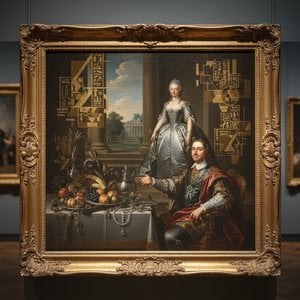
Explore the fascinating history of wealth & status in art! Discover how Renaissance masters depicted prosperity through portraiture, symbolism, and patronage. Expert insights for elite collectors.

Explore the groundbreaking art of Antonello da Messina, a pivotal figure of the Renaissance. Discover his innovative oil painting techniques, captivating portraits, and lasting influence on Italian masters. Learn more at WahooArt.
 Skicka
 Dela
 Visa detaljer
 Guide


 Ladda ner
 Liknande objekt
 Bildspel
 Frågor och svar

 Statistik


 Visa mer






































 Glasalternativet är endast tillgängligt i storlekar under 110 cm.


