Konstnärsbiografi
A Master of Emotion: The Life and Legacy of Rogier van der Weyden
Rogier van der Weyden, född omkring 1400 i den livliga staden Tournai, belägen i det nuvarande Belgien, steg fram som en nyckelperson i den blomstrande världen av tidig flamsk målning. Det finns relativt lite information om hans tidiga liv, men det tros att han först utvecklade sina färdigheter inte med pensel och färg, utan som guldsmed. Denna formativa utbildning lade en obeveklig dedikation till minutiös detalj och en förfinad känsla för hantverk – kvaliteter som skulle bli kännetecken för hans konstnärliga stil. Precisionen som krävdes vid arbete med ädelmetaller översattes oundvikligen till den utsökta återgivningen av texturer, tyger och uttryck som definierar hans mästerverk. Han målade inte bara verkligheten; han återskapade den med noggrannhet, fylld med en nästan andaktig uppmärksamhet på detaljer.
From Tournai to Brussels: A Rising Star
År 1427 hade van der Weyden befordrat till mästare inom Gilden Saint Luke i Tournai, ett testamente till hans växande talang och skicklighet. Detta markerade en betydande vändpunkt, vilket befäste hans position som professionell konstnär och öppnade dörrar till viktiga uppdrag. Hans framgång fortsatte när han ingick i tjänst hos Filip den gode, hertig av Burgund, år 1435 – ett beskydd som skulle forma hans karriär för resten av sitt liv. Att vara hovmålare gav honom inte bara ekonomisk säkerhet utan också tillgång till en elitkrets av inflytande och exponering för några av tidernas mest eftertänksamma ögon. Det var under denna period som van der Weydens konstnärliga vision verkligen började mogna, bort från de något strama konventionerna hos tidigare flamska målare mot en mer emotionellt resonansrik och naturalistisk approach. Han målade inte bara religiösa scener; han strävade efter att väcka genuin känsla hos betraktaren, att skapa en upplevelse.
The Language of Feeling: Style and Technique
Rogier van der Weydens konstnärliga signatur är omedelbart igenkännbar genom flera definierande egenskaper. Hans palett var otroligt rik och mångsidig, ett livfullt tapet av färger noggrant utvalda för att undvika upprepning och skapa djup och komplexitet inom hans kompositioner. Han besatt en extraordinär förmåga att förmedla djupa känslor – *pathos* – särskilt i representationer av religiösa ämnen som Lamentation, där sorg och vemod är palpabla. Denna emotionella intensitet uppnåddes inte genom dramatiska gester eller överdrivna uttryck; snarare var den subtilt vävd in i själva målningens tyg, förmedlad genom delikata nyanser av ansiktsuttryck, kroppsspråk och komposition. Hans figurer, medan de följde tidernas konventioner, visar ett växande intresse för realistisk representation – inte bara i anatomi och broderi utan också i att fånga sina ämnes psykologiska tillstånd. De har en stolt, nästan skulptural kvalitet, särskilt i hans monumentala altarpiecer, vilket ger dem en allvarlig och andaktig atmosfär. Han använde sig skickligt av oljefärg, byggde upp lager av genomskinliga glasyr för att åstadkomma ljusa effekter och skapa en känsla av djup och realism som var revolutionerande för sin tid.
Notable Works and Enduring Masterpieces
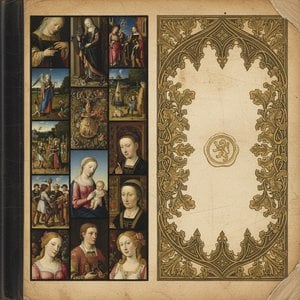
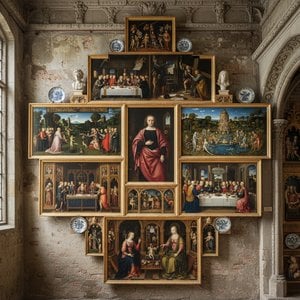
Under sin produktiva karriär producerade van der Weyden många verk som står som testamente till hans konstnärliga skicklighet. St Luke Drawing a Portrait of the Madonna, hemmahörandes i Museum of Fine Arts, Boston, visar hans behärskning av olja på panel och minutiös observation. Lamentation, som finns i Musée des Beaux-Arts Tournai, Belgien, är kanske hans mest berömda verk – en kraftfullt emotionell representation av Jesu sorg, känd för sin dramatiska användning av *chiaroscuro* och sin förmåga att väcka djup sorg hos betraktaren. Flera versioner av The Deposition existerar, var och en visar hans skicklighet i att förmedla sorg och drama med hänförande känslighet. Annunciation, ett mästerverk av raffinerad stil och uppmärksamhet på detaljer, exemplifierar hans förmåga att infusa även de mest traditionella ämnena med en känsla av fräschör och livlighet. Och slutligen står den invecklade och rikligt detaljerade Bladelin Triptych som ett monumentalt prestation – en komplex altarpiece som visar hela spektrumet av van der Weydens konstnärliga förmågor. Dessa verk, och många andra, fortsätter att fängsla publiken idag, vilket säkrar hans plats som en av de viktigaste målarna på 1400-talet.
Historical Significance and Lasting Influence
Van der Weydens inflytande sträckte sig bortom Tysklands gränser. Hans verk var mycket eftertraktade i hela Europa, särskilt i Italien och Spanien, där de introducerade ett nytt nivå av emotionell djup och naturalism till lokala konsttraditioner. Även om hans rykte upplevde en period av relativt nedgång under 1600-talet, återupptäcktes det under 1800-talet och säkrade hans plats som en av de mest betydelsefulla målarna på 1400-talet. Han stod tillsammans med Jan van Eyck och Robert Campin som en av de "tre stora" tidiga flamska mästarna, var och en bidrog unikt till utvecklingen av nordlig renässanskonst. Hans innovativa tekniker och emotionellt laddade kompositioner banade väg för framtida generationers konstnärer, inspirerade otaliga imitatorer och påverkade kursen för västerländsk målning i århundraden framöver. Han etablerade oljefärg som det dominerande mediet och höjde statusen hos konstnären inom samhället, vilket omvandlade dem från skickliga hantverkare till beundrade skapare. Rogier van der Weydens arv resonerar fortfarande idag, ett testamente till hans bestående geni och hans djupa förståelse för den mänskliga konditionen.



 Förhandsvisa
 Byt till tryck
 Skicka
 Dela
Dela
 Visa detaljer

 Ladda ner
 Liknande objekt
 Röntgen
 Bildspel
 Statistik

 Visa mer






































 Glasalternativet är endast tillgängligt i storlekar under 110 cm.