x
FörhandsvisaFörhandsvisa Förhandsgranska i ARFörhandsgranska i AR Beställ handmålad reproduktion Beställ handmålad reproduktionKöp högupplöst bild Köp högupplöst bild SkickaSkicka
Visa detaljerVisa detaljer Lägg till i favoriter Lägg till i favoriter Ladda nerLadda ner Liknande objektLiknande objekt RöntgenRöntgen BildspelBildspel

The Apothecary

Explore Pietro Longhi’s ‘The Apothecary’ (1752) – a captivating Baroque scene of 18th-century Venetian life. Oil on canvas, rich detail & theatrical storytelling.

Longhi är ett italienskt efternamn, som burits av bland andra: Alessandro Longhi (1733–1813), italiensk konstnär Barbara Longhi (1552–1638), italiensk konstnär Giuseppe Longhi (1766–1831), italiensk grafiker Luca Longhi (1507–1580), italienskt konstnär Martino Longhi den äldre (1534–1591), italienskt arkitekt Martino Longhi den yngre (1602–1660), italienskt arkitekt Onorio Longhi (1568

Giclée / Konsttryck

Giclée- eller canvasprint av museumskvalitet med snabb produktion och flexibla ytbehandlingsalternativ. (Beställ handmålad reproduktion Beställ handmålad reproduktionKöp högupplöst bild Köp högupplöst bild)

P118B $10
P118H $10
P118W $10
P438Z $10
P508JH $12
P508YH $12
P805H $10
P805Z $10
P919BZ $10
P919G $10
P919XJ $10
P959ZH $10
P968JZ $12
W106C $8
W218G $10
W218JH $8
W218Y $10
W307PJ $10
W316G $10
W316PJ $8
W316Y $10
W398PJ $8
W4111J $10
W500HY $15
W500JH $15
W692G $12
W849H $8
W940BG $15
W953PJ $8

Standardstorlek
skräddarsydd
CM
INCH

Välj bland våra förinställda storlekar som motsvarar konstverkets ursprungliga proportioner.

bredd
höjd

Du kan ange egna mått för att passa en specifik ram eller yta. Om det valda måttet inte överensstämmer med originalbildens proportioner kommer vi antingen att beskära konstverket eller utöka bilden med en speglad eller enfärgad kant. En digital mockup skickas för ditt godkännande innan produktionen påbörjas.
Vänligen notera att förhandsvisningen på skärmen inte återspeglar den faktiska beskärningen eller utökningen. Endast mockuppen visar den slutgiltiga kompositionen korrekt.
Även om anpassade storlekar är möjliga, rekommenderar vi att du väljer ett mått från den fördefinierade listan för att bevara de ursprungliga proportionerna.

Leverans över hela världen () på 2 veckor istället för standard 4/5 veckor. (4 september)

why_choose_icon
Fri expressfrakt över hela världen
why_choose_icon
Högkvalitativ linnecanvas
why_choose_icon
Fullständig fraktförsäkring
why_choose_icon
Garantier för återbetalning av tullavgifter
why_choose_icon
Garantier för exakt färgåtergivning
why_choose_icon
60 dagars returrätt (endast vid fabrikationsfel)
why_choose_icon
100% pengarna tillbaka-garanti
why_choose_icon
Mängdrabatt erbjuds

Totalpris

$ 68

reproduction

The Apothecary

Giclée / Konsttryck

Storlek på reproduktion

-

Slutgiltigt pris

$ 68

Snabbfakta

  • Dimensions: 59 x 48 cm
  • Artist: Pietro Longhi
  • Subject or theme: Apothecary scene
  • Artistic style: Genre painting
  • Influences:
    • Perugino
    • Venetian Hogarth
  • Year: 1752
  • Movement: Baroque

Konstquiz

Det finns endast ett korrekt svar på varje fråga.

Fråga 1:
What historical period does ‘The Apothecary’ primarily depict?
Fråga 2:
According to the description, what is a prominent feature of ‘The Apothecary’s’ composition?
Fråga 3:
What is a symbolic element within ‘The Apothecary’ that reflects knowledge and medicine?
Fråga 4:
Who is Pietro Longhi, as described in the provided text?
Fråga 5:
What artistic style is ‘The Apothecary’ associated with, based on the description?

A Glimpse into Venetian Society: Pietro Longhi’s “The Apothecary”

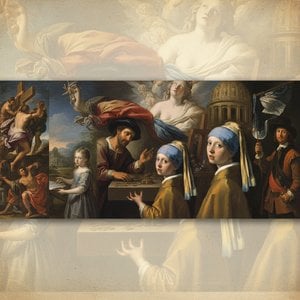
Pietro Longhi's "The Apothecary," painted in 1752, is more than just a depiction of a bustling commercial space; it’s a meticulously crafted window into the vibrant and often contradictory world of 18th-century Venice. Longhi, a master of capturing the everyday dramas unfolding within bourgeois homes, eschewed the grand historical narratives favored by his contemporaries, instead focusing on the intimate details of Venetian life – a deliberate choice that cemented his reputation as the “Venetian Hogarth.” This painting immediately draws the viewer into a scene brimming with quiet observation and subtle social commentary, utilizing a shallow depth of field to prioritize interaction and narrative over strict realism. The warm palette—rich browns, ochres, and deep reds—creates an atmosphere both inviting and slightly cluttered, reflecting the practical yet aesthetically-minded environment of an apothecary.

A Baroque Tableau: Composition and Technique

The composition is remarkably complex, skillfully arranged to guide the eye through a series of interconnected actions. A central figure, a man diligently applying something to a woman’s face – a gesture both intimate and slightly unsettling – dominates the scene, immediately establishing a core narrative thread. An older gentleman observes with a mixture of curiosity and concern, while a nun stands nearby, seemingly offering assistance or perhaps simply observing the unfolding drama. Longhi's mastery lies in his ability to render textures with remarkable detail; the rough surfaces of wooden shelves laden with jars and bottles contrast sharply with the smooth fabrics of the clothing worn by the figures. The use of linear perspective, characteristic of Baroque painting, subtly flattens the space, prioritizing clarity and narrative flow over strict adherence to three-dimensional accuracy. The brushwork is generally smooth and blended, indicative of an oil paint technique—a medium that allowed for nuanced color gradations and a rich, tactile quality.

Symbolism Within the Scene: Alchemy and Social Commentary

Beyond its immediate depiction of apothecary life, “The Apothecary” is laden with symbolic meaning. The shelves overflowing with jars and bottles represent not just medicinal ingredients but also knowledge, alchemy, and perhaps even a veiled commentary on the pursuit of wealth and power within Venetian society. The presence of the nun adds another layer of complexity, suggesting themes of faith, charity, or even illicit affairs – common motifs in Longhi’s work. The man administering the treatment is often interpreted as representing a physician, while the woman receiving it embodies vulnerability and perhaps a degree of passive acceptance. Notably, many of the figures are partially obscured, their faces often hidden behind masks—a recurring device in Longhi's oeuvre that invites speculation about identity, disguise, and the performative nature of social interactions. The scene subtly critiques the superficiality and intrigue prevalent within the Venetian elite.

Historical Context: A Portrait of a Changing Venice

Painted in 1752, “The Apothecary” reflects a pivotal moment in Venetian history – a period of relative stability following the turmoil of the preceding decades. Venice was transitioning from its maritime dominance to a more inward-looking society, increasingly focused on domestic life and the pleasures of the wealthy elite. Longhi’s choice to depict this everyday scene—a private moment within a professional setting—underscores this shift in focus. His work stands as a valuable historical document, offering insights into the social customs, fashion trends, and prevailing attitudes of 18th-century Venice. The painting aligns with the Rococo style, characterized by its emphasis on elegance, intimacy, and playful subject matter, yet it retains Longhi’s distinctive wit and observational acuity.

Collecting a Legacy: Reproduction and Artistic Value

Reproductions of “The Apothecary” offer an exceptional opportunity to bring this captivating scene into any interior space. The painting's rich detail and evocative atmosphere create a focal point that sparks conversation and adds a touch of historical charm. Considered alongside the work of Pietro Longhi, it exemplifies his unique ability to capture the nuances of Venetian life with both artistic skill and social awareness. Investing in a high-quality reproduction allows you to appreciate the enduring appeal of this masterful painting—a testament to Longhi’s legacy as one of Venice's most perceptive and engaging chroniclers of daily life.


Konstnärsbiografi

Pietro Longhi (1701-1785): A Venetian Chronicler of Daily Life

Pietro Longhi, born Pietro Falca in Venice on November 5th, 1701, wasn’t painting grand historical narratives or mythological scenes; he was capturing the quiet dramas unfolding within the city's elegant homes and bustling streets. He became renowned for his witty genre paintings – intimate glimpses into the lives of 18th-century Venetians, a departure from the prevailing artistic trends of his time. The son of Alessandro Falca, a silversmith, Longhi’s early training began under the Veronese painter Antonio Balestra, who recognized and nurtured the young artist's talent. This foundation in traditional technique would later serve as a subtle counterpoint to the innovative spirit he brought to his chosen subject matter. He adopted the surname “Longhi” upon beginning his artistic career, a symbolic shedding of his father’s trade for the pursuit of painting.

Early Influences and Artistic Training

Longhi's formative years were marked by exposure to Venetian artistic traditions. His initial mentor, Antonio Balestra, instilled in him a mastery of Venetian painting techniques—broken brushwork and vibrant color glazes—a stylistic hallmark of the era. This meticulous attention to detail would become evident throughout his oeuvre, particularly in his depictions of interiors and fabrics. Recognizing Longhi’s potential, Balestra recommended him to Giuseppe Maria Crespi, a Bolognese painter who was highly regarded for both religious and genre painting. Crespi's influence encouraged Longhi to explore broader artistic horizons while retaining the core principles of Venetian art. He diligently studied Crespi’s methods, absorbing his understanding of light and color—a crucial element in achieving realism and conveying emotion. This early training solidified Longhi’s commitment to capturing the nuances of everyday life with remarkable accuracy.

Religious Beginnings and Transition Towards Genre Painting

Like many artists of his time, Longhi began his artistic career with religious commissions. His 1732 altarpiece for the church of San Pellegrino exemplifies this initial phase—a testament to Balestra’s influence and demonstrating a skillful command of traditional Venetian painting techniques. The composition is carefully balanced, utilizing chiaroscuro to create dramatic depth and highlighting key figures within the scene. However, Longhi's artistic trajectory took an unexpected turn in the late 1730s. Sensing a shift in cultural sensibilities—a growing fascination with the private lives of the bourgeoisie—he deliberately moved away from grand historical narratives and embraced genre painting. This decision represented a bold departure from prevailing artistic conventions and signaled Longhi’s burgeoning independence as an artist. He began to depict scenes of Venetian society, capturing moments of domestic life, social interaction, and theatrical performance.

The Venetian Hogarth: Satirical Observation and Artistic Innovation

Longhi quickly established himself as “the Venetian Hogarth,” a moniker bestowed upon him by critics who recognized his uncanny ability to infuse seemingly mundane subjects with layers of social commentary—much like William Hogarth’s unflinching depictions of London life. Unlike Hogarth's moralizing pronouncements, Longhi’s satire possessed a subtle irony and a keen awareness of human folly. His paintings are populated with masked figures – a vibrant reminder of Venice’s Carnival celebrations – engaged in various activities ranging from gambling and flirtation to clandestine meetings and dubious transactions. The Concert, for example, portrays a gathering of Venetian nobles, capturing the atmosphere of aristocratic society with meticulous detail. Longhi's masterful use of light and color—influenced by Caravaggio—further enhanced his artistic innovation, creating an illusionistic depth that captivated audiences. He wasn’t merely recording life as it was; he was offering a perceptive critique of its complexities and contradictions.

Legacy and Recognition

Longhi’s oeuvre comprises approximately 150 paintings, predominantly genre scenes depicting Venetian interiors and daily life. His works are characterized by their remarkable realism—a testament to his unwavering dedication to observation and technique. He achieved considerable fame during his lifetime, earning the admiration of fellow artists and critics alike. Notably, Carlo Goldoni praised Longhi’s commitment to truth, emphasizing his ability to portray human behavior with unflinching honesty. His paintings continue to resonate with viewers today, appreciated for their charm, wit, and artistic sophistication. Longhi served as Director of the Academy of Drawing and Carving from 1763, furthering his influence within Venetian art circles and ensuring that his legacy would endure. He died peacefully in Venice on May 8th, 1785, leaving behind a body of work that remains an enduring symbol of Venetian artistic excellence—a true chronicler of the Enlightenment era.
Pietro Longhi

Pietro Longhi

1701 - 1785 , Italien

Kortfakta

  • Artistic Movement Or Style: Venetian painting, Rococo
  • Artists Or Movements Influenced By This Artist: ['William Hogarth']
  • Artists Who Influenced This Artist:
    • Antonio Balestra
    • Giuseppe Maria Crespi
  • Date Of Birth: November 5, 1701
  • Date Of Death: May 8, 1785
  • Full Name: Pietro Longhi
  • Nationality: Italian
  • Notable Artworks:
    • The Tailor
    • The Baptism
    • Painter in his studio
  • Place Of Birth: Venice, Italy