Ett liv i form och färg: Piet Mondrians resa mot abstraktionen
Piet Mondrian, född Pieter Cornelis Mondriaan 1872 i den stillsamma nederländska staden Amersfoort, var inte en konstnär som upplevde en omedelbar kallelse. Hans väg till konsten var snarare en gradvis utveckling, präglad av tradition och sökande. Familjen spelade en viktig roll; hans farbror, Frits Mondriaan, var redan etablerad målare, och det var genom honom som den unge Piet först introducerades för landskapsmåleriet. Dessa tidiga verk, med tydliga influenser från Haagska skolan och nederländsk impressionism – såsom *Den röda kvarnen* – avslöjar en noggrann studerande av naturen, en behärskning av teknik, men också ett subtilt sökande efter något bortom den enkla återgivningen. Redan då anade man en längtan efter förenkling i hans penseldrag. Han nöjde sig inte med att spegla världen; han ville destillera dess essens. Denna period präglades av experimenterande med pointillism och fauvism, stilar som erbjöd olika perspektiv på färg och form, men ingen lyckades fullt ut tillfredsställa hans växande konstnärliga vision. Det var en tid av utforskning, ett nödvändigt förspel till det radikala brott som skulle definiera hans arv.
Parisaruppvaknandet och Neoplasticismens födelse
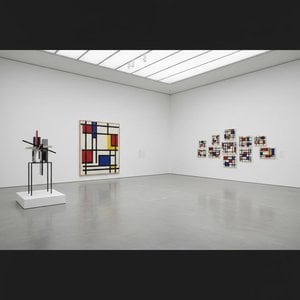
En avgörande vändpunkt kom 1912 när Mondrian flyttade till Paris. Staden pulserade av avantgardistisk energi, och han befann sig mitt i den revolutionerande kubismens värld. Detta möte blev transformativt. Han började dekonstruera formerna, bryta ner objekt i deras geometriska beståndsdelar, och förflyttade fokus från att skildra *vad* han såg till att utforska *hur* han såg det. Men Mondrian nöjde sig inte med att bara anamma en ny stil; han gav sig in på ett spirituellt sökande. Djupt influerad av teosofin – en mystisk filosofi som betonade underliggande universella principer – trodde han att konsten kunde vara ett verktyg för att uttrycka dessa dolda sanningar. Denna övertygelse drev hans obevekliga strävan efter abstraktion, vilket ledde honom till att reducera färg och form till deras mest grundläggande element. Runt 1917 kulminerade denna resa i formuleringen av neoplasticismen, ofta kallad ”ren plastisk konst”. Det var en radikal estetik baserad på essentiella former – raka linjer, räta vinklar – och en begränsad färgpalett: primärfärgerna (rött, blått, gult), svart, vitt och grått. För Mondrian handlade denna reduktion inte om tomhet; det var ett sätt att avslöja universums underliggande harmoni, en visuell manifestation av andlig ordning. Han grundade tillsammans med Theo van Doesburg rörelsen *De Stijl* för att främja dessa idéer, vilket befäste neoplasticismen som en definierande kraft inom modern konst. Mästerverk som *Komposition med rött, blått och gult* och *Tableau no. 2 Komposition no. V* står som vittnesbörd om denna period, ikoniska representationer av hans orubbliga engagemang för geometrisk renhet.
New York-rytmer: En sen blomstring
Utbrottet av andra världskriget tvingade Mondrian att fly Europa 1940 och söka fristad i den pulserande metropolen New York City. Denna omflyttning visade sig oväntat stimulerande. Stadens rigida rutnät – en skarp kontrast till de mer organiska landskap han hade känt – resonerade med hans konstnärliga principer. Hans senare verk, framför allt *Broadway Boogie Woogie* (1943), speglar detta inflytande. Även om han behöll neoplasticismens kärna introducerar målningen en dynamisk energi, en livlig rytm inspirerad av stadens pulserande liv och jazzmusiken. De raka linjerna är fortfarande närvarande, men de dansar och korsas nu med större frihet, vilket skapar en känsla av rörelse och glädje. Det var som om Mondrian hade hittat ett nytt språk inom sin etablerade vokabulär, ett sätt att uttrycka modern urban existens komplexitet genom geometrisk abstraktionens enkelhet. Han fortsatte att förfina sin stil fram till sin död 1944 och lämnade efter sig ett verk som fortsätter att fängsla och inspirera.
Ett bestående arv: Mondrians varaktiga inflytande
Piet Mondrians inverkan på konstvärlden är omätbar. Han var inte bara en konstnär; han var en visionär som fundamentalt förändrade vår förståelse av abstraktion och dess potential att uttrycka universella sanningar. Hans verk har djupt influerat otaliga konstnärer, rörelser och discipliner. Abstrakt expressionism, minimalism och Color Field-måleri är alla skyldiga en skuld till hans banbrytande anda. Men hans inflytande sträcker sig långt bortom duken. Neoplasticismens principer – enkelhet, klarhet, geometrisk ordning – har genomsyrat arkitektur, design och mode. Från möbler och textilier till byggnadsfasader och grafiska layouter fortsätter Mondrians estetik att forma vår visuella värld. Han förblir en ikonisk figur inom modern konst, en symbol för den obevekliga strävan efter abstraktion och den bestående kraften i konstnärlig innovation. Som designhistorikern Stephen Bayley träffande noterade har Mondrian blivit en ”totem för allt Modernismen försökte vara”. Hans arv är inte bara ett av estetisk skönhet utan också av intellektuell stringens, andligt djup och en orubblig tro på konstens transformerande potential.
Influenser och nyckelverk
- Tidiga influenser: Haagska skolan, nederländsk impressionism, pointillism och fauvism lade grunden för hans initiala konstnärliga utforskningar.
- Transformativt inflytande: Kubismen i Paris var avgörande för hans övergång till abstraktion och geometriska former.
- Filosofisk grund: Teosofin informerade djupt hans tro på att konsten kunde uttrycka universella andliga principer.
- Nyckelverk: *Den röda kvarnen* (tidig naturalistisk period), *Komposition med rött, blått och gult* (quintessentiell neoplasticism), *Tableau no. 2 Komposition no. V* (demonstrerar reduktionen till essentiella former), *Broadway Boogie Woogie* (sen blomstring influerad av New York City).
- Bestående inflytande: Mondrians verk fortsätter att inspirera konstnärer, arkitekter och designers och formar modern estetik inom olika discipliner.
Hans estetiska principer sträckte sig bortom måleriet till att påverka arkitektur, design och mode. Han förblir en ikonisk figur inom modern konst, som representerar strävan efter abstraktion och universell harmoni.



 Förhandsvisa
 Byt till tryck
 Skicka
 Dela
Dela
 Visa detaljer

 Ladda ner
 Liknande objekt
 Röntgen
 Bildspel
 Statistik

 Visa mer






































 Glasalternativet är endast tillgängligt i storlekar under 110 cm.