A Life Bathed in Light: The World of Pierre Bonnard
Pierre Bonnard, född 1867 i den parisiska förorten Fontenay-aux-Roses, var inte tänkt att leva ett liv djupt rotat i konstnärligt uttryck. Hans far, en högt uppsatt tjänsteman vid det franska krigsministeriet, såg sin sons framtid i juridiken. Ung Pierre ägnade sig därför med flit studier i juridik och tog examen 1888, men hans hjärta fann sitt hem någon annanstans – i den förtrollande världen av färg och form. Denna dualitet, denna spänning mellan förväntningar och passion, skulle subtilt påverka hans konstnärliga resa, vilket gav hans verk en unik intimitet. Han började med karikatyrer, skärpt sin förmåga att observera – en färdighet som senare blomstrade ut i exakt avbildade hemmanära scener. Men det var vid Académie Julian där Bonnard verkligen fann sin väg, där han mötte likasinnade själar som delade hans växande avståndstagande från akademiska konventioner och omfamnade den avantgardistiska anda som svepte genom Paris. Detta ledde honom till Nabis-gruppen – en grupp konstnärer, inklusive Maurice Denis, Paul Sérusier och Édouard Vuillard – som sökte infusa konst med andlighet och symbolik, bortom ren representation mot en utforskning av inre upplevelse.
The Nabi Years and the Cultivation of Intimacy
Bonnards tillhörighet till Nabis var avgörande. Gruppens betoning på platta former, djärva färgpaletter och ett avståndstagande från traditionell perspektiv resonerade djupt med hans konstnärliga känslor. Inspirerad av japanska tryck – deras eleganta linjer och harmoniska kompositioner – och Symboliströrelsens utforskning av subjektiva känslor, började Bonnard att utveckla sin signaturstil. Han var inte intresserad av storslagna berättelser eller historiska allegorier; istället vände han inåt, fokuserade på de tysta ögonblicken i vardagen: en kvinna som badar, en familj samlad till middag, en solkysst trädgård. Dessa var inte bara scenernas avbildningar utan destillationer av känsla – evokationer av minne och atmosfär. Detta fokus på intimitet i hemmet fick honom till namnet “Intimist”, ett begrepp som perfekt fångar den emotionella resonans i hans verk. Hans målningar handlar inte om *vad* som visas, utan *hur* det känns att vara närvarande i dessa ögonblick. Han arbetade från minne, skissade noggrant och sedan översatte dessa intryck till duken med en anmärkningsvärd känslighet för ljus och färg.
Color as Emotion: A Master Colorist
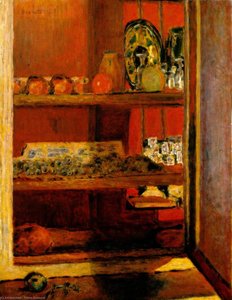
Bonnards mästerskap i färg är utan tvekan hans mest definierande egenskap. Han använde inte bara färg; han *känns* den, tillät den att styra stämningen och atmosfären i sina målningar. Hans palett var livlig men nyanserad, ofta med hjälp av oväntade kombinationer som skapade en känsla av skimrande ljus. Han skulle återvända till färdiga dukar flera gånger, försiktigt justera färgerna över flera verk för att uppnå perfekt harmoni – ett testamente till hans besatta engagemang för kromatiskt balans. Detta var inte om realistisk representation; det handlade om att fånga den subjektiva upplevelsen av färg, dess förmåga att väcka känslor och minnen. Han avvek från direkt observation, föredrog istället att måla från minne, vilket gav honom möjlighet att infusa sina scener med en drömlik kvalitet. Hans landskap var inte bara representationer av platser utan emotionella svar på dem – filtrerade genom linsen av personliga erfarenheter.
Influences and Development
Bonnards konstnärliga resa var formad av flera influenser. Han beundrade japansk konst, särskilt dess komposition och användning av ljus och skugga. Han studerade också verk av impressionister som Claude Monet och Auguste Renoir, men han utvecklade en egen stil som skiljde sig från deras. Hans tid i Nabis-gruppen var avgörande för hans utveckling, eftersom han lärde sig att fokusera på subjektiva känslor och att använda färg för att uttrycka dessa känslor. Han experimenterade med olika tekniker, inklusive pastell och collage, och hans verk blev alltmer abstrakta och expressionistiska under de sena åren av hans karriär.
Later Life and Lasting Legacy
Under sin senare tid sökte Bonnard inspiration i den franska rivieran, särskilt i området kring Le Cannet. Han fortsatte att måla med samma passion och skicklighet som han hade visat under hela sitt liv, men hans verk blev alltmer personliga och introspektiva. Hans relation till Marthe de Meligny, hans fru och livslånga muse, var central för hans liv och konst. Hon figurerade ofta i hans målningar, ofta avbildad badande eller engagerad i vardagliga aktiviteter, hennes närvaro utstrålade en tyst grace och intimitet. Bonnard dog 1947, men hans arv lever vidare genom hans unika stil och hans förmåga att fånga den sköra skönheten i det vardagliga livet. Hans verk finns i museer över hela världen, inklusive Musée Marmottan Monet i Paris, Art Institute of Chicago och Tate Modern i London, vilket bevisar hans varaktiga inflytande på modern konst.
Notable Works & Collections
- Woman in Checkered Dress (1890): Ett tidigt exempel på hans Nabis-inspirerade stil, som visar platta former och djärva färgkombinationer.
- The Dining Room (1913): En typisk Intimist-scen, som fångar värmen och intimiteten i hemmet.
- Bowl of Fruit (c. 1933): Visar hans mästerskap i stillivna objekt, med livfulla färger och en känsla av skimrande djup.
- The Almond Tree in Blossom (1947): Ett av hans sista verk, utfört bara några dagar före sin död, som visar hans fortsatta utforskning av färg och ljus.



 Förhandsvisa
 Beställ handmålad reproduktion
 Skicka
 Dela
Dela
 Visa detaljer

 Ladda ner
 Liknande objekt
 Röntgen
 Bildspel
 Statistik


 Visa mer






































 Glasalternativet är endast tillgängligt i storlekar under 110 cm.