Konstnärsbiografi
Paul Delvaux: En Drömmets Arkitekt
Paul Delvaux, född 1897 i den lilla belgiska byn Wanze, var en konstnär vars liv och verk blev en fascinerande utforskning av drömvärldar, klassisk skönhet och underliggande oro. Hans resa från en tidig utbildning i grekiska och latinska språk till att bli en av surrealismens mest distinkta röster är en berättelse om kontraster – disciplin mot fantasi, ordning mot kaos, det konkreta mot det sublima. Från början var han inriktad på arkitektur av sina föräldrar, men den konstnärliga passionen tog överhanden och ledde honom till studier vid Académie Royale des Beaux-Arts i Bryssel. Även om de matematiska kraven inom arkitekturen visade sig vara en utmaning, gav utbildningen honom en grundlig förståelse för perspektiv och form – verktyg som skulle bli avgörande för att skapa hans unika, suggestiva drömlandskap. Hans tidiga verk präglades av denna akademiska bakgrund, främst landskapsmålningar i en postimpressionistisk stil, men redan då började antydningar om den märkliga atmosfär som skulle definiera hans vuxna konst – en blandning av realism och det övernaturliga.
En Surrealistisk Genombrott: De Chiricos Inverkan
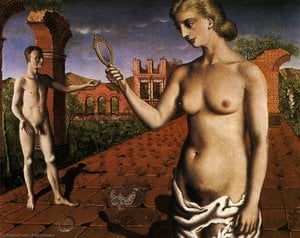
Det avgörande ögonblicket i Delvaux’s konstnärliga utveckling kom med hans möte med Giorgio de Chirico. De Chiricos metafysiska målningar – strama, gåtfulla scener befoljade av skuggor och klassisk arkitektur – resonerade djupt inom honom och öppnade upp för en ny värld av möjligheter. Han började fylla sina dukar med nakna figurer, ofta placerade mot imponerande arkitektoniska strukturer eller i vidsträckta, ödsliga landskap. Dessa var inte bara representationer av den mänskliga formen; de var utforskningar av begär, alienation och det undermedvetna. Den florentinska expressionistens konst, särskilt Constant Permeke och Gustave De Smet, gav också en mörkare ton till hans palett och penseldrag. Men Delvaux utvecklade snabbt sin egen unika stil – en kombination av klassisk precision och drömlik irrationellitet. Hans målningar började förmedla en känsla av obehag, en antydan om att något dolt lurade under ytan av verkligheten. Upprepade motiv uppstod: tåg, skelettfigurer och kvinnor med släckta ögon, alla bidrog till den suggestiva atmosfären som präglar hans verk.
Från Ungdomsminnen till Symbolisk Språk
Delvaux’s konstnärliga språk är rikt på symbolik, men han undvek konsekvent en enkel, psychoanalytisk tolkning. Den nakna kvinnan, en central figur i många av hans målningar, framstår ofta som passiv eller melankolisk, och representerar både begär och sårbarhet. Tåg och tågstationer dyker frekvent upp som symboler för övergångar, flykt och modernitetens ångest. Skelett, långt ifrån att vara mörka emblem av döden, är en spöklik närvaro, ett påminnelse om mortaliteten som genomsyrar även de mest idylliska scenerna. Klassisk arkitektur ger en bakgrund av ordning och beständighet, men den framställs ofta på ett märkligt förvrängt eller ofullständigt sätt, vilket antyder en sårbarhet under ytan. Dessa element är inte bara dekorativa; de är integrerade i den emotionella och psykologiska effekten av hans verk. Night Train, till exempel, fångar dessa teman – de anonyma figurerna, den imponerande arkitekturen och känslan av förestående fara skapar en kraftfull och oförglömlig bild. Själva konstnären sa att hans motiv härröt från personliga minnen och intryck, snarare än medvetna försök att dechiffrera det undermedvetna.
Ett Klassiskt Måleri i en Surrealistisk Tid
Under 1930-talet blev Delvaux starkt influerad av surrealismen, men han anslöt sig aldrig helt och hållet till rörelsens dogmer. Han reste genom Italien under den perioden och de klassiska arkitekturdetaljer han stötte på utvecklades till återkommande motiv i hans verk. Hans konstnärliga stil var en unik blandning av akademisk precision och drömlik irrationellitet, vilket skiljde honom från många andra surrealister. Han fortsatte att skapa bilder som utmanade konventionella idéer om skönhet och verklighet, och hans verk fortsätter att fascinera och provocera tittare än idag. Hans konst är en påminnelse om att drömvärlden kan vara lika vacker och suggestiv som den verkliga världen.
Arv och Bestående Inverkan
Under hela sin långa karriär var Paul Delvaux en unik figur i konstvärlden. Även om han tillfälligt associerades med surrealismen, behöll han en viss oberoendehet och vägrade att strikt följa dess regler. Hans målningar fortsätter att fängsla publiken med sin suggestiva skönhet och gåtfulla atmosfär. Verk som The Summer, Grise City och flera versioner av Sleeping Venus finns i framstående museer runt om i världen, inklusive Tate Gallery i London och Musee de Toyama i Japan. Delvaux’s inflytande kan ses i arbetet hos många samtida konstnärer som utforskar teman som minne, begär och det undermedvetna. Han visade att surrealism kunde existera bortom gränserna för automatisk skrivning och drömanalys, och omfamnade istället en noggrann teknik och en djupt personlig vision. Hans arv lever inte bara genom hans målningar utan också genom den bestående kraften i hans unika konstnärliga språk – ett språk som fortsätter att tala till våra djupaste rädslor och önskningar. Paul Delvaux Museum i Saint-Idesbald, Belgien, står som ett testamente till hans varaktiga inflytande, och erbjuder besökare en inblick i den fängslande världen av hans fantasi.



 Förhandsvisa
 Byt till tryck
 Skicka
 Dela
Dela
 Visa detaljer

 Ladda ner
 Liknande objekt
 Röntgen
 Bildspel
 Statistik


 Visa mer