A Vision of Divine Humility: Nicolas Poussin’s *Adoration of the Shepherds*
Nicolas Poussin's *Adoration of the Shepherds*, painted circa 1633-34, stands as a cornerstone of French Baroque classicism—a testament to artistic innovation tempered by profound theological contemplation. This oil on canvas (98 x 74 cm) transcends mere depiction; it’s a meticulously crafted tableau brimming with layered narratives and imbued with an intellectual rigor that continues to captivate audiences centuries later.
Subject & Narrative
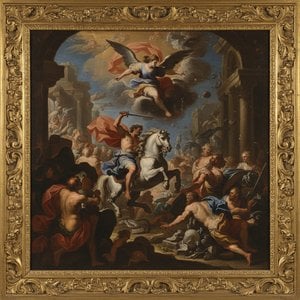
- The Biblical Scene: The painting portrays the pivotal moment when shepherds, guided by angelic proclamation, arrive at Bethlehem to venerate the newborn Jesus. Mary and Joseph occupy central positions, cradling the infant Christ within a humble stable setting—a deliberate choice reflecting the sanctity of his origins.
- A Dual Narrative Layered Within: Poussin subtly weaves two interwoven narratives into this single composition. In the background, we glimpse *The Annunciation to the Shepherds*, creating a visual echo of the initial divine intervention that initiated this sacred pilgrimage. This masterful layering elevates the artwork beyond a simple retelling of scripture, inviting viewers to ponder the unfolding plan of God.
- Classical Ruin & Humble Birth: The setting itself is strikingly symbolic—a grand, yet dilapidated classical edifice serves as backdrop for the unassuming birth. This purposeful juxtaposition underscores a central theme: the arrival of divine grace within the context of human history and imperfection—a concept deeply rooted in Renaissance humanist thought.
Style & Technique
- Baroque Classicism – A Harmonious Balance: Poussin’s artistic style embodies a harmonious blend between Baroque drama and Classical restraint. While undeniably dynamic in its compositional arrangement, the painting eschews excessive ornamentation, prioritizing clarity of form and intellectual order—characteristics that distinguish it from more flamboyant contemporaries.
- Linear Precision & Sculptural Form: The artist demonstrates unwavering attention to detail through precise drawing and meticulously modeled forms. Figures are sculpted with a palpable sense of dignity and weight, reminiscent of idealized statues from antiquity—a deliberate stylistic choice reflecting Poussin’s admiration for classical art.
- Color Palette & Dramatic Lighting – *Chiaro Scuro*: A distinctive “coppery” tonality dominates the canvas, establishing a unified atmospheric mood. Dramatic lighting—particularly *chiaroscuro*, or strong contrasts between light and dark—highlights key figures—Mary, Joseph, and Jesus—drawing the viewer’s gaze to the artwork's emotional core. This technique amplifies depth and enhances the expressive power of the scene.
- Compositional Structure – The Pyramidical Embrace: Poussin employs a pyramidal compositional structure, anchoring the central figures while allowing for surrounding activity—a device frequently utilized by Renaissance artists like Raphael to convey stability and guide the viewer’s eye across the canvas.
Historical Context & Symbolism
- Poussin in Rome – Embracing Antiquity: Painted during Poussin's most prolific period in Rome—a city brimming with artistic fervor—the artwork reflects his profound engagement with classical antiquity and the legacy of Renaissance masters. He sought inspiration from Raphael’s frescoes in Stanza della Segnatura, striving to emulate their grandeur and intellectual sophistication.
- Patronage & Cardinal Medici’s Vision: Originally commissioned by Cardinal Gian Carlo de’ Medici—a prominent figure within Florentine aristocratic circles—the painting speaks to the tastes of its time—a desire for religious art imbued with erudition and moral contemplation.
- Symbolic Resonance – Echoes of Sacred Narrative: The shepherds represent humility and simplicity, embodying virtues valued throughout Christian tradition. Angels symbolize divine intervention—God’s benevolent action in human affairs—while the manger signifies Christ's humble origins—a foreshadowing of his sacrificial death. The classical ruins serve as a reminder that God’s grace transcends temporal boundaries, asserting dominion over all earthly realms.
Emotional Impact & Legacy
- Awe & Reverence – Capturing Sacred Emotion: *Adoration of the Shepherds* evokes profound awe and reverence—stirring emotions that resonate deeply within the viewer. The painting invites contemplation on themes of faith, humility, and divine grace—a timeless masterpiece that continues to inspire artists and scholars alike.
- Influence Across Generations – David & Cézanne’s Admiration: Poussin's work exerted a considerable influence on subsequent generations of painters—including Jacques-Louis David and Paul Cézanne—who recognized in his style the virtues of clarity, compositional rigor, and intellectual depth.
- A Timeless Testament – Beauty & Spiritual Insight: This painting remains an enduring testament to Poussin’s artistic genius—a sublime fusion of classical ideals and Baroque expressive power—and a profound reflection on the sacred narrative at its heart. It is undoubtedly a treasured addition to any collection seeking both aesthetic beauty and spiritual resonance.
Photo Description: --Overall Impression-- The artwork is a Baroque-style painting depicting the Nativity scene. It’s a dynamic composition featuring numerous figures arranged within an architectural setting – a grand archway supported by columns and flanked by ruins. The scene is filled with activity, showcasing angels ascending, shepherds observing, and the central focus on Mary, Joseph, and the infant Jesus in a manger. The style leans towards dramatic realism, characteristic of Baroque art, emphasizing movement, emotion, and opulent detail. The use of lines is strong and directional, guiding the viewer’s eye through the complex arrangement of figures. Shapes are predominantly geometric – arches, columns, rectangles – combined with organic forms representing the human and animal subjects. Textures appear rich and layered, achieved through brushwork that creates a sense of depth and volume. Lighting is dramatic, with highlights emphasizing key figures—Mary, Joseph, and Jesus—drawing the viewer’s eye to the heart of the scene. The use of *chiaroscuro* (strong contrasts between light and dark) adds depth and emotional resonance. --
Size: 98 x 74 cm
Date: Unknown
ARTIST INFORMATION:
==================
Artist: Nicolas Poussin
Birth Year: 1594
Death Year: 1665
Birth City: Le Havre
Birth Country: France
Biography:
A Life Dedicated to Classical Reverie
Nicolas Poussin, a name synonymous with the grandeur of French Baroque painting, was nonetheless a soul deeply rooted in Italian soil for much of his artistic life. Born in Le Havre, Normandy, in June 1594, his early years remain somewhat veiled in mystery, yet they undoubtedly laid the foundation for a career that would become pivotal in shaping the classical tradition within French art. Though he briefly studied in Paris during the early 1610s, absorbing influences from lesser-known artists of the time, it was his journey to Rome in 1624 that truly ignited his artistic destiny. This wasn’t merely a geographical relocation; it was an immersion into the heart of antiquity—a pilgrimage to the very source of inspiration that would define his aesthetic vision. Poussin's initial forays into painting were marked by a sensuous quality reminiscent of Venetian masters like Titian, yet even in these early works, a nascent sense of order and i



 Förhandsvisa
 Beställ handmålad reproduktion
 Skicka
 Dela
Dela
 Visa detaljer

 Ladda ner
 Liknande objekt
 Röntgen
 Bildspel
 Statistik


 Visa mer






































 Glasalternativet är endast tillgängligt i storlekar under 110 cm.